Get Full Government Meeting Transcripts, Videos, & Alerts Forever!
Get email alerts on the Commercial Development topic
No spam. Unsubscribe anytime.
Zoning commission denies proposed car wash at Johns Malsburger after resident concerns
Summary
After extensive resident testimony about noise, traffic and privacy, the commission denied a rezoning request for a proposed car-wash tunnel at 15015 Johns Malsburger Road, endorsing staff’s recommendation to deny.
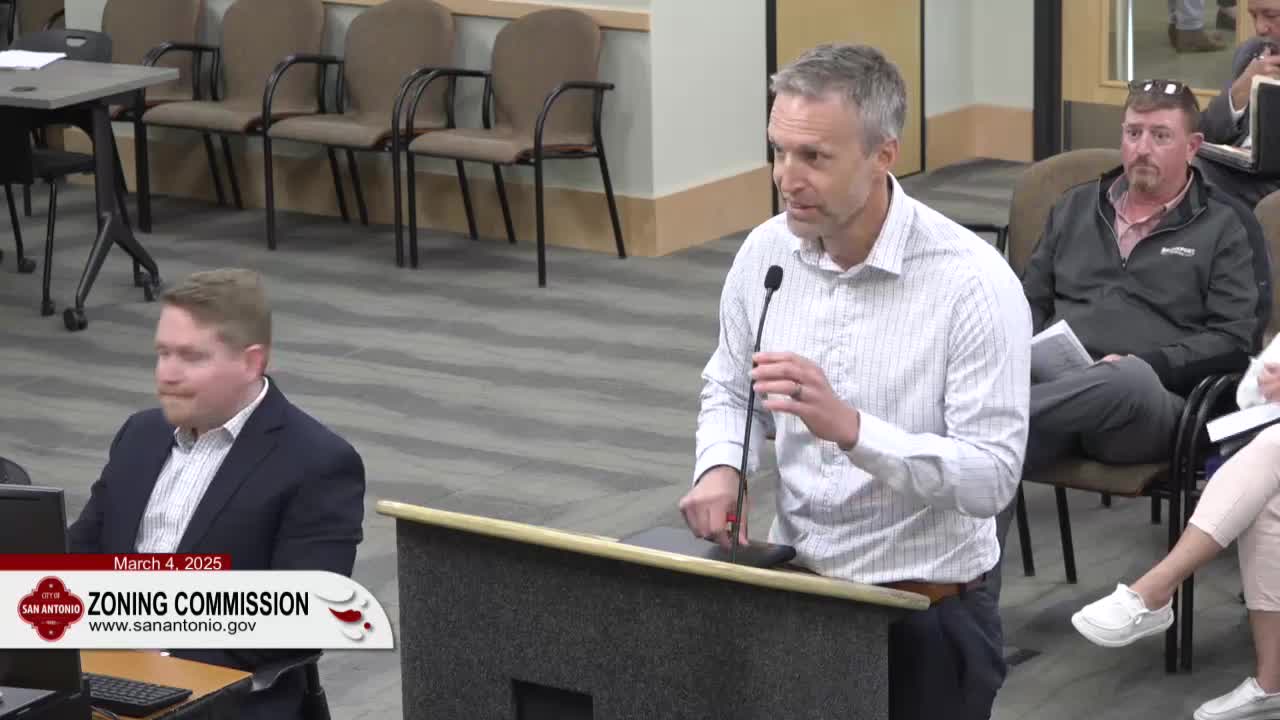
The San Antonio Zoning Commission voted to deny a rezoning request for a proposed car wash at 15015 Johns Malsburger Road after hearing extensive public opposition and discussion of technical mitigation measures offered by the applicant.
Applicant Russell Nelson described changes meant to reduce impacts, including hiring an acoustic consultant, limiting modeled noise to a 63‑decibel maximum, constructing an eight‑foot wall for screening, adjusting access points and replacing removed trees. He told commissioners the modeled operations with proposed mitigations would measure below existing ambient noise levels at measured points.
Neighbors vigorously disputed both the noise and traffic analyses. Multiple voicemails and speakers said the tunnel would back up traffic, worsen U‑turns into the neighborhood, create lighting and privacy problems for adjacent backyards and increase late‑night activity. One speaker summarized: "It’s a nightmare...we already have circulation and lighting issues at the McDonald’s intersection," and several neighbors said a solid wall would not eliminate the impacts they fear.
Commissioners questioned required buffers and whether the applicant’s site plan incorporated the 15‑foot landscape buffer between commercial and residential uses. Staff confirmed a 15‑foot buffer is required and noted the applicant could pursue the Council of Adjustments process for variances, but the current plan did not demonstrate compliance or appropriate mitigation. Several commissioners said the cumulative effect of unresolved issues — buffering, tree replacement, access/paving and proximity to residences — led them to support staff’s recommendation to deny. The motion to deny carried on roll call.
Why it matters: Commissioners weighed technical mitigation proposals against demonstrated neighborhood impacts. The denial sends the recommendation for denial to City Council and signals that buffering, access and neighborhood compatibility are decisive factors where commercial uses adjoin residential lots.
Next steps: The denial will be transmitted to City Council with the planning department recommendation of denial, per standard practice.