Get Full Government Meeting Transcripts, Videos, & Alerts Forever!
Lawmakers warned gas‑tax revenue decline could shrink transportation funding statewide
Summary
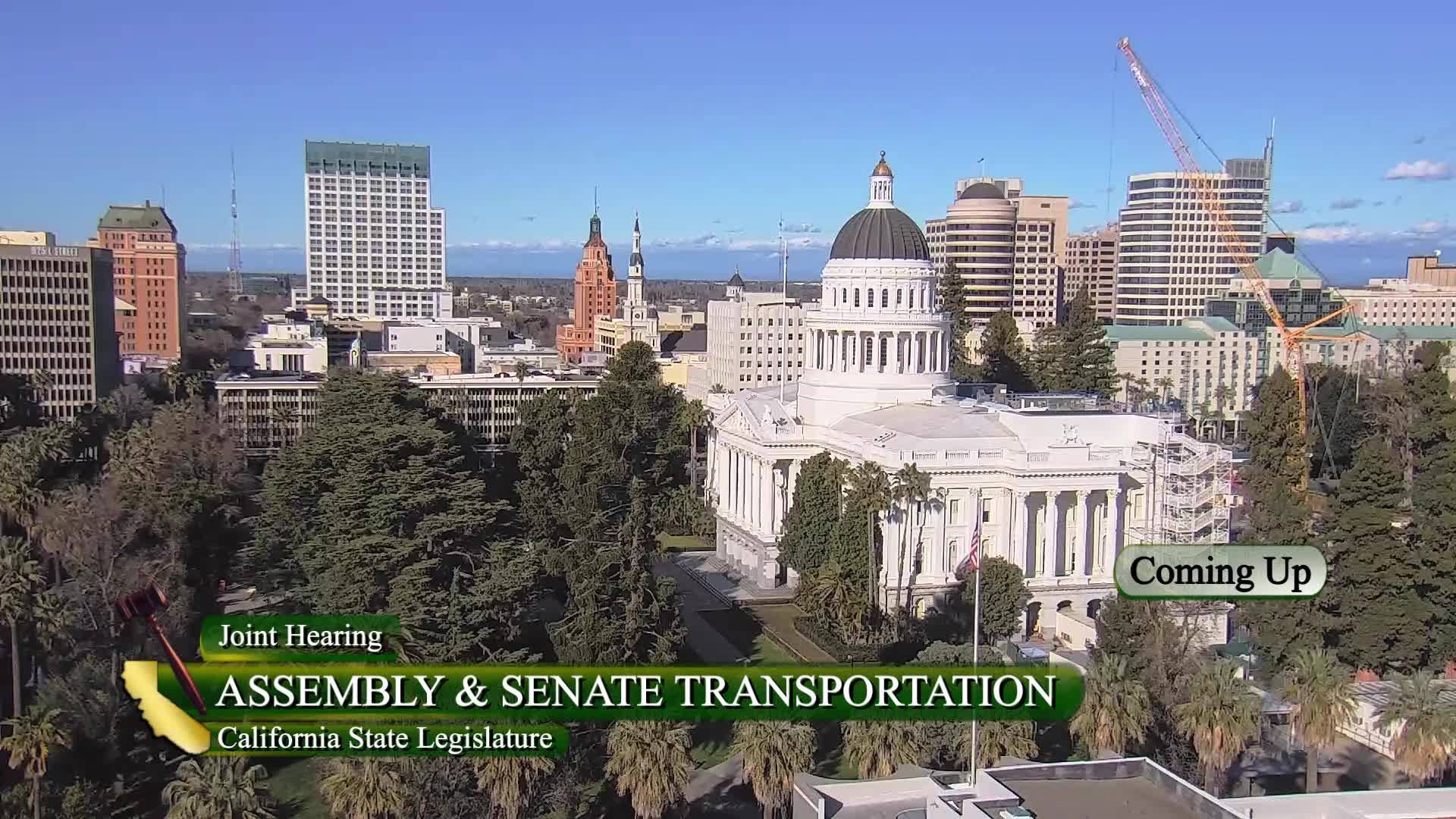
A joint informational hearing of the Assembly and Senate transportation committees in Sacramento heard on multiple panels that California’s traditional fuel‑tax funding model is eroding and that the state must develop replacement revenue mechanisms to avoid large cuts to maintenance and projects.
A joint informational hearing of the Assembly and Senate transportation committees in Sacramento heard on multiple panels that California’s traditional fuel‑tax funding model is eroding and that the state must develop replacement revenue mechanisms to avoid large cuts to maintenance and projects.
The hearing, convened by Chair Wilson of the Assembly Transportation Committee and attended by Senate leaders including Senator Cortese, featured briefings from the Legislative Analyst’s Office and academic and agency experts who described how increasing vehicle fuel efficiency and the transition to zero‑emission vehicles are shrinking the state’s gas‑tax base.
The briefing from Frank Jimenez of the Legislative Analyst’s Office laid out how California’s transportation funding is structured and how much it currently relies on fuel taxes and vehicle fees. Jimenez told the committees that total transportation funding in 2022–23 was about $44 billion and that state revenues from fuel taxes and vehicle fees are expected to generate roughly $14.4 billion in 2024–25, with the gasoline excise tax alone estimated to produce about $7.9 billion.
Why it matters: a decline in user‑based fuel revenues would hit large programs that are not fully protected by fixed funding rules. Tanisha Taylor, executive director of the California Transportation Commission, told lawmakers the commission allocates nearly $8 billion a year through programs that include the State Transportation Improvement Program (STIP), the Senate Bill 1 Local Streets and Roads program and the State Highway Operation and Protection Program (SHOP). Taylor warned, “we will have fewer resources to address the types of projects I described earlier,” if projected declines…
Already have an account? Log in
Subscribe to keep reading
Unlock the rest of this article — and every article on Citizen Portal.
- Unlimited articles
- AI-powered breakdowns of topics, speakers, decisions, and budgets
- Instant alerts when your location has a new meeting
- Follow topics and more locations
- 1,000 AI Insights / month, plus AI Chat