Get Full Government Meeting Transcripts, Videos, & Alerts Forever!
Get email alerts on the Learning With Music Sf110 topic
No spam. Unsubscribe anytime.
Senate hears bill to expand McPhail’s ‘Learning with Music’ program for early‑childhood classrooms
Summary
Senate file 110 would expand McPhail Center for Music’s Learning with Music program, which trains early‑childhood educators to integrate music across the day; the committee laid the bill over for possible inclusion in an omnibus bill after testimony from program directors and partner site leaders.
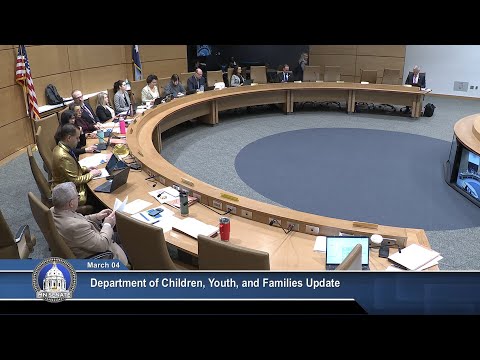
Senate Education Finance Committee members on March 4 heard Senate File 110, which would expand the McPhail Center for Music’s Learning with Music program that trains early‑childhood educators to use music as a tool for classroom routines, transitions and social‑emotional regulation.
Senator John Champion (sponsor) told the committee Learning with Music “uses music as a tool” to address readiness gaps faced by children experiencing economic hardship and described published research the bill’s backers say shows measurable gains in inhibitory control and school readiness. "Quality early childhood education is critical in promoting the development of our youngest learners and their future success," Champion said.
Diana Babcock, director of Sing, Play, Learn at McPhail, told the committee the program focuses on coaching early‑childhood teachers to use music throughout the day — not only at group music time — and that McPhail’s evaluation, conducted with Wilder Research, showed larger gains for children living with economic hardship. “Music is one of those few activities that activates both sides of the brain…when music is integrated into learning for our youngest learners, we see that learning improves,” Babcock said.
Program partners described classroom‑level benefits and the program’s reach: - Angela Claire, director of Wilder Child Development Center, described using songs to help children calm and transition, and praised coaching for building teachers’ skills. - Lily Crooks, director at the Jeremiah Program in St. Paul, said she has seen “significantly less wailing” during transitions after implementing the program and stressed that many early‑childhood centers operate on thin financial margins and rely on outside funding to provide enrichment.
Evidence and implementation notes offered to the committee: Babcock said McPhail’s Learning with Music has been developed over roughly 20 years and that Wilder Research conducted a longitudinal research project (noted in testimony as covering a period ending in 2018) and published findings in Early Childhood Research Quarterly. She also said McPhail is launching a public website in April that will host teacher resources, tip sheets, flash cards and videos, and that McPhail has received state support in the prior biennium to pilot and scale training and coaching.
Committee action: After testimony and questions, Chair Kunish said "Senate file 110 is laid over for possible inclusion in a future omnibus bill." The committee took no immediate vote on the bill during the hearing.
Why this matters: Advocates emphasized that evidence‑based, classroom‑embedded coaching for early‑childhood educators may improve school readiness and social‑emotional regulation for children who face economic hardship. Several senators praised the concept and the program’s classroom results, and witnesses asked the committee to include the program in forthcoming omnibus funding.
The committee’s record includes backers’ claims about research findings and program impacts; the committee did not itself evaluate the research during the hearing, and proponents described both published evaluation and ongoing data collection through Wilder Research.