Get Full Government Meeting Transcripts, Videos, & Alerts Forever!
Get email alerts on the Centers For Independent Living topic
No spam. Unsubscribe anytime.
House committee lays over bill to fund Minnesota Centers for Independent Living after testimonies highlight cost savings and life changes
Summary
A state committee heard testimony on House File 1326 to make ongoing funding for Minnesota's eight Centers for Independent Living permanent. Committee members praised personal accounts and fiscal staff reviewed current and proposed funding levels. The bill was laid over for possible inclusion in the budget.
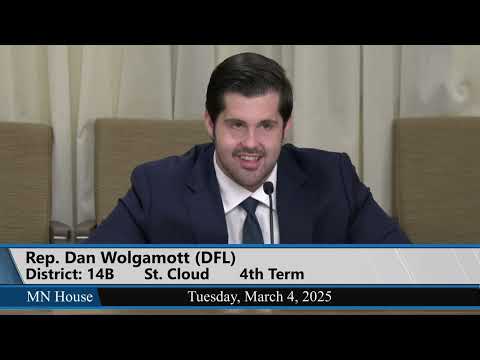
State Representative (bill sponsor) presented House File 1326 on funding for Minnesota's eight Centers for Independent Living and the House Labor Committee laid the bill over for possible inclusion in the budget process.
The bill would continue recurring funding for the Centers for Independent Living, which the sponsor described as statutory nonprofits that provide training, job coaching and services intended to help people with disabilities live independently. Fiscal staff told the committee the current base budget for the centers is $6,000,000 for the FY2026–27 biennium; the sponsor and witnesses said the proposal would increase recurring funding to match prior one‑time appropriations.
The centers, represented in the hearing by Jesse Bethke Gomez, executive director of Metropolitan Center for Independent Living, and testifiers who said they benefited from center services, stressed both human and budgetary impacts. Jesse Bethke Gomez said the centers are "a statutory nonprofit" structure with federal oversight under the Workforce Innovation and Opportunity Act and that centers have rigorous reporting and vocational rehabilitation alignment. Gomez told the committee the centers collectively reported helping 1,655 people move out of or avoid long‑term care during the last budget cycle.
Two invited witnesses gave first‑hand accounts of how center services changed their lives. Carol LaFleur, of Brooklyn Park, described long periods in institutional care and credited a mentor from the Metropolitan Center for Independent Living with helping her gain independence, attend college and find employment. "Investing in this program is the best thing we can do," LaFleur said. John Schneider, who identified himself as a Marine Corps veteran and a former client of Access North, said center staff helped him obtain housing, medical care and educational credentials. "The Minnesota Center for Independent Living, they taught me the skills to live my life," Schneider said.
Committee members asked for budget context and operational details. The committee fiscal analyst, identified as Ms. Eng, confirmed the current base appropriation is $6,000,000 for the FY2026–27 biennium. Representative Pinto and other members discussed how the bill would convert previously allocated one‑time funds into ongoing base funding; one member characterized the change as increasing the biennial total to roughly $14,000,000 when prior one‑time investments are included.
Sponsor remarks summarized the bill's intent: to restore the centers' base funding from the last budget cycle and to make prior one‑time funds permanent so centers can maintain staff, job coaches and ramp‑building services the sponsor said help avoid institutional placements. The sponsor and witnesses emphasized claimed cost savings from preventing institutionalization; the sponsor cited an estimate that keeping 1,655 people out of long‑term care could save between $106,000,000 and $254,000,000, as presented during the hearing.
No formal vote occurred. The committee chair announced that House File 1326 would be "laid over for possible inclusion," meaning the bill will remain under consideration as the committee and budget negotiators complete their work.
Details provided at the hearing show current statewide oversight and participation by multiple regional centers, including Metropolitan Center for Independent Living, Access North, Freedom Resource Center for Independent Living, Independent Lifestyles, Operations Resource Center for Independent Living (East Grand Forks), Southeastern Minnesota Center for Independent Living (Rochester), Minnesota Southwestern Center for Independent Living (Marshall) and others that testified or were represented. Witnesses and the sponsor also noted that centers receive federal vocational rehabilitation alignment under the Workforce Innovation and Opportunity Act.
The committee's action preserves the bill for further budget deliberations; no appropriation was approved at the hearing and no vote tally was recorded.