Get Full Government Meeting Transcripts, Videos, & Alerts Forever!
Get email alerts on the Pfas Liability Shield topic
No spam. Unsubscribe anytime.
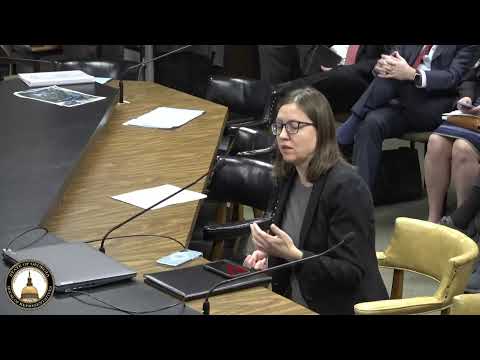
Committee hears bill to shield manufacturers, users from PFAS lawsuits
Summary
A Georgia House committee held a hearing on House Bill 2 11, a proposal that would limit civil liability for companies that handled or used PFAS chemicals; witnesses for industry, local governments, residents and environmental groups testified and no vote was taken.
The House Judiciary Committee on Monday heard testimony on House Bill 2 11, legislation that would bar many state lawsuits against companies that received, used or managed PFAS chemicals unless plaintiffs can show willful misconduct.
The bill’s sponsor, Representative Carpenter, said the measure aims to protect manufacturing jobs in northwest Georgia and limit litigation among downstream users and local governments. “This legislation is no laughing matter,” Representative Carpenter said, adding it is meant “to focus the attention of the litigation on the chemical companies.”
Supporters from the manufacturing, forestry and chemistry sectors told the committee the measure is necessary to protect employers who say they used products they were told were lawful. Mark Rogers, deputy general counsel for litigation at Mohawk, said the bill would shield downstream users unless there is “willful misconduct” and would not affect personal-injury claims. “Without willful misconduct, that would be an exception,” Rogers said during his testimony.
Environmental advocates, municipal lawyers and residents urged caution or opposed the bill, saying it would limit the ability of cities, ratepayers and individuals to recover the costs of water-treatment upgrades, cleanup and property impacts. April Lipscomb, senior attorney at the Southern Environmental Law Center, warned the proposal could “disincentivize industrial corporations from discontinuing the use of these products,” and said studies and litigation showing risks date back decades.
Municipal and utility representatives said local governments and ratepayers already face costs to detect and treat PFAS in drinking water. Andrew (Andy) Davis, an attorney representing the city of Rome and other municipal plaintiffs, told the committee that pending lawsuits have sought remediation from manufacturers and downstream facilities; he said the bill could make recovery more difficult. Davis argued that, if downstream receivers are shielded, it could leave municipalities and taxpayers bearing cleanup costs.
Several residents from northwest Georgia recounted personal and local impacts attributed by witnesses to PFAS contamination. Amber and Leroy Fletcher of Dalton said testing of their creek and soil returned high parts-per-trillion figures they reported to the committee; Amber Fletcher told lawmakers, “We can until recently, we ate the eggs from our chickens. We fed off our land. Are the eggs safe?”
Industry groups including the Georgia Association of Manufacturers, the Georgia Paper and Forest Products Association and the American Chemistry Council argued for protections for a broad set of downstream users ranging from paper mills to small manufacturers. Britney Hall, vice president of government affairs for the Georgia Association of Manufacturers, said many member companies “were sold products containing PFAS” that they used in reliance on federal guidance and regulations.
Representatives of professional consultants and engineers said they supported a targeted amendment in the bill that would provide some protection for consultants brought into litigation, but warned of insurance and professional-liability consequences if coverage is lost. Russ Pennington, a consulting engineer, described a case in which his firm was named in litigation and later faced changes in its insurance coverage and costs.
Georgia EPD’s Watershed Protection Branch chief, Anya Trishinski, briefed the committee on the state’s regulatory posture: federal EPA rules have prompted state-level rulemaking and monitoring work, and EPD has the delegated authority under the Clean Water Act and primacy under the Safe Drinking Water Act to implement federal standards. Trishinski said EPA published maximum contaminant levels for several PFAS compounds in April 2024 and Georgia has until April 2026 to adopt consistent drinking-water regulations. She noted that EPD has used existing statutory authorities in at least one no-penalty consent order to protect a public-water watershed.
Committee members raised questions about the bill’s scope, its temporal reach (whether it would affect pending suits), the statutory standard of “willful misconduct” (which proponents said was drawn from workers’ compensation case law), and potential effects on apportionment and “empty-chair” defenses in multi-defendant cases. Legal advocates for plaintiffs said testimony and documents in existing litigation indicate some manufacturers had knowledge of PFAS concerns and that the issue of knowledge should be decided in court, not preempted by statute.
Chairman Smith closed the hearing without a vote. “This will be a hearing only,” he said, and the committee did not take formal action on House Bill 2 11 during the session.
Ending: The committee heard roughly three hours of testimony from industry representatives, municipal lawyers, environmental lawyers, local residents and state regulators. Lawmakers posed detailed legal and technical questions; several witnesses asked the committee to either narrow the bill’s scope or defer action until ongoing litigation and federal rulemaking are further along. No vote was held.