Lifetime Citizen Portal Access — AI Briefings, Alerts & Unlimited Follows
WMATA cites market and capital limits for transit‑oriented development; councilmember, advocates press for creative public partnerships
Loading...
Summary
WMATA described constraints — capital costs, financing rates and limited usable land near tracks — that limit how quickly the authority can pursue transit‑oriented development (TOD); councilmembers and community groups pushed for clearer activation plans for priority sites.
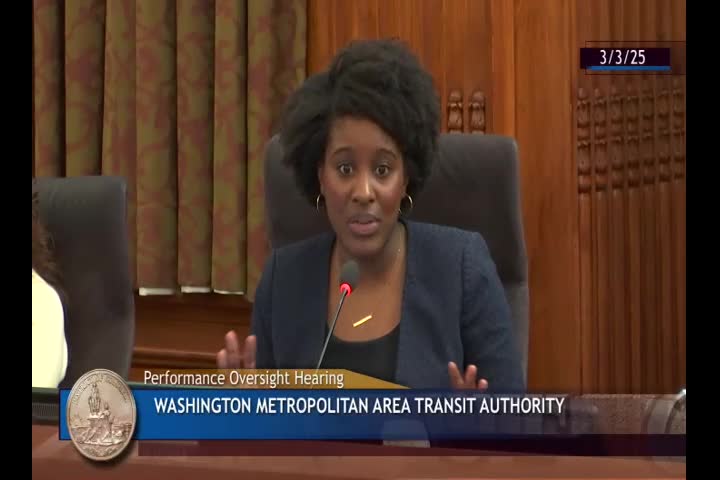
At the March 3 oversight hearing WMATA described its strategic real estate program and the constraints that limit near‑term transit‑oriented development (TOD) on WMATA property.
General Manager Randy Clark said WMATA has a strategic real estate plan and several active solicitations — naming Deanwood and Morgan Boulevard among sites in various stages of planning — but that high construction costs and financing rates, the limited amount of developable surface property near tracks and the need to replace existing transit infrastructure are the principal barriers to immediate widespread development of WMATA parcels.
Clark said the most feasible TOD parcels are those with large surface parking lots close to stations (for example, Fort Totten and Deanwood) where redevelopment could swap surface lots for parking garages and create new housing and retail. He said financing garage replacements is expensive and that WMATA is not a developer and typically needs private capital and public subsidy to activate such projects.
Why this matters: Activating WMATA parcels for housing and mixed uses can increase transit ridership and local housing supply, but realistic timelines and financing plans are required for projects to be viable.
What WMATA told the committee
- WMATA has a strategic plan and active solicitations, and is focusing on parcels like Deanwood, Morgan Boulevard and Fort Totten. Clark said market conditions (construction and financing costs) and the physical limits of land adjacent to rail right‑of‑way constrain what is immediately feasible.
- WMATA said it is willing to partner with the District and jurisdictional leaders on creative approaches to replace surface parking with garages and then use the development value to support housing, but that many projects need market conditions to become cost effective.
Community requests and next steps
- Community groups and Council member testimony (including a local CDC study presented by Northwest Opportunity Partners) urged WMATA and the District to resume collaborative planning on major sites (Friendship Heights Lord & Taylor site and others) and publish clear plans so developers and community stakeholders can align on affordable housing outcomes.
Ending
WMATA and councilmembers agreed to continue collaboration. WMATA asked for realistic timetables tied to market conditions and financing, and advocates asked the agency to restart site‑level planning and community processes so opportunities are not lost when market conditions improve.