Get AI Briefings, Transcripts & Alerts on Local & National Government Meetings — Forever.
HCAI seeks ongoing funding for California’s all‑payer claims database; privacy safeguards emphasized
Summary
HCAI requested $22 million annually and 47 positions to operate the Healthcare Payments Data (HPD) all‑payer claims database. Agency officials described the database’s structure, current data holdings and rigorous privacy and security protocols for researcher access.
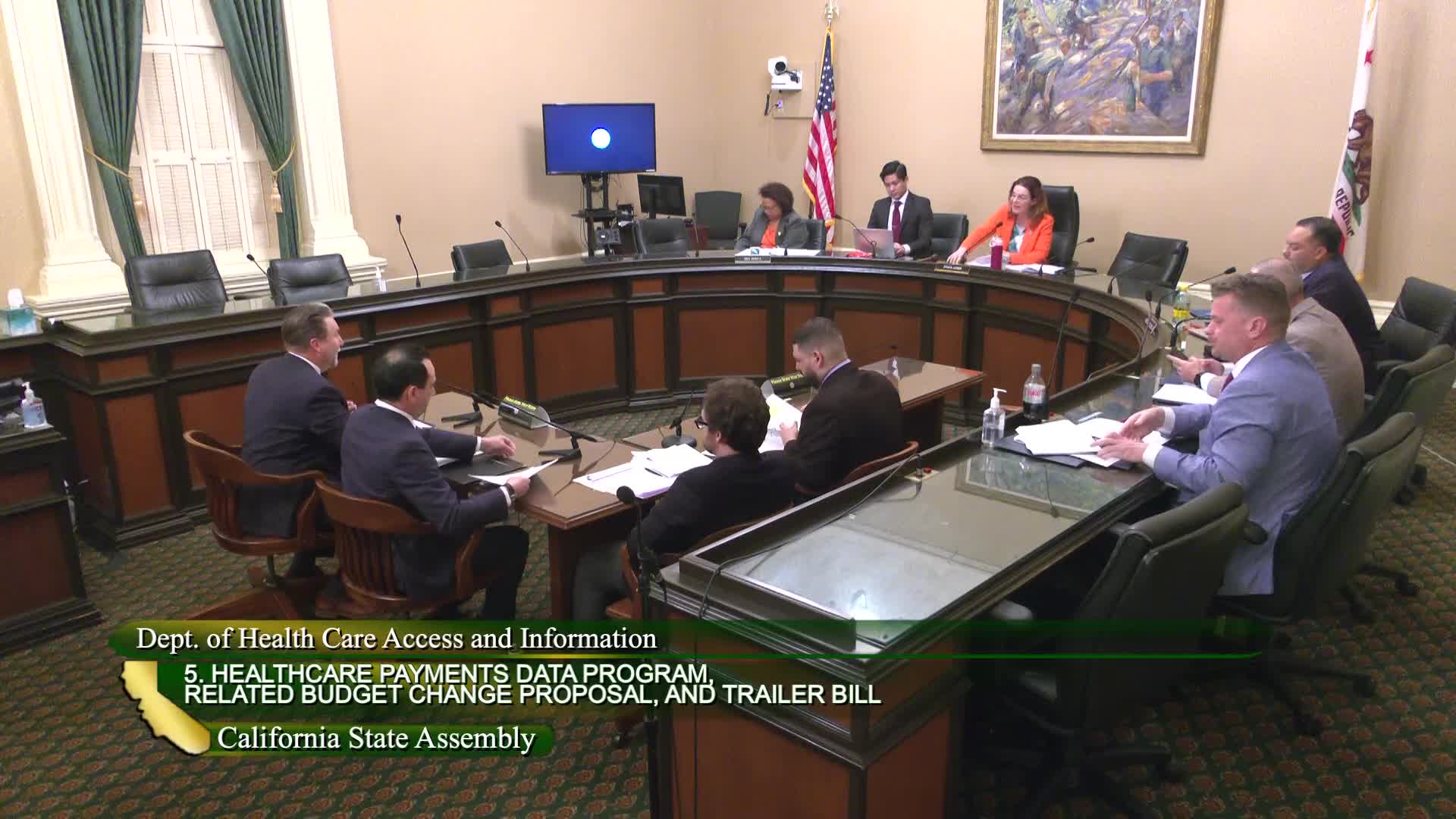
HCAI officials told the Assembly Budget Subcommittee No. 1 on Health that the Healthcare Payments Data program (HPD), California’s all‑payer claims database, has matured from planning to full collection but needs ongoing funding to sustain operations and provide policy‑relevant analyses.
Scott Crispont of HCAI provided a history: AB 1810 allocated $60 million in one‑time funds to build the HPD; AB 80 authorized data collection from commercial plans, the Department of Health Care Services for Medi‑Cal, and CMS for Medicare data. HCAI has ingested four years of historical data (calendar years 2018–2021) and receives more than 100 million claims and encounters monthly. The database already supports public reports and a data release program that opened to qualified researchers in January.
HCAI requested $22 million ongoing and 47 positions to maintain operations, expand analytic capacity and continue mandated reporting. Crispont said HCAI has explored federal Medicaid fund maximization and user fees, but concluded these alone would not cover ongoing costs. The administration’s budget assumes a smaller ongoing contribution and is evaluating reappropriation of remaining one‑time funds.
HCAI Chief Information and security staff described technical and procedural safeguards to protect health‑care privacy: role‑based least‑privilege access controls, encryption of data at rest and in transit, element‑scrambling for sensitive fields used for research linkage, detailed logging and auditing, third‑party penetration testing and oversight by an independent data‑release committee and the state’s human subjects protections committee. HCAI told the committee that some researchers may, in limited circumstances, need identifiable data to link records but that published results must be de‑identified.
Why this matters: an operational HPD enables evidence‑based policymaking on cost drivers, utilization patterns and the effects of state initiatives such as OCA targets. The program’s fiscal sustainability and data governance determine whether California can maintain a robust, statewide longitudinal claims resource for policy, research and transparency.
What comes next: HCAI requested trailer‑bill authority to transfer some fines and penalties from the Department of Managed Health Care into the HPD fund and plans to continue developing a user‑fee model as data requests ramp up. The LAO and members of the committee signaled support but asked for additional detail on long‑term funding and user‑fee design.
Ending note: HCAI emphasized privacy protections and said it will work with the Legislature on funding options and ongoing program governance.