Get Full Government Meeting Transcripts, Videos, & Alerts Forever!
Get email alerts on the Local Infrastructure topic
No spam. Unsubscribe anytime.
Cities and counties warn local roads and bridges at risk as fuel‑tax revenue declines
Summary
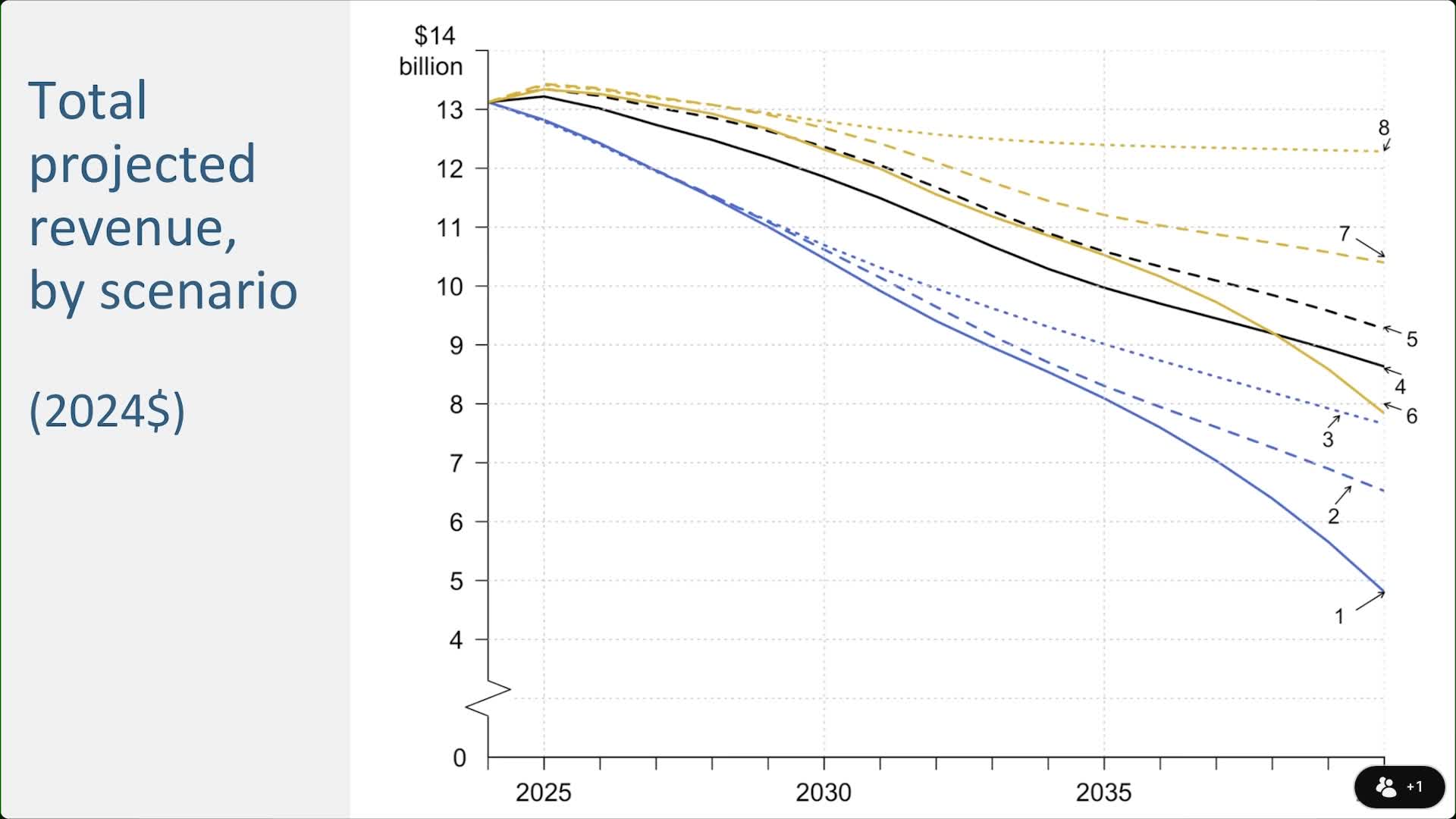
State and regional officials told an Assembly transportation committee hearing that local streets, bridges and related safety infrastructure are at risk from declining fuel‑tax revenues and rising costs for construction and climate resilience.
State and regional officials told an Assembly transportation committee hearing that local streets, bridges and related safety infrastructure are at risk from declining fuel‑tax revenues and rising costs for construction and climate resilience.
Tanisha Taylor, executive director of the California Transportation Commission, told the committee that the CTC allocates funds to cities and counties through several statutory programs and that a decline in bottom‑of‑the‑waterfall revenues would most directly affect the State Transportation Improvement Program (STIP), the SB 1 Local Streets and Roads program and the State Highway Operation and Protection Program (SHOP). She said the state currently programs nearly $8 billion per year through these mechanisms but that projected declines mean fewer maintenance and improvement projects in future cycles.
Margo Yap, who helps produce statewide needs assessments, outlined the scale and condition of the local system. Municipalities and counties together own the majority of California’s road network: roughly 44,000 centerline miles (roughly 370,000 lane miles statewide were cited elsewhere in testimony). Yap said the statewide pavement condition index (PCI) was about 65 in 2022; deterioration and deferred maintenance raise future costs because reconstruction is more expensive than preventative maintenance. She estimated local needs in the tens of billions over the next decade (multiple figures were presented during testimony), and noted that bridges—about 12,000 locally owned—are aging: more than half are older than 50 years and many carry weight limits or do not meet current standards.
Climate impacts and recent emergencies compound the problem. Panelists and local officials described storm, wildfire and flood damage that required emergency repairs and debris removal; several witnesses said such events have already diverted SB 1 and SHOP funds to emergency repairs in recent years. The CTC has increased reserves for emergency damage in SHOP from prior levels (one example cited was raising annual set‑asides toward $1 billion for emergency response) to address more frequent storms and fire impacts.
What this would mean locally
Speakers described likely local consequences if state revenues decline: a growing share of local pavement moving into “poor” or “failed” condition; reduced capacity to maintain sidewalks, signals, bikeways and transit access; and delayed safety upgrades. Margo Yap said that deferred maintenance can flip an overlay‑level repair into a reconstruction‑level cost over several years, increasing program costs by multiples.
Equity and rural concerns
Multiple witnesses stressed rural impacts: many rural and agricultural roads see low daily traffic but are essential to farm operations and goods movement. Panelists urged policy designs that account for long rural commutes and the logistics needs of freight and agriculture. Assembly members and county officials asked for protections for communities reliant on long drives and noted administrators must balance local priorities in programming.
Public comments from labor, construction and freight groups urged that any replacement revenue mechanism protect investments in goods‑movement corridors and support local jobs in construction and maintenance.
Ending
Panelists asked the legislature to pursue scenario updates, pilots and a combination of short‑term stabilization and long‑term transition strategies to protect local pavement and bridge investments while addressing equity and resilience.