Get Full Government Meeting Transcripts, Videos, & Alerts Forever!
Get email alerts on the TOPA Preservation topic
No spam. Unsubscribe anytime.
Tenants and advocates urge full preservation of TOPA rights as developers and legal groups press for clarity
Summary
Public commenters at the oversight hearing strongly defended the Tenant Opportunity to Purchase Act (TOPA) as a tool for tenant-led preservation and homeownership; advocates and tenant groups asked the Council to resist proposed changes that would narrow coverage.
Dozens of tenant advocates, tenant association leaders, and lawyers told the Committee on Housing that TOPA remains a critical tool for protecting tenants and preserving affordable housing in Washington.
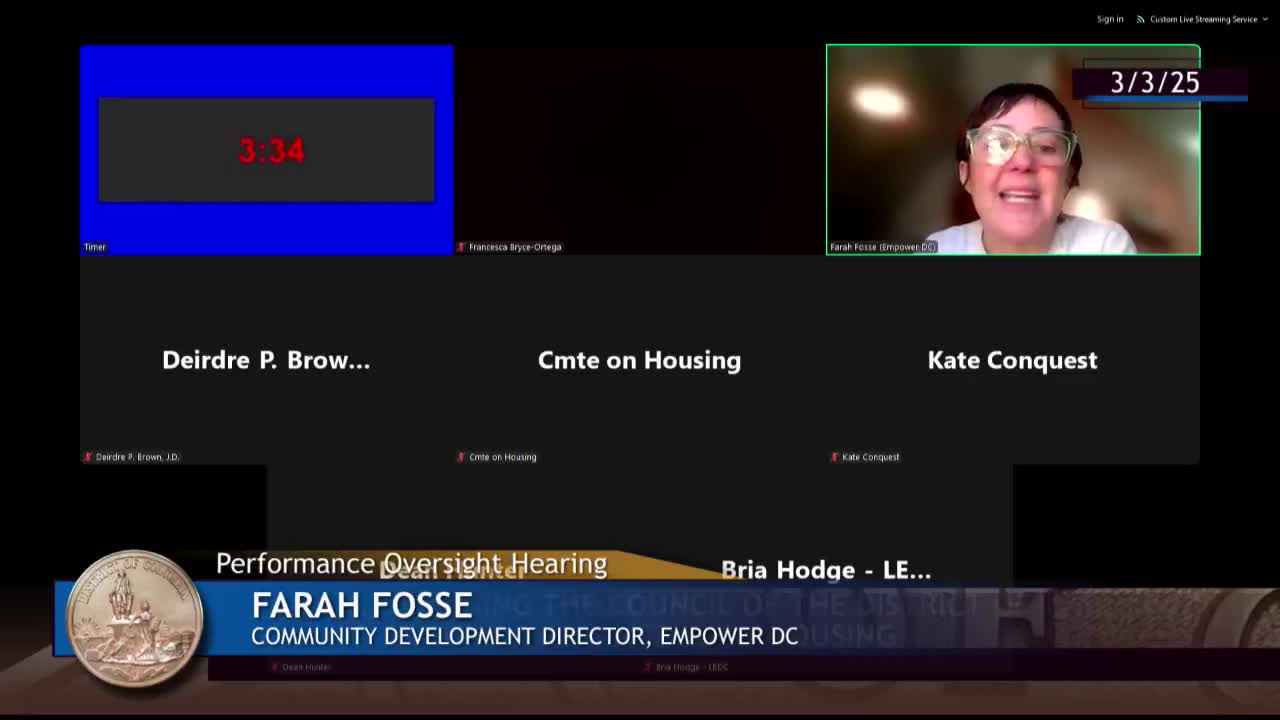
Speakers at the March 3 oversight hearing described examples where TOPA allowed tenants to organize, secure better repair commitments from owners, and in some cases purchase properties as tenant associations or limited-equity cooperatives. Farrah Fosse of Empower DC said TOPA has preserved housing and created opportunity for mission-oriented developers and tenant ownership, noting in her testimony "We know that not 1 unit of subsidized housing was lost through TOPA." Legal Aid DC attorneys Johanna Schmidt and Simon Wenzel described lawsuits and legal actions used when owners circumvented TOPA rights; Wenzel said bankruptcy filings have been used by some single-asset entities to defeat tenants' rights and urged stronger enforcement.
Tenant leaders with Tenant Associations and organizations such as Mi Casa, Northwest Opportunity Partners and neighborhood tenant groups described active TOPA negotiations that preserved units and improved conditions. Speakers with tenant associations at buildings that had exercised TOPA said they negotiated development agreements that included repairs, security, and affordability covenants.
Several witnesses asked the council to resist the mayor's announced "Rental Act" provisions that would narrow TOPA coverage for certain transactions; they argued narrowing eligibility would remove one of the few tools tenants possess to prevent displacement. Providers and developers at the hearing urged the council to also consider ways to accelerate funding availability and reduce barriers to new production so both preservation and production are viable.
DHCD and DCHFA described ongoing coordination with the council and the mayor's office and noted they are reviewing the proposed legislation. Committee members said they would scrutinize any change to TOPA and balance concerns about transaction timing with the preservation tool's public benefits.
Ending: The hearing produced strong, repeated public support for maintaining broad TOPA rights. The committee requested additional briefings and data about TOPA outcomes and asked agencies for enforcement data and examples of sales where TOPA rights were denied or circumvented.