Lifetime Citizen Portal Access — AI Briefings, Alerts & Unlimited Follows
WMATA and DDOT brief council on Better Bus network rollout; temporary signs and staffing planned for June
Loading...
Summary
WMATA told the council it will start installing temporary bus signs for the Better Bus Network and has trained operators, but some street changes will be implemented after the initial launch and the agency will use a day-one all‑hands customer service approach.
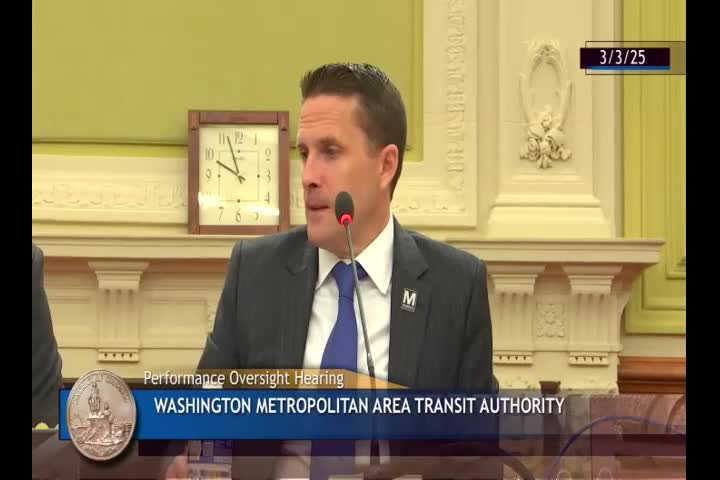
The Committee on Transportation and the Environment heard detailed operational planning for WMATA—s Better Bus Network on March 3. WMATA officials said operator training is ahead of schedule, temporary signage installation has begun and the authority will stage customer service staffing for day‑one of the redesign.
WMATA said it must physically touch more than 11,000 bus stops across the region to implement the plan and that not every street treatment (for example dedicated curb changes) will be in place on day one. "All of them will not be in place on day 1. We anticipated that because there's just so many changes that's necessary," said the agency—s operations lead during testimony. The authority said temporary detours or temporary stops might be used initially while DDOT finishes street treatments.
Officials described an all‑hands approach for the first weekend of operations: a concentrated presence of administrative and customer service staff at major terminals to help riders adapt to new stop locations and routing. WMATA also described its public outreach numbers: more than 130 customer engagement events, roughly 21,000 comments and 12,000 survey responses during the planning phase.
Why this matters: The Better Bus Network is a major redesign intended to improve bus reliability and reduce travel times by consolidating routes, changing stop spacing and aligning mid‑day and weekend service. The complexity of the changes means communication and short‑term operational support are critical to reduce rider confusion.
Details and context
- Training and signage: WMATA said operator training for the new routes is ahead of schedule and the authority has begun installing temporary bus signs at stops to guide riders ahead of the summer launch.
- Customer outreach: WMATA reported nearly 130 public engagement sessions and more than 21,000 comments collected during the planning phase; the authority said nearly 60% of bus customers surveyed were already aware of the redesign.
- Day‑one support: WMATA said on the scheduled launch week it will deploy extra administrative staff and on‑the‑ground customer support at major terminals to answer rider questions and help everyone reach their destination smoothly.
What WMATA told the committee
- "We track this on a daily and weekly basis," WMATA said of Better Bus readiness. "Training is ahead of schedule with all of our bus operators. We have a workforce of over 2,600 bus operators that need training on all of the new routes." (WMATA testimony)
- "On Sunday, June 29... we will have on all‑hands on deck approach... to make sure that we're providing great customer service because folks are gonna have a lot of questions," WMATA said of its start‑up week preparations.
Ending
WMATA told the committee it will continue to coordinate with DDOT and other regional partners and asked councilmembers to help amplify neighborhood communications in the final weeks before rollout. Officials acknowledged there will likely be some "hiccups" but said the agency is designing the launch for rapid adjustments and on‑the‑ground support.