Get Full Government Meeting Transcripts, Videos, & Alerts Forever!
Get email alerts on the Postsecondary Education topic
No spam. Unsubscribe anytime.
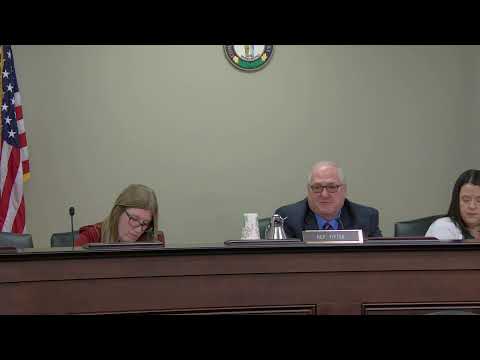
House committee votes to advance bill restricting DEI programs at Kentucky colleges
Summary
The House Standing Committee on Postsecondary Education voted 11-4 to advance House Bill 4 as amended, a measure that narrows and restricts diversity, equity and inclusion (DEI) offices and adds state oversight and licensure limits for postsecondary institutions.
Representative Jennifer Decker, state representative from House District 58, told the House Standing Committee on Postsecondary Education that she seeks to dismantle what she called "failed and misguided DEI bureaucracies" and asked members to support House Bill 4 to limit diversity, equity and inclusion programs at Kentucky colleges and universities.
Decker said HB 4 "would allow our universities and colleges to return to their primary focus of providing Kentucky students with excellence in academic instruction" and urged the panel to act after the committee adopted a substitute that narrowed and changed parts of the original bill.
The committee substitute removes a private right of action that had been in the original draft and adds several enforcement and conformity provisions. Under the substitute, the auditor of public accounts would be authorized to review whether institutions comply with the statute every four years. If the auditor finds a violation, the institution would be notified and given 180 days to cure it; failure to cure would render the institution ineligible for formula funding increases under KRS 164.092 in the following fiscal year. The substitute also added a new section barring licensing authorities from requiring DEI training as a precondition for initial licensure or renewal.
Supporters of HB 4 framed the measure as an equal-protection safeguard and cited the U.S. Supreme Court's 2023 decision in Students for Fair Admissions v. Harvard as legal context. Representative Decker said the bill "targets DEI offices and initiatives that promote unconstitutional differential treatment based on religion, race, ... color, or national origin." She repeatedly said she was not asserting DEI caused declining enrollment, but argued DEI had not delivered the promised enrollment gains for low-income, in-state students.
Opponents and witnesses urged the committee to reject the bill. Dr. Eric Russ, executive director of the Kentucky Psychological Association, said HB 4 would "threaten our ability to recruit and retain top psychology and other health care researchers and trainees in Kentucky" and warned that eliminating DEI programs would harm recruitment and retention of students and faculty from underrepresented groups. "I urge you to vote no on HB 4," Russ told the committee.
Graduate student testimony warned of chilling effects on teaching and research. James Orley, a Ph.D. student in educational leadership and organization development, said, "This is what HB 4 will do. HB 4 threatens to dismantle pathways to opportunity." Michael Lin, a master's student at the University of Kentucky who studies racial violence, asked how instructors would treat historical material and quoted Martin Luther King Jr. to illustrate how the bill's language could be interpreted in the classroom.
Public commenters also addressed the committee. Will Warner, who described himself as a longtime resident and former manager in the private sector, said DEI "supports people in hostile environments" and argued that removing such programs risks returning institutions to environments that disadvantage women and people of color.
Committee members asked the bill's sponsor to clarify its scope and legal effects. Questions centered on causation versus correlation in enrollment trends, the bill's potential to increase or decrease litigation risk, the authority of licensure boards, and what would replace DEI initiatives if the bill became law. Representative Decker reiterated that the substitute eliminates a state-private right of action but preserves a role for the attorney general to review disputes and for institutions to petition if they disagree with auditor findings.
After discussion, the committee voted on House Bill 4 as amended by the committee substitute. The roll call recorded 11 yes votes and 4 no votes; the committee reported the bill "passes with favorable expression." The committee's yes votes included Representative Baker, Representative Banta, Representative Bratcher, Representative Decker, Representative Doan, Representative Groeschel, Representative Massaroni, Representative McCool, Representative Thompson, Representative Truitt and Chair Tipton. No votes were recorded from Representative Brown, Representative Rorch, Representative Stalker and Representative Wilner.
The committee action advances HB 4 out of committee; any further changes or the bill's fate on the House floor were not decided at the hearing.