Get Full Government Meeting Transcripts, Videos, & Alerts Forever!
Get email alerts on the School Staff Misconduct topic
No spam. Unsubscribe anytime.
Senate committee advances bill requiring "traceable" staff-student communication after parents recount counselor’s conduct
Summary
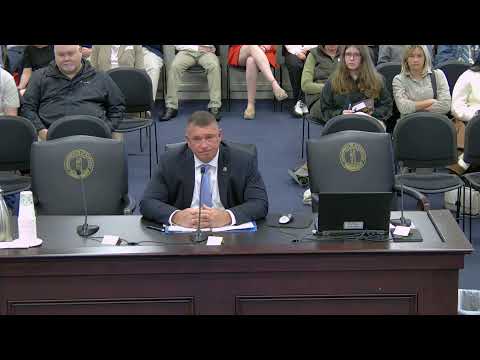
The Senate Families and Children Committee voted 9-0 to forward SB181, which would require school districts to use traceable channels for communication between students and staff, after testimony from an Anderson County family and a survivor of educator misconduct.
The Senate Standing Committee on Families and Children voted unanimously to give Senate Bill 181 a favorable recommendation after extended testimony from a family in Anderson County and a survivor of educator sexual misconduct.
Senator Lindsey Tichenor, R‑6, introduced SB181 as legislation “relating to school employee and volunteer misconduct,” saying it would “put in place standards that protect the education profession and the proper relationships between students and those in authority.” The bill would require districts to adopt policies that limit staff, coach and volunteer contact with students to “traceable” forms of communication and would require employees and volunteers to report known private communications so parents are notified and districts may take action. Section 2 includes a provision described by Tichenor as protecting minors’ anonymity for 120 days.
The bill drew its most detailed evidence from Stacy and Brad Briscoe of Anderson County, who told the committee their then‑16‑year‑old daughter began extensive private contact with a high‑school guidance counselor in early 2023. Stacy Briscoe said the counselor encouraged the student to continue a relationship the parents had forbidden, advised the student to consider legal emancipation, and allegedly suggested reporting the parents to child protective services to obtain placement outside the home. According to the Briscoes’ account, the counselor urged the student to make secret recordings and to use voice memos on an iPhone; the family said there were at least 202 text messages and multiple phone calls between the counselor and their daughter. The Briscoes said a counselor used the Kentucky Cabinet for Health and Family Services’ online reporting tool on March 13, 2023, and that a social worker subsequently interviewed the student at the school. The CPS investigation concluded the allegations were unsubstantiated, the Briscoes said.
The Briscoes told the committee they reported the matter to school administrators and, later, to the Educational Professional Standards Board (EPSB). They said the local superintendent and school board declined to take discipline and that their EPSB complaint has been pending for 15 months. Stacy Briscoe said the family provided documentation to the school board in October 2023 and that the superintendent’s response included a cease‑and‑desist letter to their daughter.
Ashley Nation, a survivor who testified in support of SB181, recounted grooming by a teacher that began with in‑person and electronic contact. Nation said the absence of monitoring policies allowed the teacher to “operate without oversight,” and argued SB181 would not ban communication but would make it “transparent and accountable.” She told the committee, “No student should have to question whether the adults entrusted with their education have ulterior motives.”
Committee members asked about the bill’s definition of “traceable” communication; Tichenor said the bill defines it and gave examples including paper notes and district‑approved platforms such as Google Classroom and ClassDojo, which leave an auditable record. Senator Deneen and others urged that districts be allowed to maintain a list of approved platforms rather than a one‑size‑fits‑all mandate. Committee members also confirmed with Tichenor that the bill would make known private staff‑student communications a reportable duty for others who become aware of them.
Senator Funke Froehmeyer moved the committee to give SB181 a favorable recommendation; Senator Mills seconded. The committee recorded a vote of 9‑0 in favor, and Chair Carroll said the bill “should pass on the Senate floor.”
SB181 now moves to the full Senate for consideration. Supporters told the committee they hope the bill will speed investigations by EPSB and restore “previously existing safeguards” for students and families; the committee hearing record reflects parents’ and a survivor’s appeals for faster and more effective oversight in such cases.