Get Full Government Meeting Transcripts, Videos, & Alerts Forever!
Get email alerts on the Long Term Care Covid Testing topic
No spam. Unsubscribe anytime.
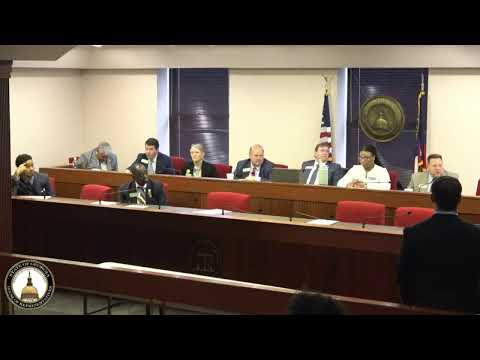
Committee votes 6-3 to remove routine COVID test requirement for new long-term care residents and hires
Summary
A legislative committee approved a bill to remove a blanket requirement that new residents and newly hired staff in certain long-term care facilities be tested for COVID-19, saying the rule is no longer routinely enforced; opponents warned the change could reduce a low-cost infection-control tool.
A committee voted 6-3 to approve House Bill 645, which would remove a statutory or regulatory requirement that new residents and newly hired staff at certain long-term care facilities be routinely tested for COVID-19.
Mr. Sherman, the bill’s presenter, told the committee the testing requirement was added during the 2020 pandemic and is no longer widely enforced. “So this bill just removes that requirement,” he said, adding that the department could reinstate testing “if there’s an outbreak.”
The measure applies to congregate personal care homes (facilities with more than 25 beds), assisted-living communities and skilled nursing facilities. Supporters, including Seth Daniels, director of government affairs for the Georgia Senior Living Association, said most providers have already stopped the routine testing and asked the legislature to clarify enforcement. “The vast majority, 99% are not doing it and are not being checked for it,” Daniels said.
Opponents urged caution. Representative Campbell said testing remains a proven, low-cost measure to protect a highly vulnerable population. “I just feel very uncomfortable with the idea of removing this cost effective, proven methodology for preventing the spread of a disease that, for this population, is extremely dangerous,” she said. Campbell and other members questioned the practical effect of removing the requirement on surveillance and on families seeking assurance that providers use all tools to prevent outbreaks.
Committee members who supported the bill described it as a return to pre-pandemic practice and said other infection-control layers remain in place, including the physician’s evaluation required at admission and existing infection-control rules that trigger additional action if multiple people show the same infection. “This is just removing the blanket requirement from the general population,” the bill’s presenter said, noting the Healthcare Facility Regulation Division is not routinely inspecting files for COVID tests.
Members also discussed operational burdens that officials said can slow admissions and hiring. Multiple supporters described the testing step as taking about 15 minutes and argued even short delays compound across staff, administrators and families. Representative McDonald and others noted that facilities may still set their own testing policies and that the department could require testing in response to localized spikes.
The committee recorded six votes in favor and three opposed; the motion for a “due pass” recommendation passed. The bill is identified in the hearing record as LC461108 (House Bill 645). No fiscal impact estimate or effective date was stated at the hearing.
Supporters repeatedly said the change would not prevent facilities from testing when they judge it necessary, and that existing mandatory elements of admission files — including a physician’s evaluation and a longstanding tuberculosis testing requirement — would remain. Opponents said removing the routine test eliminates one readily available early-detection tool and could reduce situational awareness about new spikes.
Committee members pressed the executive-branch survey authority’s capacity to enforce and monitor the rule historically; presenters replied that survey staffing constraints and shifting priorities contributed to inconsistent enforcement. Seth Daniels said providers sought statutory clarification to avoid being penalized in isolated inspections for not following an often-unenforced rule.
The bill passed the committee by a 6-3 vote and will move on with a committee “due pass” recommendation. The committee record did not include individual recorded roll-call votes by member name; the committee counted six yes votes and three noes during the voice vote and hand-raise confirmation.