Get Full Government Meeting Transcripts, Videos, & Alerts Forever!
Get email alerts on the Affected Communities topic
No spam. Unsubscribe anytime.
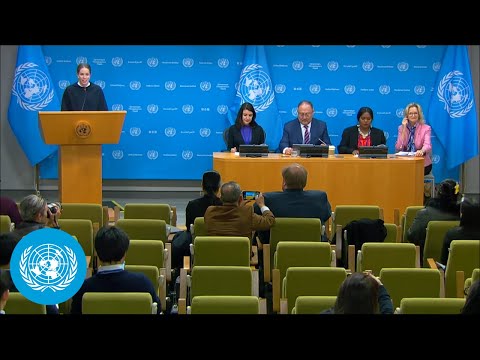
Kiribati survivor recounts nuclear-tests trauma; panelists urge broader engagement, criticize Japan’s absence
Summary
A Kiribati delegate recounted three-generation harms from British and U.S. tests on Christmas (Kiritimati) Island; panelists and journalists questioned Japan’s non-participation and stressed the importance of observers and umbrella states attending the TPNW meeting.
Tarem Taogaru, a representative of affected communities from the Republic of Kiribati, described multi-generational harm from nuclear tests on Christmas (Kiritimati) Island and urged the meeting to deliver "nuclear justice" and outcomes on articles 6 and 7 of the treaty addressing victim assistance and environmental remediation.
"My family endured the same trauma experienced by the 87 other families living on Christmas Island during the nuclear test," Taogaru said, describing relocation orders, the sound of explosions and long-term health effects in family members including cancers and deafness.
Taogaru said the tests by the United Kingdom in 1957–58 and the United States in 1962 "profoundly impacted our lives" and voiced hope that the meeting’s deliberations would produce tangible results she could bring back to victims’ associations in Kiribati.
In a later question about Japan’s absence, journalists noted that Japan is the only country to have experienced atomic bombings and that some Japanese parliamentarians and civil society support engagement with the TPNW. Ambassador Akan Rakhmuntullin said he was "not in a position to comment" on Japan’s sovereign decision but said Kazakhstan engages with Japanese NGOs and encouraged Japan to consider observer participation as a possible step. "It's an entirely, solitary decision by the Japanese government," he said.
Melissa Park of ICAN was more direct: "How extremely disappointing it is that Japan decided not to participate in this meeting, even as an observer," she said, adding that the Japanese public and Hibakusha advocates have urged the government to engage, particularly on victim assistance and remediation.
The briefing also covered the role of observers and so-called "umbrella" states (countries whose security policies rely in part on nuclear deterrence). Rakhmuntullin said observer participation can send a "quite strong signal" to domestic populations and the international community that a state is willing to engage with the TPNW process even if it has not yet joined. Park and other panelists noted that parliamentarians, cities and investors are increasingly active on the issue and that some umbrella states already attend in observer roles or send delegations to engage on specific issues such as victim assistance.
Taogaru’s testimony and the NGO and ICRC presentations framed the meeting’s deliberations this week as directly tied to obligations on victim assistance and remediation and as a venue where affected communities seek concrete outcomes.