Get Full Government Meeting Transcripts, Videos, & Alerts Forever!
Get email alerts on the Mobile Food Units topic
No spam. Unsubscribe anytime.
Houston staff outline new food-truck park ordinance, enforcement gaps and public-safety concerns
Summary
City health and fire officials described how mobile food units are regulated, pointed to gaps in enforcement around food truck parks and propane storage, and said staff are drafting a food‑truck park ordinance that would assign property-owner responsibility and allow multi‑department inspections.
Houston Health Department and Houston Fire Department staff told the City Council Quality of Life Committee on Monday that the city is drafting a food‑truck park ordinance and seeking tighter coordination between departments to address nuisance, sanitation and propane‑safety problems at mobile food unit clusters.
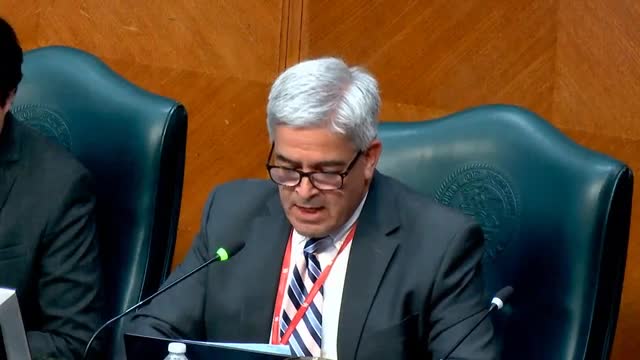
The presentation, led by Renee Beckham, a chief sanitarian in the Houston Health Department’s Bureau of Consumer Health Services, summarized current enforcement practices and identified recurring violations, while fire officials described separation and LP‑gas requirements they say are often breached at informal “food‑truck parks.” Councilmembers and restaurant‑industry representatives urged faster permitting and stronger property‑owner accountability.
Beckham said mobile food units are regulated as food service establishments under the City of Houston Code of Ordinances, chapter 20 (Food and Drugs), and that unrestricted mobile food units—those that prepare food onboard—are subject to plan review, preopening inspection, and an annual medallion. "Mobile food units are covered under the City Of Houston code of ordinances chapter 20, which is food and drugs," she said. She described required documents and controls: an authorization letter from the property owner, an access‑to‑toilet letter showing employee access to a toilet within 500 feet, a certified food manager on site during preparation, and an LP‑gas permit when propane is used.
Beckham said the Health Department attaches a GEO tracking device to permitted units and stamps approved plans; the medallion is valid one year and changes color annually to ease visual identification. Her office inspects mobile units, investigates consumer complaints and enforces through citations and closures. She said three sanitarians cover field inspections and 17 city‑approved commissaries service the permitted units for fresh water, waste water and grease management.
The health presentation cited recurring problems: inadequate handwashing (the most frequent food‑safety violation), illegal operation at unpermitted locations, improper authorization letters, inaccessible toilet facilities and issues with LP‑gas storage and placement. Beckham said the department receives both consumer complaints and reports from competitors; she offered complaint counts as an indicator of enforcement activity and said the program is complaint‑driven rather than proactively inspecting every location.
Houston Fire Department staff said their inspections focus on LP‑gas storage and appliance safety, fire‑extinguisher type and automatic suppression servicing at events. The fire office enforces a general 25‑foot separation between units using LP gas (the fire marshal may reduce that to 10 feet at her discretion in some circumstances) and restricts tank sizes in “districts of limitation” downtown and in the Medical Center to 60‑pound maximum. Fire staff said abandoned propane bottles and close spacing create public‑safety and enforcement challenges.
Both departments described gaps exposed by unregulated food‑truck clusters: many current “parks” operate on private property without formal designation or site‑plan review, so no single party is accountable for parking, traffic flow, trash, lighting and noise. Beckham said the Health Department is drafting a food‑truck park ordinance using language pulled from other Texas jurisdictions and hopes to accept councilmember input before formal proposal. "We're working on a food truck park ordinance," she said, and "Yes, I would be willing to take input from city council members on that ordinance before you finalize it and propose it for council." Council staff and the fire marshal said coordination across departments (health, fire, public works and police) will be necessary to address parking, waste and public‑safety concerns.
Industry and neighborhood speakers told the committee the underlying ordinances are adequate but enforcement is thin. Ricardo Molina of the Houston Restaurant Association described repeated trash, nighttime noise, generators, oversized signs and unsecured 100‑pound propane bottles at a long‑running food‑truck cluster near Westheimer, and asked for stronger site‑plan and parking rules. Michael Shine, executive director of the Houston Restaurant Association, urged more inspectors and more consistent enforcement so compliant restaurants are not disadvantaged. Neighborhood residents and council staff raised the stake of noise and nuisance impacts on nearby homes.
Committee members asked operational questions about the GEO trackers, commissary records and the daily commissary visit requirement Beckham described. Beckham said units must visit their approved commissary within 24 hours before operation, and inspectors can corroborate commissary tickets with commissary logs and the unit’s tracking data. She acknowledged limits: the tracker shows location and movement but not whether the unit is open, and units that are not permitted do not appear in the department’s account database.
The committee did not take a formal vote. Staff said they will continue drafting the food‑truck park ordinance, coordinate with fire and police on enforcement procedures, and return to council with a proposal and opportunity for council input.
The Health Department presentation and subsequent public comment highlighted enforcement capacity needs—three sanitarians for a large city, frequent after‑hours activity, and increasing operational complexity of food trucks—issues members said they would consider during budget and ordinance drafting discussions.
The committee’s work continues as staff refine the proposed ordinance language and interdepartmental procedures, and as council offices and community groups provide input on acceptable standards for parking, hours, waste management and fire‑safety spacing.