Lifetime Citizen Portal Access — AI Briefings, Alerts & Unlimited Follows
Kazakh president of TPNW meeting urges universalization, cites recent ratifications
Loading...
Summary
Akan Rakhmuntullin, president of the third Meeting of States Parties to the Treaty on the Prohibition of Nuclear Weapons, called for broader participation in the TPNW and cited four recent ratifications as momentum for the treaty.
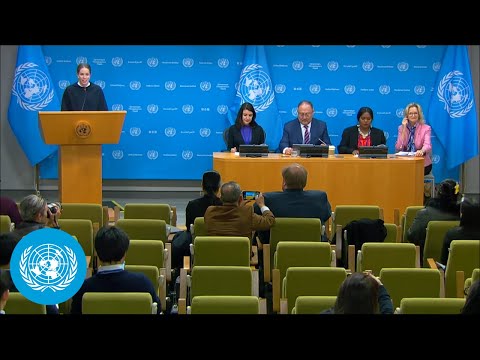
Akan Rakhmuntullin, the president of the third Meeting of States Parties to the Treaty on the Prohibition of Nuclear Weapons and First Deputy Foreign Minister of Kazakhstan, opened the press briefing at the United Nations by urging greater universalization of the treaty and highlighting recent ratifications.
"We have to work on the, according to the, it's the structure of the treaty on the universalization, to emphasize the critical need for broader participation and ratification to increase the number of those who ratified and joined during the, treaty," Rakhmuntullin said, adding that four states—Indonesia, São Tomé and Príncipe, Sierra Leone and the Solomon Islands—had recently ratified the treaty.
Rakhmuntullin described the meeting as an opportunity for states parties, non-governmental organizations and other stakeholders to review the treaty's operation and to prepare final documents including a declaration and decisions. He said the conference will address issues including universality, the total elimination of nuclear weapons, victim assistance and security concerns.
He noted Kazakhstan’s historical role as a former nuclear test site and a state that relinquished nuclear weapons after the breakup of the Soviet Union, framing that history as a reason for Kazakhstan’s active role in the process. "Our government has never regretted... giving away its nuclear arsenal," he later told a questioner, saying the decision was the "only vital and the only right decision." He characterized Kazakhstan’s approach as seeking peaceful coexistence and cooperation with neighboring states.
Rakhmuntullin said negotiators were working on final documents and expected decisions on victim assistance and environmental remediation to be considered, citing a working group on those issues. He described the meeting as "another very good opportunity" to compare notes and identify ways forward toward the treaty’s review processes.
The press briefing opened for questions after the panel presentations; Rakhmuntullin answered inquiries about Japan’s absence from the meeting, observers and the political context that shapes states’ participation.
The meeting described at the briefing is scheduled to run through the week and to consider formal steps to advance implementation and universality of the TPNW.