Get Full Government Meeting Transcripts, Videos, & Alerts Forever!
Get email alerts on the Aba Oversight topic
No spam. Unsubscribe anytime.
Child advocate asks lawmakers to tighten oversight of ABA providers, require background checks
Summary
The Office of the Child Advocate recommended a task force and statutory changes to better regulate applied behavioral analysis (ABA) programs for children with autism, citing gaps in facility licensing, employee background checks and coordination with child-abuse investigation systems.
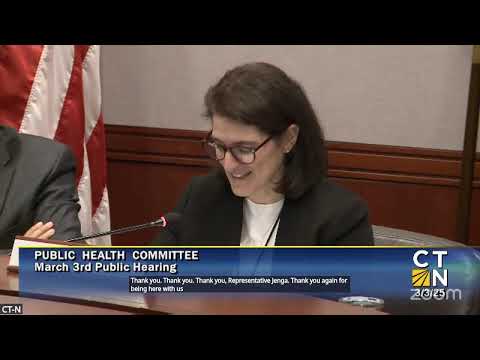
HARTFORD — Connecticut—s acting child advocate on Monday urged lawmakers to adopt legislative changes and create a task force to improve state oversight of entities that provide applied behavioral analysis (ABA) services to children, saying existing statutes leave gaps in facility supervision and child-safety checks.
What the child advocate requested: Christina Guillot, acting child advocate, testified in support of HB 7049 and presented recommendations from an investigation the office conducted after concerns were raised about intensive, day‑long ABA programs that serve children with autism. Her office found that while board‑certified behavior analysts (BCBAs) are licensed by the Department of Public Health, the facilities where ABA services are provided are frequently not licensed like child-care centers and therefore are not subject to the same employee background checks and regulatory oversight.
Specific problems identified - Facility licensing gap: The child advocate said ABA programs provide medical treatment in settings that may resemble childcare centers but lack licensing requirements for facilities, background-check rules for employees and joint investigative procedures when concerns arise. - Background checks: In a small sample, programs running day‑long ABA services conducted state and federal criminal-history checks, but none voluntarily checked the state child‑abuse registry. Guillot said state law requires background screening in schools and licensed childcare settings and urged parity for ABA programs that serve children many hours per day. - Notification and data sharing: Guillot told the committee there is no systematic mechanism for the Department of Children and Families to notify DPH when a BCBA is placed on the DCF registry, or for DCF to notify employers about such findings — a gap she said must be fixed.
Proposed response The Office of the Child Advocate recommended both statutory changes (to require minimum employee checks and clarify reporting channels) and a task force to define which ABA programs should fall under regulated oversight and which state agency is best suited to take responsibility. Guillot recommended the task force include DPH, DCF, the Office of Early Childhood and autism‑services experts.
Ending Guillot told lawmakers her goal is protective: to ensure children who attend intensive ABA programs receive services in settings with the same types of safety checks that other child‑serving facilities have, and to set up the interagency lines of communication necessary for rapid investigation and prevention.
Short background: ABA services are an evidence‑based therapy for children with autism and can be intensive and medically important; the child advocate said the law has not kept pace with growth in providers and that a limited sample review found inconsistent practices on background checks and reporting.