Get Full Government Meeting Transcripts, Videos, & Alerts Forever!
Get email alerts on the Correctional Health topic
No spam. Unsubscribe anytime.
Ombudsman and advocates press lawmakers for state oversight of correctional health care
Summary
Correctional ombudsman, advocates and veterans— groups urged the Public Health Committee to pass SB 1394 to bring Department of Correction health services under Department of Public Health oversight, require accreditation and strengthen infectious‑disease monitoring and facility inspections.
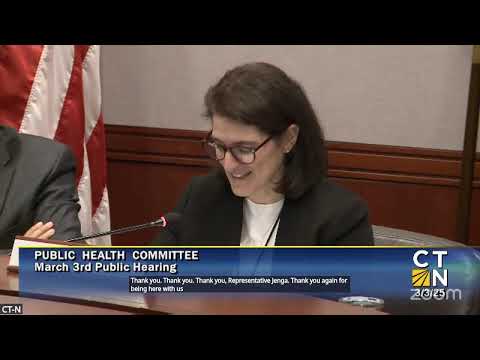
HARTFORD — State advocates, a newly created Office of the Correctional Ombudsman and public-health groups urged lawmakers Monday to give the Department of Public Health a greater role overseeing medical care inside Connecticut—s prisons, saying the state—s current approach contributes to preventable illness and costly litigation.
What witnesses asked for: Devon Ward, the state—s correctional ombudsman, told the committee that DPH already performs many public‑health duties relevant to prisons and should be empowered to inspect facilities, monitor infectious disease and help prevent environmental hazards. "The reality is that infectious diseases do not stay confined within prison walls," Ward said, citing hepatitis C, HIV and tuberculosis. The ombudsman and allied groups also called for consideration of national accreditation standards for correctional health care and for the state—s licensing, inspection and oversight mechanisms to be aligned with best practices.
High-level themes from testimony - Oversight and standards: Witnesses urged DPH to adopt or employ nationally recognized standards such as those from the National Commission on Correctional Health Care (NCCHC) and to perform routine inspections and environmental checks — for example for radon and drinking-water safety — that could head off litigation and health harms. - Staffing and recruitment: Testimony underscored chronic staffing shortages for clinicians in prisons and suggested pay, recruitment and administrative changes to retain clinicians. Ombudsman Ward cited instances of facilities without routine care such as optometry coverage for extended periods. - Mental‑health care: Advocates including NAMI Connecticut and the Regulate DOC Healthcare Connecticut Coalition argued behavioral health must be a central element of any oversight. They urged adding the Department of Mental Health and Addiction Services to task-force planning and ensuring psychiatric services are explicitly included.
Lawsuits and costs Witnesses noted recent litigation tied to prison health and environmental issues as evidence that current practices are costly and inadequate. Ward pointed to settled cases involving hepatitis C access and environmental exposures as proof that earlier oversight might avoid large payouts and public‑health harms.
Voices at the hearing - "Infectious diseases do not stay confined within prison walls," said Devon Ward, correctional ombudsman, urging DPH coordination with DOC. - NAMI and other mental‑health organizations urged the committee to explicitly integrate behavioral health into any oversight structure and add DMHAS representation on task forces.
Outlook The committee heard broad agreement that prison health care needs reform and more coordination among agencies. Lawmakers will consider whether to draft SB 1394 with clearer inspection and accreditation language and how to fund any new oversight duties.
Ending Witnesses urged the committee to focus on achievable, evidence‑based steps — accreditation, infection control, timely staffing and environmental protections — to reduce harm and long‑term costs.