Get Full Government Meeting Transcripts, Videos, & Alerts Forever!
Get email alerts on the Climate Superfund topic
No spam. Unsubscribe anytime.
Support grows for a Connecticut climate superfund to pay for adaptation; bill prompts legal and fiscal questions
Summary
A coalition of environmental groups, labor and finance advocates backed HB 6280, which would compel major fossil fuel producers to pay for state adaptation projects; proponents said polluters should pay, but opponents warned of legal challenges and uncertain economic impacts.
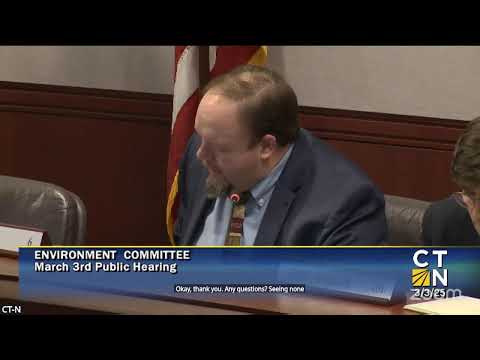
A proposal to require large fossil‑fuel producers to contribute to a state climate adaptation fund drew strong support from environmental groups, labor organizations and clean‑energy finance advocates during the Environment Committee—s hearing.
House Bill 6280 would direct the state to seek payments from companies responsible for a specified tranche of historical greenhouse‑gas emissions and place recovered funds in a dedicated climate superfund. Proponents argued the fund would provide a stable, predictable revenue source for resilience projects such as flood mitigation, community adaptation grants and nature‑based solutions that municipalities currently struggle to finance.
Brian Garcia, chief executive of the Connecticut Green Bank, said the fund could unlock private capital for resilience projects, and called the proposal "a way to pay for upfront investments that prevent much higher future costs." Bert Hunter of the Green Bank told the committee resilience improvement districts could leverage private capital and use savings — for example from reduced insurance costs for flood‑proofed neighborhoods — to repay investments.
Supporters including labor leaders urged stronger labor protections for green jobs that would be created through the fund. Ed Hawthorne of the Connecticut AFL‑CIO said the state should ensure wages, apprenticeships and prevailing‑wage standards apply to projects financed by recovered funds.
"We support holding the largest emitters accountable," one advocate said. "The bill would help communities that are already paying the price for climate disasters."
Lawmakers and several witnesses pressed fiscal and legal questions. Opponents noted the New York law that inspired similar proposals has already triggered multi‑state litigation and that court outcomes are unsettled; insurance and business witnesses warned the proposal could be challenged under interstate commerce or other legal theories and that litigation would delay funding.
Other witnesses raised implementation questions: How would the state calculate a fair share from global firms? Would Connecticut be able to collect meaningful sums from companies whose assets are overseas? Several witnesses asked how recovered funds would be allocated by geography and whether the fund would favor low‑income and environmental justice communities.
HB 6280—s proponents said the measure would be carefully constructed to use established emissions inventories and legal mechanisms and that other states have passed similar legislation. Lawmakers asked the administration and proponents to provide more detail on legal defensibility, projected recoveries and guardrails to ensure funds reach the communities that need them most.
No immediate action was taken. Supporters said they will work with the committee to refine language and to address the fiscal and legal questions raised.
The hearing also included testimony urging smaller, near‑term steps: several environmental and municipal witnesses urged expanding state resilience grant programs and prioritizing nature‑based remedies while legal questions about any superfund are resolved.