Get Full Government Meeting Transcripts, Videos, & Alerts Forever!
Get email alerts on the Neuromodulation Veterans topic
No spam. Unsubscribe anytime.
Doctors and veterans press Connecticut for pilot funding of neuromodulation therapy for stroke recovery
Summary
Physicians asked the Public Health Committee for $2 million to fund 10 veterans for VIVISTEM vagus‑nerve neuromodulation and associated rehab research, saying early results show sustained gains years after stroke; lawmakers pressed for evidence, VA coordination and long‑term funding plans.
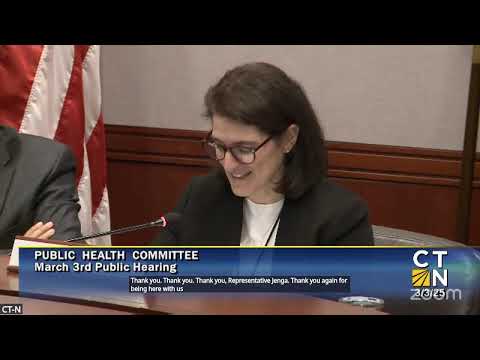
HARTFORD — Physicians, veterans and advocates urged Connecticut lawmakers Monday to fund a small research-and-treatment pilot offering neuromodulation therapy to veterans and other patients with chronic stroke impairment, saying early clinical experience shows life-changing improvements even years after a stroke.
What was proposed: Speakers asked the Public Health Committee to authorize $2 million to cover surgery, device, rehabilitation and research for 10 veterans at UConn Health and Hartford HealthCare. The request would fund implants of the VIVISTEM vagus‑nerve stimulator, intensive targeted occupational and physical therapy, neuroimaging and gait research to measure how the brain reorganizes after stimulation.
Why supporters argue it—s urgent: "This therapy ends up being really miraculously effective," neurosurgeon Dr. Chris Connor told the committee. Connor described patients who had long plateaued after stroke regaining function that restored the ability to cook, hold a grandchild and live independently. Patient John Newt, who testified remotely after receiving VIVISTEM in May 2024, said his mobility and hand use have improved: "My mobility has improved about 40% according to the Fugl-Meyer test," he said.
Clinical case for research - Physicians said VIVISTEM is FDA‑cleared for upper‑extremity weakness after ischemic stroke, but use and long‑term outcomes are still being studied. Supporters want to collect MRI and EEG data, gait lab measures and standardized functional scores to document effects on limb function, walking, pain and possibly bowel/bladder control. - "We want to know if the brain is reorganizing and which parts reactivate," said Dr. Connor. Physiatrist Dr. Gregory DeGrucci said veterans often have complex exposures and early-onset strokes; he and others argued pilots targeted at veterans could both help those patients and generate data for broader care.
Questions raised by lawmakers - Evidence and scale: Several lawmakers welcomed the initial positive anecdotes but pressed for clarity about how a $2 million pilot would translate into broader coverage. Committee members asked whether the VA had been engaged; clinicians said they had begun outreach and that the VA could pay for community care if a therapy is proven effective. - Costs and sustainability: Witnesses acknowledged federal grant funding is constrained and said a state-funded pilot would establish preliminary data to seek wider reimbursement from insurers and the VA.
Voices and roles - Dr. Chris Connor, neurosurgeon (UConn), testified about surgical outcomes, the need for intensive 6‑week, three‑times‑weekly occupational therapy and the plan to do MRI and EEG research. He described the first patients— functional gains and said the program aims to enroll 10 veterans and study outcomes over 12–24 months. - Dr. Gregory DeGrucci, physiatrist (Hartford HealthCare), said veterans have higher stroke rates and complex needs and endorsed a center of excellence model to coordinate surgical, rehab and research services. - Veteran John Newt testified that after VIVISTEM he regained daily abilities he had lost. - Supporters included veterans groups and clinicians who argued that even a small pilot could prove the approach, spur insurer and VA coverage and expand care.
Outlook Lawmakers pressed clinicians to firm up plans for VA coordination, research protocols and a path to payers if results are positive. Several members said they were sympathetic but wanted detailed costing, timelines and assurances the pilot would produce publishable, generalizable data.
Ending Proponents said a $2 million pilot would be a modest, high‑leverage investment to test a promising therapy for chronic stroke disability and to catalyze broader insurer and VA support if the research confirms the clinical benefits reported by early adopters.