Get Full Government Meeting Transcripts, Videos, & Alerts Forever!
Get email alerts on the Environmental Permitting topic
No spam. Unsubscribe anytime.
Debate on permitting predictability bill shifts to public‑participation concerns
Summary
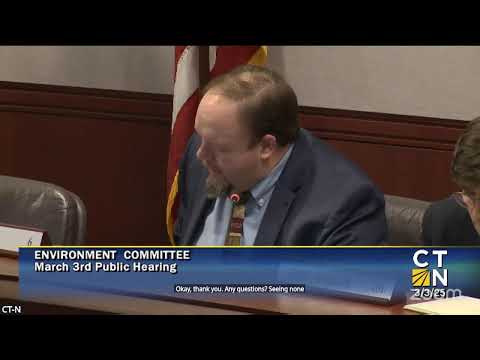
Lawmakers and environmental groups said a proposal to streamline DEEP permitting should not limit public comment or judicial review; attorneys and advocates warned language in HB 6868 could make it harder for residents to secure hearings and intervene in contested cases.
A push to speed environmental permitting drew sharp questions from advocates and lawmakers who said changes to the agency—s hearing procedures should not curtail public rights.
The permitting predictability measure would let DEEP reserve resource‑heavy evidentiary hearings for matters where parties are contesting a permit and provide a streamlined public comment phase for other petitions. DEEP legal staff said the plan aims to improve efficiency and focus state hearing resources on contested cases, but several attorneys and conservation groups told the committee the bill—s text could be read to raise barriers to participation.
Brendan Shane, DEEP—s environmental quality legal director, told the committee the agency often fields petitions where the public seeks to speak during a public comment session, while a separate adjudicatory proceeding with formal evidence is not warranted. "Our intent is to provide for the public comment phase when that—s all someone is seeking and reserve the evidentiary phase when participation by other parties would add value," he said.
But Roger Reynolds of Save the Sound and other witnesses argued the measure, as drafted, paraphrases and changes existing practice in ways that could deny residents the ability to intervene and to seek judicial review. "The bill, as written, appears to require legal and evidentiary claims to be stated before a hearing is conducted," Reynolds said. "That could be interpreted as restricting judicial review and making agency determinations unreviewable." The organization urged the committee to remove the new language and rely on DEEP—s existing rules of practice, which already allow the agency to determine whether a public comment hearing or a contested evidentiary hearing is required.
Representatives of environmental groups and some legislators said a reduction in drawn‑out litigation is a reasonable aim, but not at the expense of the public—s right to participate. Several lawmakers asked DEEP for more precise draft language and warned the committee to avoid a statutory change that would unintentionally limit participation under the Connecticut Environmental Protection Act.
DEEP told the committee it would provide clarifying language and additional written materials. No formal votes were taken on the proposal during the hearing.
The committee also heard related testimony about permitting backlogs and options to speed renewals and general permits, from DOT and DEEP staff. Department lawyers said some of the items in the bill were intended to reduce resource burdens without trimming due process. Environmental attorneys said the statutory text needs redrafting so its intent is clear and cannot be read to reduce the rights of residents or the scope of judicial review.