Get Full Government Meeting Transcripts, Videos, & Alerts Forever!
Get email alerts on the Health Transactions topic
No spam. Unsubscribe anytime.
Connecticut hearing probes private equity, seeks clearer review of health-care mergers
Summary
Lawmakers and regulators debated Governor Lamont—s HB 6873 to expand state review of health-care transactions, with the attorney general and Office of Health Strategy urging more authority and resources while doctors and private practices warned the bill could hamper independent providers.
NEW HAVEN — Connecticut regulators and clinicians on Monday clashed over a bill aimed at giving the state a broader look at mergers and acquisitions in the health-care sector, as attorneys and public-health officials urged lawmakers to expand review authority and doctors warned of unintended consequences for independent practices.
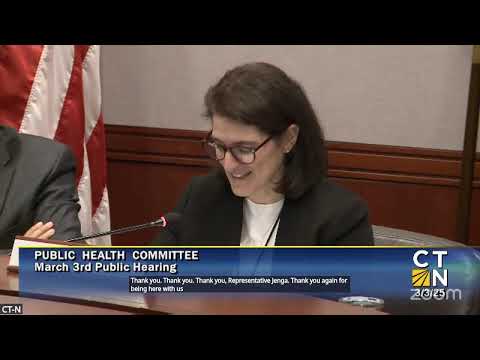
The Office of the Attorney General and the Office of Health Strategy supported Governor Ned Lamont—s HB 6873, saying the measure would strengthen a 2014 notice-of-material-change law and give the state new tools to spot consolidation and private-equity activity that can affect access, cost and quality. "This bill, if passed, will update and strengthen a statute this legislature wisely enacted in 2014," Nicole Demers, chief of the antitrust section at the Connecticut attorney general—s office, told members of the Public Health Committee.
Why it matters: State regulators asserted the federal Hart-Scott-Rodino (HSR) threshold leaves many transactions invisible because serial smaller deals can escape review. The bill would lengthen the notice period from 30 to 60 days, add a $10 million assets/revenue threshold and explicitly flag private-equity, insurance carriers and management-services organizations, which proponents say will give the state early visibility into potentially harmful deals.
Key details and debate - Attorney General—s office: Nicole Demers and staff said the office needs more time and mandatory data to estimate market concentration and to escalate inquiries when there are signs of anticompetitive activity. Demers said the expanded language would let the office capture complicated arrangements such as management-services organizations and investments by private-equity firms. - Office of Health Strategy (OHS): Commissioner Deirdre Gifford said the state has seen growing "financialization of health care" and that OHS and the AG need to consult when market moves raise concerns about access, quality or affordability. "We put in work with this committee last year that would have intensified oversight," she said, adding the bill aims to balance scrutiny with limiting administrative burden on routine transactions. - Medical community: Physicians and leaders of independent practices urged caution. Several specialists testified that partnerships with management-service organizations (MSOs) or private-equity-backed MSOs had enabled them to expand access, open urgent-care locations, add research trials and offer lower-cost outpatient procedures — and that broad new reporting could deter such arrangements. "The partnership has allowed me to delegate the business aspects of my practice so I can focus on delivering care," said Dr. Dinesh Kapoor, an oncologist who described a minority-MSO structure for his group.
Concerns and trade-offs - Resource gap: OAG and OHS witnesses said the offices lack staff and funding to review a large surge in filings. Demers told the committee the AG—s eight-person antitrust section needs additional positions to implement any expansion; otherwise the office would exercise enforcement discretion and triage the most worrisome filings. - Narrowing vs. catching deals: Supporters said the bill is targeted at transactions that current federal thresholds miss, including roll-ups and sale-leasebacks, while critics urged specific exclusions or expedited paths for small-scope transactions to avoid gumming up routine deals.
Voices from the hearing - "We are seeing an increase in what—s known as financialization of health care," Commissioner Deirdre Gifford said. "We are seeing harmful practices of financially motivated entities that can disrupt care for patients and hurt the communities." - "A hospital-driven consolidation is driving up patient costs," said Dr. Joe Capa, a gastroenterologist, but he added that private-equity partnerships have helped his independent practice expand access and reduce costs in his markets.
Outlook and next steps Lawmakers asked staff to consider narrowing language and to explore resources to implement any expanded review. Several members urged carve-outs or expedited processes so routine transactions can proceed quickly while authorities concentrate on deals that materially affect market power. Supporters urged mandatory funding for OAG and OHS to make the bill operational.
Ending The committee held hours of testimony from regulators, physicians, hospital and union representatives and industry groups. Lawmakers signaled they will try to preserve the bill—s goal—greater transparency around investors, sale-leasebacks and complex deals—while refining the mechanics so oversight can be carried out without unduly burdening small providers.