Get Full Government Meeting Transcripts, Videos, & Alerts Forever!
Get email alerts on the Budget And Taxation topic
No spam. Unsubscribe anytime.
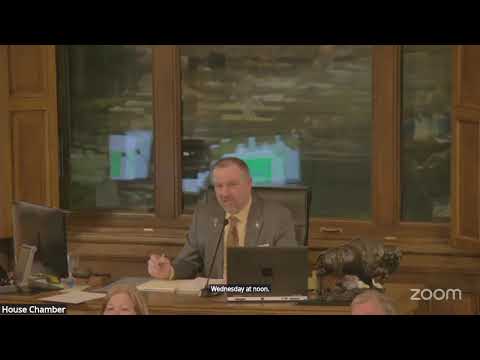
House splits on bill to reorganize investment revenue; amendments to protect school funding fail
Summary
Legislators debated Senate File 169, a bill reorganizing several state investment revenue flows. Representatives clashed over whether the bill would guarantee school funding and preserve budget reserves; three separate amendment attempts to protect guaranteed school revenue or preserve reserve flows were defeated.
House members debated multiple second‑reading amendments to Senate File 169, a bill that would restructure how earnings and transfers from state investment accounts flow into the general fund, school accounts and other spending. Representative Harshman, who presented a major amendment intended to preserve a set of guarantees for school funding and keep key transfer rates intact, said the bill as introduced would remove long‑standing guarantees and shift hundreds of millions in revenue off existing streams.
Harshman told the chamber the bill’s fiscal note showed a roughly $134 million annual revenue reduction and a biennial impact on the order of $276 million, numbers he and others said would force cuts or require new revenues. “This bill is about revenue,” Harshman said. Representative Baer, arguing against Harshman’s amendment, said the bill simplifies a complex web of statutorily directed transfers and that reclaiming the existing guarantees added the complexity back in.
Supporters of maintaining guarantees said the change would reduce the guaranteed flow to the school foundation program and stressed courts had already found the state out of compliance on full funding in certain circumstances. Representative Provenza and Representative Eliza Campbell urged voters to preserve the stability of school funding. Members debating the bill repeatedly invoked terms such as CIPA (strategic investments and projects account), LSRA (Legislative Stabilization Reserve Account), and the school foundation program and highlighted competing priorities: property‑tax relief, capital construction, and maintaining the state’s rainy‑day reserves.
Three separate amendment attempts to preserve the existing guarantees or to alter the revenue flow were put to the House. Second Reading Amendment No. 1 (Harshman) failed on a voice/division vote, 28‑33. Second Reading Amendment No. 2 (Representative Thayer), which would have moved a specified capital construction appropriation into the bill’s funding plan, failed on a voice/standing vote (20 aye; 40 no; 2 excused). Second Reading Amendment No. 3 (Representative Washert), which would have reallocated $3 million from a strategic account to finance a shooting‑sports complex, also failed after a standing count (the Speaker announced the amendment had not been adopted). After the amendments were voted down, the bill was ordered to third reading.
Ending: Lawmakers left the debate with clear division on how to balance simplifying statutory revenue flows against protecting designated streams for schools and capital projects. Proponents of the bill said it will simplify state revenue routing; opponents warned of tangible near‑term cuts to health and education budgets if guarantees are removed.