Get Full Government Meeting Transcripts, Videos, & Alerts Forever!
Pelham board narrows facilities bond choices; weighs geothermal, tax impact and construction disruption
Summary
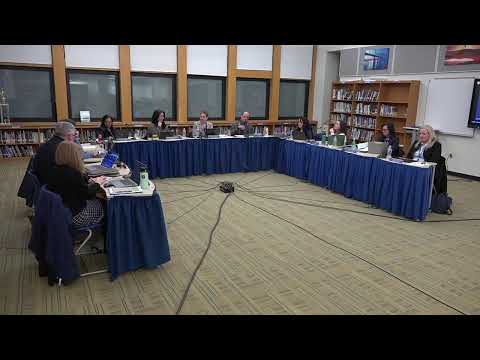
The Pelham Union Free School District Board of Education continued a March 3 working session on a proposed facilities bond that would fund additions, major renovations and, in some options, ground‑source (geothermal) systems.
The Pelham Union Free School District Board of Education continued a March 3 working session on a proposed facilities bond that would fund additions, major renovations and, in some options, ground-source (geothermal) heating and cooling systems. Architects, a construction representative and a municipal finance advisor presented options and preliminary tax-impact models; board members did not vote and said the purpose of the meeting was to reach consensus on a draft scope to take to the community.
Why it matters: the district has about $65,000,000 in debt scheduled to roll off in coming years, a factor the district says creates room to borrow for facilities work without immediately increasing the local tax burden. But choices about scope — which buildings to include, whether to install geothermal systems, and whether to add district-office renovations — would change the size of the bond and the eventual tax impact on homeowners.
Board President Natalie opened the session by reminding members that “the Board is not voting on anything tonight,” and that the purpose was to refine a proposal for community feedback and a possible March 19 resolution to position the district for a May 20 vote.
Finance adviser Rick Yancey of Capital Markets Advisors presented six modeled packages. The largest “all‑in” package (Option 1) that the board reviewed totals about $161.7 million and, according to Yancey’s draft model, would produce a peak net tax increase beginning in fiscal 2029 of roughly $986 a year for a home assessed at $850,000, about $1,379 for a home at the district’s average assessment of $1,189,000, and about $1,768 for a home assessed at $1.5 million. Yancey emphasized the numbers are draft and “directional” and account for the debt that will roll off the district’s books as older bonds retire.
The board and presenters walked through smaller packages and ways to split projects into two propositions for voters. Under one split (Option 2), the package most board members discussed, Proposition 1…
Already have an account? Log in
Subscribe to keep reading
Unlock the rest of this article — and every article on Citizen Portal.
- Unlimited articles
- AI-powered breakdowns of topics, speakers, decisions, and budgets
- Instant alerts when your location has a new meeting
- Follow topics and more locations
- 1,000 AI Insights / month, plus AI Chat