Get Full Government Meeting Transcripts, Videos, & Alerts Forever!
Get email alerts on the Urban Renewal Housing Tif topic
No spam. Unsubscribe anytime.
BDAB backs establishment of new TIF areas and recommends Project Platform for core-area housing incentive
Summary
City staff presented a draft urban-renewal investment strategy and five site-specific housing proposals on March 3 and asked BDAB to recommend establishment of three new TIF areas and approval of one core-area application for TIF-assisted housing.
City staff presented a draft urban-renewal investment strategy and five site-specific housing proposals at the March 3 BDAB meeting and asked the board to recommend that the Bend Urban Renewal Agency establish new tax-increment-finance (TIF) areas and support Project Platform's core-area application.
Overview and staff goals
Jonathan Taylor, the city's urban-renewal manager, said the proposed investment strategy is intended as a short-term "guiding document" for priority urban-renewal investments across the city's tax-increment areas (core area, Juniper Ridge, Murphy's Crossing and prospective future districts). Staff said the plan rests on four strategic principles (strategic, sustainable, measurable and aligned) and focuses on housing development, entrepreneurship, infrastructure, business and land development, and beautification.
Why staff proposed this
Staff described the funding role of urban renewal: increment from increased tax-assessed value within designated urban-renewal areas is retained by the agency and can be invested in public infrastructure and, in some cases, used to incentivize private development that the agency finds necessary to catalyze broader redevelopment. Staff noted that the city's Transportation System Plan and recent housing analyses framed the need for coordinated investments to support housing production and higher-wage job creation.
Five site-specific project proposals (summary)
Staff presented five candidate projects that would be eligible for assistance under proposed site-specific TIF-area rules. If all five projects proceed as proposed, staff said the combined package would: generate about 893 residential units (across the five proposals), restrict approximately 53% of those rents to households at or below 90% area median income (AMI), create an estimated $172.9 million in local construction spending and produce an estimated $272 million local economic impact. Staff reported Burra's (urban-renewal) portion of the total investment would be about $69 million across all projects, about 21% of the projects'combined development cost ($335 million).
Selected project details from staff presentation (applicants remain responsible for final financing and approvals)
- Century Drive / Reed Market cluster: two related projects were presented. One is a $6.5M, 52-unit development (proposed enhanced policy: 20% of units at 90% AMI for 30 years; Energy Star certification and 61% local contractors); the other is a $127M, 297-unit project (proposed 15% at 90% AMI for 20 years; LEED Silver certification; 23% local contractors). Staff reported the combined projected Burra investment for those two projects would be roughly $33.9M over 30 years.
- Briarridge (western Bend): a $53M garden-style apartment project with 78 units; proposed 20% of units at 90% AMI for 30 years and use of local contractors (80% local contractor target noted in the application package). Staff estimated Burra investment of $14.2M over 30 years for that project.
- Viridian Ridge (near COCC): a $23M, 69-unit project with proposed affordability for a portion of units (staff presented 24-year affordability at 80% AMI in the model) and estimated Burra investment of about $6.8M.
- Project Platform (core area, former LeSchwab site): a $79M, 99-unit project that originally applied for a multi-unit property tax exemption (MUPTE). Staff noted that to use the site-specific TIF assistance, the MUPTE application would need to be rescinded; the applicant proposed 20% of units at 90% AMI for 23 years, Earth Advantage certification and 25% local contractors. Staff estimated Burra investment of $14.4M and a $41M local economic impact for this core-area project.
Program and policy highlights
- Enhanced-housing policy: staff proposed a baseline assistance option (12-year TIF rebate of Burra's share) for projects that meet a minimum affordability threshold and a set of enhanced benefits (up to 30 years of assistance) for projects that meet additional criteria (greater affordability share, energy-efficiency standards, local-contractor commitments, deeper rent reductions, or longer affordability periods).
- Employment incentive option: staff outlined a separate jobs-based incentive (12-year rebate) for projects that create full-time jobs paying an average target wage (staff used $72,000 as an example in the illustration) in targeted sectors; childcare can qualify under the jobs test as well.
- Checks and balances: staff emphasized performance conditions in development agreements (projects receive rebates only if they meet affordability and construction commitments); staff also noted program caps (Burra's contribution targets below a set percent of total development cost) and the prohibition on projects that have already begun construction from receiving these incentives.
Board action
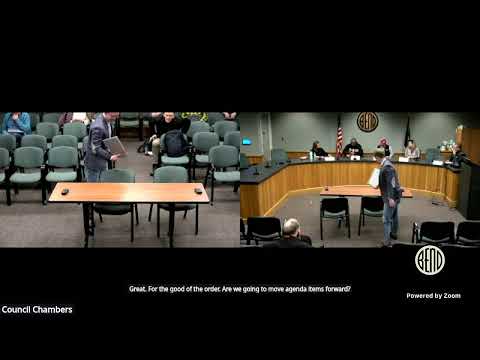
BDAB members discussed the financing trade-offs, the appropriate Burra role and the balance between catalytic incentives and public investment. After discussion BDAB passed a motion recommending that the Bend Urban Renewal Agency establish the TIF areas described by staff for projects that meet the program rules, and a separate motion recommending approval of the Project Platform application for the core area. The motions passed in the meeting; BDAB also asked staff to return in future months with refined policy detail and a feasibility study for potential northern Bend/employment-area needs (staff said an RFP for a feasibility study is planned).
Legal and program context
City attorney staff noted the urban-renewal authority and limits are set by state law (ORS chapter 457). Staff also reviewed the relationship between the multi-unit property tax exemption (MUPTE) program and the proposed TIF-assistance approach: applicants that previously applied for MUPTE would need to rescind that application if they wished to pursue site-specific TIF assistance under the new program.
Next steps and schedule
Staff said they would return with final plan documents, the feasibility study scope for northern Bend/Juniper Ridge employment infrastructure and recommended implementation details for the housing and jobs incentive programs. Staff proposed to seek formal Burra adoption of the investment strategy at the June meeting after additional public outreach and further technical analysis.
Selected direct quote
- "The goal of the plan is to be a short term guiding document for the agency to invest its tax increment," Jonathan Taylor, Urban Renewal Manager.
Reporting note: the dollar and unit figures above are taken from the application summaries and staff's presentation to BDAB; BDAB's approval is a recommendation to the urban-renewal agency and/or council where required by state law.