Get Full Government Meeting Transcripts, Videos, & Alerts Forever!
Get email alerts on the Sovereignty Unesco topic
No spam. Unsubscribe anytime.
Committee hears HB 570 to bar UN/WHO influence in state policy; supporters cite sovereignty, opponents raise legal questions
Summary
Representative John Corbett introduced HB 570, a bill that would codify that the United Nations, the World Health Organization and related international organizations have no authority to implement rules or mandates in Georgia.
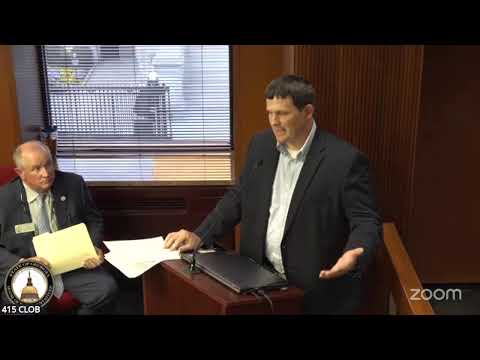
Representative John Corbett presented House Bill 570 to the Subcommittee on Resource Management, describing the measure as codifying that the United Nations, World Health Organization and related international organizations “shall have no jurisdiction or power to implement or enforce any rule, regulation, fee, tax, policy, or mandate in this state.” Corbett said the proposal aims to remove any doubt about Georgia’s sovereignty and to prevent external bodies from influencing state and local policy.
Nut graf: HB 570 would declare that international organizations have no authority to impose rules on Georgia political subdivisions. Supporters characterized the bill as a preventive safeguard against perceived encroachments by UN agencies and UNESCO processes; opponents and some committee members raised questions about federal treaty power, actual mechanisms of influence and whether state law could preempt internationally negotiated treaties or executive agreements.
Supporters described UNESCO and World Heritage processes as potential routes for international influence on land use and property rights. Witnesses on Zoom and in the room cited examples they said show how UNESCO’s World Heritage and related programs can later encourage buffer zones, management input and nonbinding guidance that could affect private property. Alex Newman, a journalist who follows UN institutions, told the committee the UN’s “2030 Agenda” and the “Pact for the Future” are examples of global policy documents that have broad ambitions and may be implemented through national and local programs. Mike Worley of the Georgia Wildlife Federation and other local witnesses framed HB 570 as a precautionary measure to protect state decision‑making.
Opponents and questioners pressed for clarity about legal effect and overlap with federal law. A committee member noted that the U.N. Charter provides that the organization “has no authority to intervene in matters which are within the domestic jurisdiction of any state” and asked how the statute would operate in the event of a U.S. treaty ratification. Witnesses who favor the bill said state codification would strengthen local resistance to any international attempt to influence policy and suggested enforcement mechanisms be added to the draft.
Representative Corbett and other supporters also cited local organizing: several county commissions and local Republican organizations in Southeast Georgia had adopted resolutions opposing UNESCO involvement in the Okefenokee nomination process; supporters asked the legislature to act preemptively.
Ending: The subcommittee heard HB 570 and received a mix of nationalized policy arguments and local concerns about property rights and education standards. Committee members did not vote on the bill at the hearing and requested further legal review and drafting clarification about how state law would interact with federal treaty obligations and administrative practice.
Speakers quoted in this article come from the hearing transcript and include Representative John Corbett (sponsor), Alex Newman (journalist on UN affairs, Zoom), Mike Worley (Georgia Wildlife Federation), and multiple local witnesses who expressed concern about UNESCO and World Heritage processes.