Get Full Government Meeting Transcripts, Videos, & Alerts Forever!
Get email alerts on the Land Use topic
No spam. Unsubscribe anytime.
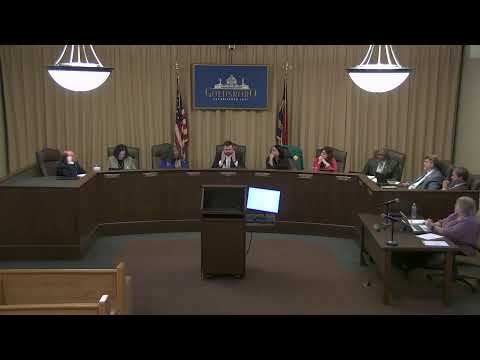
Goldsboro council approves convenience-store expansion with required privacy fence
Summary
The Goldsboro City Council approved Special Use Permit SU 21-24 allowing a convenience store expansion at Bill Lane Boulevard and Arlington Road, conditioning approval on a solid visual barrier fence to screen adjacent properties after public concern about public urination and visibility.
The Goldsboro City Council on March 3 approved Special Use Permit SU 21-24, allowing Yassen Investments Incorporated to expand an existing convenience store at the corner of Bill Lane Boulevard and Arlington Road, subject to a condition that the applicant install a solid visual barrier fence along portions of the site.
Planning Director Mark Helmer told the council the 1.336-acre site is currently zoned neighborhood business and residential agriculture, and that the applicant proposes adding 3,362 square feet to an existing 2,590-square-foot building for storage and expanded retail sales. Helmer said the plan shows adequate parking (30 spaces) but also noted the site lies within the 100-year floodplain and “any new development would be required to be elevated to the City of Goldsboro’s stormwater damage prevention ordinance.”
The council reopened a public hearing that had been continued from Feb. 3 to hear new testimony about on‑site behavior and safety concerns. Resident Glenn Bryan, who spoke in opposition, described continued incidents of people urinating near the site and urged the council to require fencing that would conceal and limit access to the sides and rear of the building: “If he fences it in, that will help control it,” Bryan said.
Helmer recommended approval consistent with the Unified Development Ordinance and the comprehensive land use plan but proposed adding a condition requiring additional screening “in the form of a fence along the public right of way of NC Secondary Road 1915.” He told the council staff could not require public restrooms, because Environmental Health had found soils on site unsuitable for a high-traffic public restroom and the property is served by a septic system. “So, we cannot ... require them to provide a restroom,” Helmer said.
Council discussion focused on balancing visibility for public safety against creating concealed areas that could encourage the behavior residents described. One council member suggested the fence be “secured” so the public could not access the fenced area, which council members said would be enforced as a condition of obtaining a certificate of occupancy.
The council made and passed four required quasi-judicial findings, each by voice/hand vote, and approved SU 21-24 with the added fencing condition and a requirement for technical review by city engineering and building inspections. The motions passed unanimously.
The council noted additional procedural steps: the decision is subject to a full technical review (engineering, building inspections) and the applicant must satisfy the fencing condition before a certificate of occupancy will be issued. Helmer also noted that because the property uses septic service and is a satellite annexation, some on-site infrastructure (public restroom) was not feasible under current conditions.
The approval advances the applicant’s expansion plans but ties final implementation to permit and inspection processes and the installation of the required visual barrier fence. The council did not require public restrooms and explicitly stated staff cannot legally force a public restroom on a septic-served site based on the health department’s soil assessment.
Votes at a glance: SU 21-24 (Yassen Investments Incorporated) — approved, condition requiring installation of a solid visual barrier fence; technical review and permitting required before occupancy.
What’s next: The applicant must submit final construction documents and satisfy the technical review and the fencing condition before receiving a certificate of occupancy. The planning staff will incorporate the fencing requirement into finding of fact #2 as part of the permit record.