Get Full Government Meeting Transcripts, Videos, & Alerts Forever!
Get email alerts on the Workforce Development topic
No spam. Unsubscribe anytime.
Council committee forwards workforce development strategic plan to full council
Summary
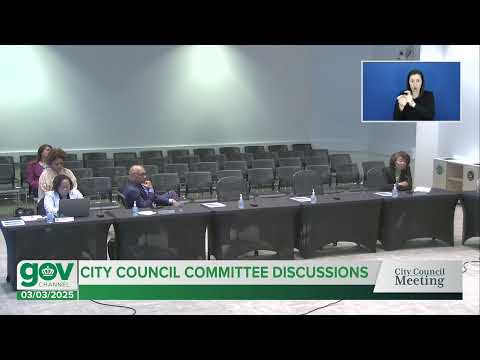
The Jobs and Economic Development Committee unanimously adopted a draft workforce development strategic plan and forwarded it to the full Charlotte City Council for a March 24 vote, committee chair Mr. Graham said.
The Jobs and Economic Development Committee unanimously adopted a draft workforce development strategic plan and forwarded it to the full Charlotte City Council for a March 24 vote, committee chair Mr. Graham said.
The plan, presented by Danielle Frazier of the Office of Workforce Development, sets three primary focus areas: career pathway access and awareness; skill development and credential attainment; and job placement and career advancement. "If we do this right, this plan will support increasing economic and upward mobility for our Charlotte residents," Frazier said during the committee presentation.
Committee members and staff framed the document as a city-level, evidence-driven framework rather than a turnkey operating program. Key immediate actions described in the plan include deploying community career navigators in corridors of opportunity, leveraging online tools for career navigation, mapping local training providers and expanding earn-and-learn programs such as apprenticeships and on-the-job training. Frazier told council that the city has already deployed about $4,500,000 in workforce development funding tied to earlier council approvals and that several ARPA-funded programs will run through April 2026.
Council members asked for more operational specificity before full council consideration. Councilmember LaJuana Mayfield asked for six-month timelines and enrollment tracking for programs the plan would rely on, noting one program (Road to Hire) had 36 participants against a 152-person goal over 10 months. "It will be helpful if we can get some of these timelines, like 6 months, to make sure that we're on track," Mayfield said.
Councilmember Sejmira raised language-access concerns and suggested partnerships with organizations serving immigrants and refugees, including the Latin American Coalition and local refugee support services; Frazier said deployment of navigators and hub-focused services is intended to connect with such community organizations. Councilmember Watlington urged the plan to be more sharply targeted: "What fundamentally is the gap in terms of our employment rate and for whom and what are the jobs in our community that we struggle to fill?" she asked, pressing for clearer target populations and industry priorities.
Committee members asked that the plan include measurable performance metrics and funding pathways beyond ARPA. Several speakers noted the committee recommended follow-up work on measurement and a clearer line item for sustaining an Office of Workforce Development position and programs in the city budget once ARPA funding expires. City staff and Frazier said the plan’s appendix includes current ARPA-funded program performance and that the office intends to produce a dashboard for council access.
The committee vote was recorded as unanimous; no individual mover or seconder was identified in the transcript. The committee’s recommendation includes a caveat that staff will return with refined metrics and additional implementation detail before full council action.
The council will consider the plan at its March 24 business meeting; staff said implementation steps could begin in April if the plan is accepted.
The plan and committee discussion emphasized coordination with other city efforts such as housing, transportation and economic inclusion programs, and with external partners including training providers and private employers. Frazier said the office hopes the plan will help match residents to jobs in growing local industries and better track outcomes over time.
Looking ahead, staff said the workforce office will continue monitoring ARPA-funded programs (many newly launched) and work with council to refine KPIs and budget implications for sustaining proven programs beyond the ARPA runway.