Get Full Government Meeting Transcripts, Videos, & Alerts Forever!
Get email alerts on the Rv Campground Regulation topic
No spam. Unsubscribe anytime.
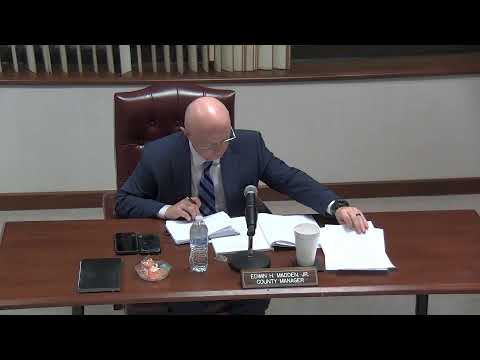
Columbus County delays decision on RV and travel-trailer rules after extensive public comment
Summary
After more than an hour of public comment on unregulated campers, Columbus County commissioners voted to table consideration of a proposed ordinance on RVs and travel trailers so staff can clarify enforcement, grandfathering and storm-safety questions.
At a Columbus County Board of Commissioners meeting, county staff and dozens of residents took part in a public hearing on proposed rules for campers, travel trailers and RVs; commissioners voted to table the item for further review.
The hearing drew sustained public comment from residents who said unregulated RVs and camper sites are occurring on private property and in informal clusters across the county, raising concerns about privacy, traffic, road maintenance, trash, septic problems and storm safety.
The issue matters because the county is considering an ordinance to distinguish certified campgrounds (which go through a special-use process) from standalone campers and RVs placed on private property. Residents argued the ordinance could affect low-income households and long-term RV residents, while county staff and commissioners said they need clearer enforcement guidance and time to consider grandfathering and safety exceptions.
Multiple speakers described specific local impacts. An unnamed resident who said she lives on River Road in Tabor City told commissioners that a nearby parcel recently developed with multiple RV sites had eroded her privacy, increased traffic and made privately maintained, century-old roads harder to keep up. She said some campers appear to be occupied “on a permanent basis,” and that she had erected a privacy fence and gated her driveway because of visitors to the campground office.
William Sibbett, who identified himself as the primary caregiver for a handicapped adult living in a camper on his six-acre parcel, asked the board to grandfather existing situations so long-term residents would not be displaced. Michael Walker, who lives on Craig Powell Road and also has property on River Road, described multiple mobile homes and campers clustered on one parcel with porches and mailboxes, and said the site appears to operate as rental housing with frequent visitors.
A speaker identifying herself only as a full-time RVer said many full-time RV users maintain a permanent home base and argued landowners should be able to keep a camper on their private property for extended stays. Another commenter urged the board to avoid forcing residents from homes they can afford.
County planning and building staff described how regulation currently works: certified campgrounds must obtain a special-use permit that goes before the planning board and the board of adjustments and are operated and enforced by the campground owner. A Columbus County Building Inspections representative said temporary electrical permits issued for travel trailers are limited by state guidelines to 180 days and that building inspections is the enforcing body for those temporary permits. The representative said: "They are only good for a hundred and 80 days," and added that building inspections has authority but limited staffing to monitor ongoing compliance.
Staff also explained technical distinctions raised by commenters: park-model units built to home specifications are allowed where codes for homes apply and can be tied down; conventional travel trailers, fifth-wheels and RVs are expected to remain road-ready and are not built to the same wind-zone standards as permanent homes. Staff noted Columbus County lies in a high wind zone and that older mobile homes and many existing units may not meet modern wind ratings.
Planning staff emphasized that the county’s proposed ordinance is focused on standalone campers and RVs that have appeared outside certified campgrounds, not on established commercial campgrounds. They said campground owners are responsible for moving units ahead of storms and for site safety under their special-use permits.
After extended public comment and follow-up questions from commissioners about enforcement, storm risk, and whether current residents would be grandfathered, the board voted to table item 8 — the planning board approval of an ordinance regarding RV campers and travel trailers — to the next meeting to allow staff to prepare clarifications on enforcement, grandfathering and safety standards. The motion to table was put to a vote and carried.
The board's action leaves the ordinance under review and signals that commissioners want more information on how enforcement would be handled, how the county would treat long-term residents on fixed incomes, and what exceptions — if any — would apply for caretaking or medical situations.
Staff and residents said they expect the issue to return to a future meeting with additional details about enforcement responsibilities, any proposed grandfathering language and the precise text of the ordinance.