Get Full Government Meeting Transcripts, Videos, & Alerts Forever!
Get email alerts on the Disaster Recovery topic
No spam. Unsubscribe anytime.
Avery County recovery officials report housing progress, warn waterways debris removal will be slow
Summary
County long-term recovery staff reported progress on housing for storm-affected families and outlined limitations and delays in waterway debris removal that are slowing the recovery effort.
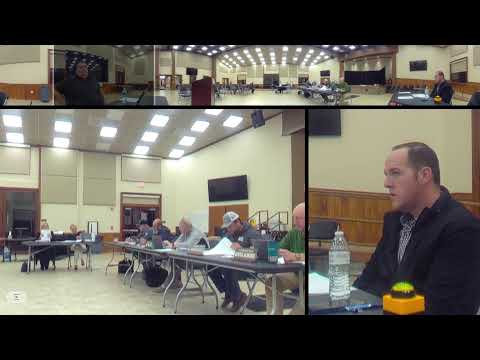
Charles Stennis, speaking for Avery County Long-Term Recovery, told the Board of Commissioners on March 3 that 180 families remain on the county’s recovery list and that nearly 50 households have had work completed.
"We've got 180 families on the list. We've got almost 50 of those…with their projects completed," Stennis said, adding that volunteers and service groups were preparing to start multiple rebuilds in the coming weeks.
The update said several projects are moving into construction: Appalachia Service Project has three homes in the pipeline, two modular homes and one stick-built home are expected to be under way, and about 10 families are scheduled to get new homes starting within two to three weeks.
The county’s recovery staff said case managers continue daily contact with survivors. Stennis described ongoing volunteer deployments, naming groups from Pennsylvania and other out-of-state volunteers who will work on repairs and rebuilds in county neighborhoods.
County staff also described continuing work to sign up homeowners for private-property debris removal. The county held registration events in recent weeks and reported signing up 73 households at one set of events; staff said additional sign-up events were scheduled in Van (Van Rount) Town Hall, Oldridge Mountain and Crossnore with information on required documents for eligibility.
Officials warned that removing debris lodged in waterways is a lengthier, federally regulated process that prevents crews from simply clearing river channels on demand. Staff said each waterway requires documentation — photographs and GPS coordinates — and prior FEMA approval, followed by review from the Environmental and Historic Preservation office before removal can begin. Staff reported the initial packet sent to FEMA comprised about 245 pages and that contractors must move between approved segments as FEMA and EHP give authorizations.
"You have to get prior approval before you can remove anything in the waterways," staff said. "Each one of the waterways has to be done like this."
Staff also said rights-of-entry from adjacent property owners are required before some removals can proceed. The county is awaiting approvals for extension requests that would allow contractors to return to previously identified sites.
Officials urged residents who need help to use the disaster recovery center at "Neyland Community College at the Avery campus" and to apply before individual assistance deadlines: staff said new applications for individual assistance are scheduled to close March 8. The county said it is asking federal/state partners to keep the disaster recovery center open beyond a March 14 closure date to accommodate ongoing appeals and residents without internet access.
Why it matters: The update consolidates the county’s housing-recovery milestones and explains why significant debris — especially in waterways — will remain a multi-step process dependent on federal approvals. The county said repairs and new home starts will accelerate recovery for families but that bureaucratic approvals and required documentation produce unavoidable delays.
Looking ahead, staff said more volunteer groups will be active this spring and summer and that case managers remain the primary contact for households on the long-term recovery list.