Get Full Government Meeting Transcripts, Videos, & Alerts Forever!
Get email alerts on the Permitting topic
No spam. Unsubscribe anytime.
Idaho Falls unveils new permitting flow, weekly predevelopment block and online guides to speed reviews
Summary
City staff from Community Development Services, building, fire and public works outlined a package of changes — flowcharts, web guides, standardized predevelopment meetings, updated checklists and an internal project-manager gate — aimed at reducing permit review times and inspection delays.
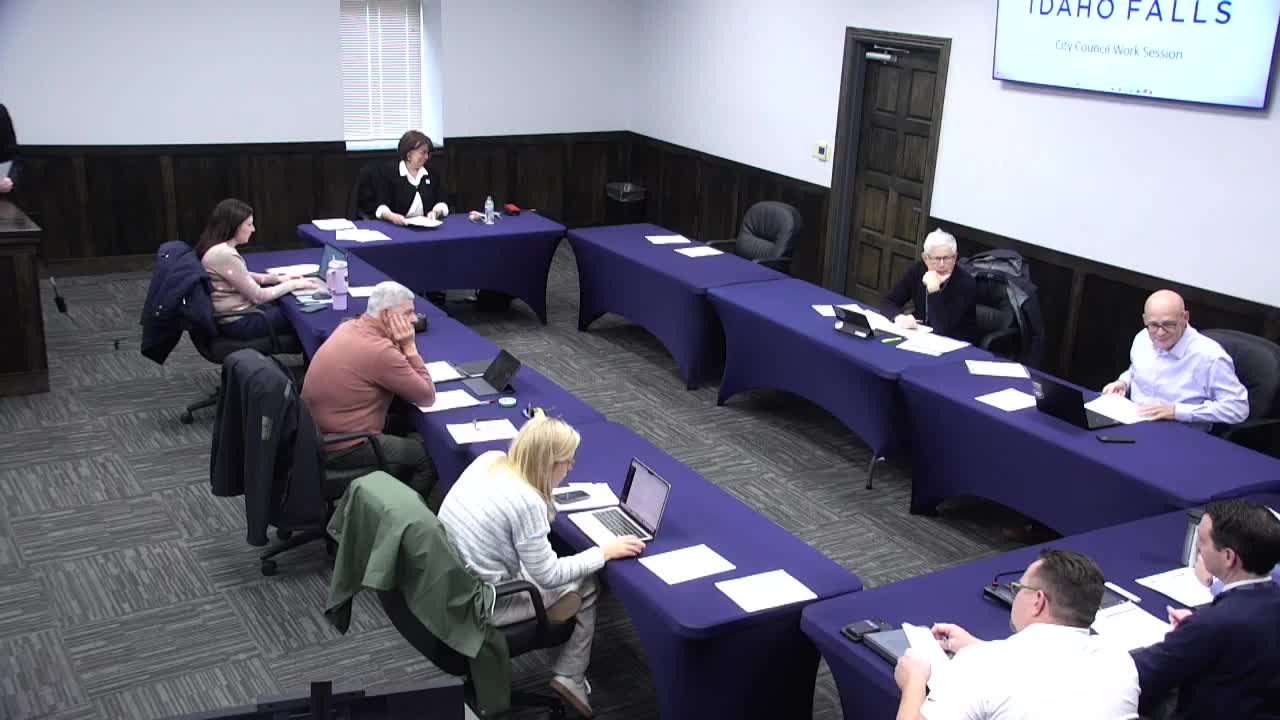
City staff presented a multi-department plan to speed building and development reviews at a City Council work session, detailing new timelines, standardized checklists, weekly predevelopment meetings and a reworked inspection workflow.
City officials said the effort, driven by Community Development Services (CDS), the building division, fire and public works, aims to make the development process more predictable and to reduce bottlenecks so approved projects can move to construction faster. "The goal of this work is to create that customer friendly environment," said Margaret, the mayor's chief of staff, describing the administration's objectives.
The changes staff described include a public-facing flowchart and a revamped web page explaining major application types (annexation, plats, site plans and building permits), expected timelines and contacts. CDS staff said they already have a detailed internal checklist for each application type and plan to publish user-friendly guides and short explanatory videos on the city website.
Predevelopment meetings: staff said they standardized predevelopment meetings by creating a recurring block on Thursday afternoons in which key departments attend in person (with remote option available for out-of-town applicants). Project submittals are distributed to the “development team” a week in advance, and staff send a written summary — the predevelopment checklist and contact list — to applicants within a week of the meeting. CDS reported it has run 12 predevelopment meetings since January 1 and that the typical appointment slot is 45 minutes; applicants may request longer meetings.
Review and coordination changes: staff described a monthly plat coordination meeting and a policy to "circle the wagons" when projects reach a fourth review, to prevent repeated back-and-forth on unresolved or major issues. CDS said that in 2024 four projects reached a fourth review and only one required more than six reviews; those cases will trigger a coordination meeting earlier in the cycle going forward.
Building division overhaul: staff explained a reorganization that moves from a single chief building official handling review and inspections to a gatekeeper/project-manager model. Permit clerks do an initial completeness review within about 24 hours, projects are assigned to one of two project managers (residential versus commercial/multi-family), and a chief building inspector now can reassign or perform inspections to reduce reinspection delays. Staff said simple permits can be completed in days while more complex projects may take weeks.
Inspections and cross‑department coordination: building, fire and public works said they now meet together more frequently (building and fire staff meet every other week) to coordinate life‑safety and infrastructure reviews. Staff described an example in which closer coordination allowed a business (the Cat & Fiddle) to open while finishing a minor outstanding item under a 45‑day grace arrangement.
Council questions and follow up: councilors asked about power department participation (staff said power attends and has backups), metrics of success (staff offered to return with numbers and noted they can report progress), and how the city handles projects that become financially unviable (staff said the city presents realistic timelines and constraints during predevelopment but does not assume developers' business risk). Councilor Perez asked staff to track interaction timelines on projects that had late problems so the council can see where earlier interventions would help.
What's next: staff said the flowcharts, checklists and web pages are being finalized with the city public information officer and will be posted online. CDS offered to return to council with performance numbers and to continue monthly internal coordination to identify recurring bottlenecks.