Get Full Government Meeting Transcripts, Videos, & Alerts Forever!
Get email alerts on the Fire Inspections topic
No spam. Unsubscribe anytime.
Council advances fire-inspection ordinance that adds daily fines, liens for unpaid fees and routes appeals to council
Summary
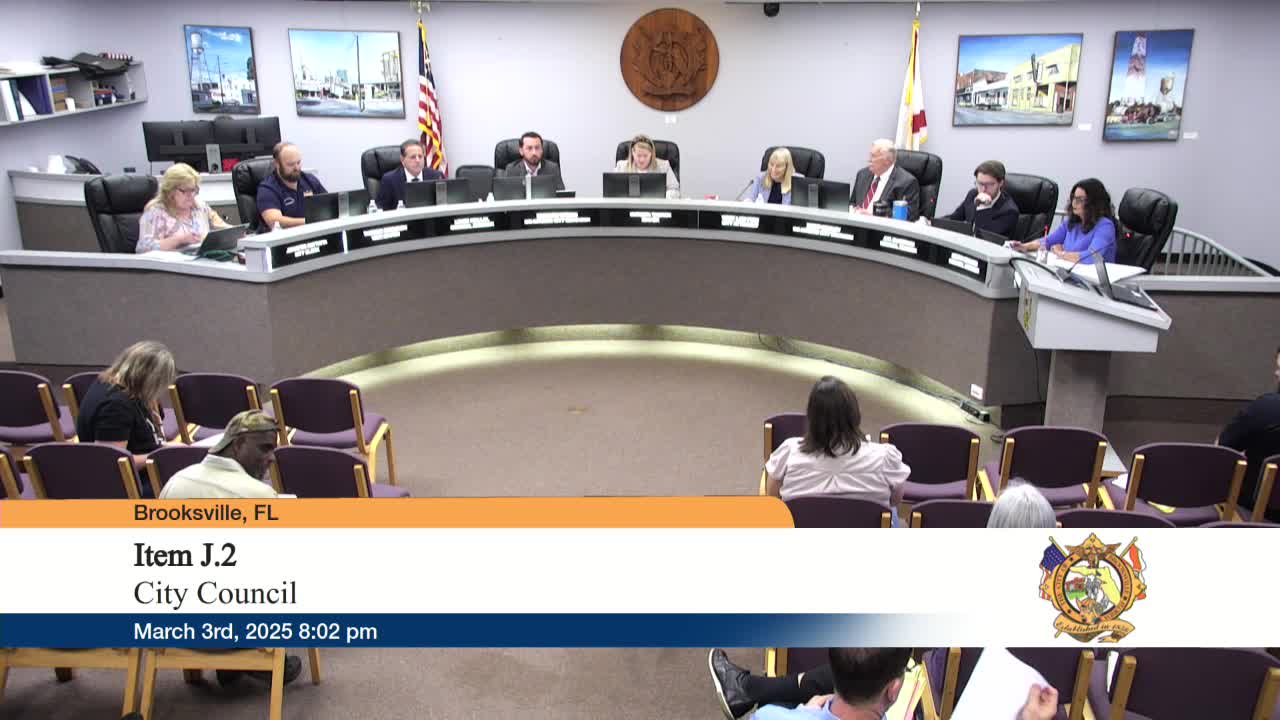
The City Council on March 3 gave first-reading approval to Ordinance 993, strengthening the fire prevention inspection code by creating a daily-fine structure for unpaid inspections, authorizing liens and special-magistrate adjudication, and routing appeals to the city council.
The City Council on March 3 gave first reading approval to Ordinance 993, a proposed amendment to the City of Brooksville fire code that would require property access for inspections, increase fines for fire-code violations and create a mechanism to collect unpaid inspection fees.
Interim Fire Chief Andrew Pepe, introduced at the meeting, described the change as a necessary enforcement tool after finding multiple businesses that had not paid inspection fees. "I've had 1 person actually physically, told me he was going to strike me," Pepe said, adding the outstanding unpaid inspection fees totaled $14,189.77. Pepe said the fees offset prevention-division costs and that maintaining inspections helps the city's ISO rating, which affects insurance premiums; he said Brooksville is currently ISO 3 and the department is pursuing improvements toward ISO 2.
Under the version presented on March 3, unpaid inspection fees would trigger a $25-per-day fine beginning 30 days after billing. If fines reached $250, the city could take nonpayment to the special magistrate for adjudication and the magistrate could authorize a running lien recorded against the property until unpaid amounts are satisfied. The ordinance also adds an appeal procedure.
Councilmember McKeithen moved and the council agreed to a change in the ordinance language so that appeals of fines would be heard by the city council rather than by the city manager. Councilmembers cited the need for transparency and for the affected business to have a public appellate forum. After that amendment the council passed first reading 5-0; the second reading was set for March 17.
City staff said the ordinance aims to incentivize compliance and recover inspection program costs. Staff also said that past practice left the city with limited enforcement options: unpaid inspection fees produced no automatic penalties under the existing code, distinguishing them from utilities charges that can be shut off. The ordinance establishes a clear enforcement path, including monetary penalties, special-magistrate adjudication and liens, while preserving an appeal opportunity before elected officials.
The measure passed first reading on March 3; councilmembers agreed to the amended appeal language sending appeals to the city council. The ordinance will return for a second reading on March 17.