Lifetime Citizen Portal Access — AI Briefings, Alerts & Unlimited Follows
Brooksville resident reports very low water pressure in Southern Hills; utilities staff to test replacement RPZ valve
Loading...
Summary
A Southern Hills resident told the City Council March 3 that neighborhood homes are experiencing water pressure far below industry standards. Utilities staff said they ran tests and will trial a different reduced-pressure zone (RPZ) valve within one to two weeks and continue follow-up.
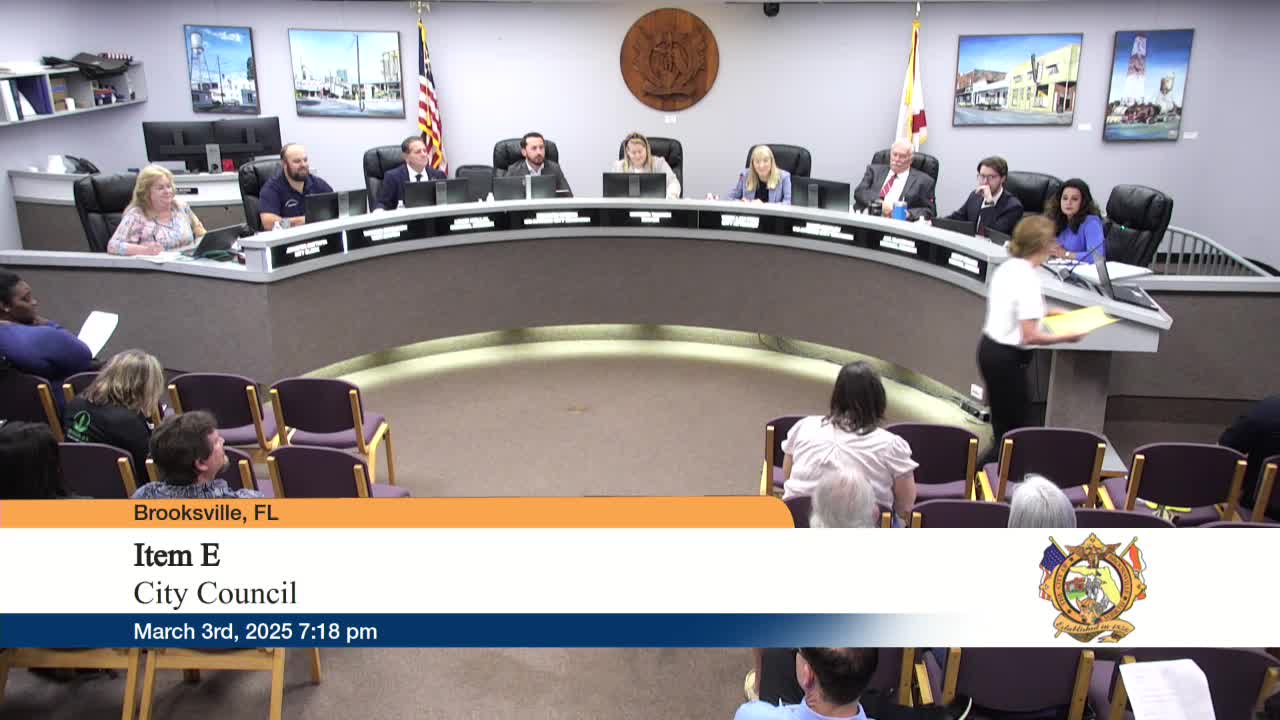
A Brooksville resident told the City Council on March 3 that several homes in the Southern Hills neighborhood are getting far less water pressure than industry standards, causing appliances to underperform and raising concerns as new homes come online.
Sam Anderson, who identified herself as a resident of Evening Ray Drive, told the council she measured household pressure “between 30 and 33 pounds of pressure,” and that the industry standard is “60 to 80 PSI.” She added that pressure at a backflow valve measured “4 pounds of pressure,” and said the low flows prevented normal laundry and dishwashing. Anderson asked the city to hire an outside engineer she had contacted to reprogram or repair the local booster pump, which she said could cost roughly $500–$600.
City utilities staff brought test results to the meeting and described follow-up steps. David Kingsbury, the city’s utilities operations manager, said staff had run a PSI test on a house while multiple spigots were open and “we maintain 43 PSI,” and acknowledged that homeowners are unlikely to see 60 PSI at many locations. Kingsbury said the city had identified pressure drop across the RPZ device in the neighborhood: “we're finding out that they have a big drop, 10 to 15 PSI, across the RPZ.” He told the council the department plans to order and try a different RPZ brand (a Watts model) and expects to test it “within the next week or two” on one site. If the test shows improvement staff said they will pursue broader replacement.
Kingsbury also raised a separate but related installation issue he and others have observed: some builders or plumbers reduce service lines after the point the city provides water, sometimes to half-inch piping. “There's no way a half inch water line is going to adequately feed your house,” he said, noting that undersized private plumbing can magnify pressure problems at the meter and fixtures.
Council members and staff framed the discussion as operational follow-up rather than a formal policy decision. No ordinance or vote was required; staff said they will order a test RPZ, report results to utilities leadership, and return to council if a larger change in equipment or funding is required. Kingsbury estimated the initial trial could happen within one to two weeks and said staff would pursue a brand that produced less pressure drop across the reduced-pressure device if the test is successful.
The council also asked staff to continue troubleshooting and to provide timelines and options for repair or capital work if required. The matter was recorded during the citizens input and staff response portion of the March 3 meeting.