Get Full Government Meeting Transcripts, Videos, & Alerts Forever!
Get email alerts on the Charter Review topic
No spam. Unsubscribe anytime.
Rockwall charter review panel recommends term-limit tweak, longer petition and claim windows; keeps plurality vote and at-large council
Summary
The Rockwall Charter Review Commission presented a package of proposed charter changes to the City Council on March 3, 2025, recommending voters be asked to approve several items — including a total five‑term limit across offices and longer windows for petition certification and notice of claim — while advising the city retain plurality elections and at‑large council seats.
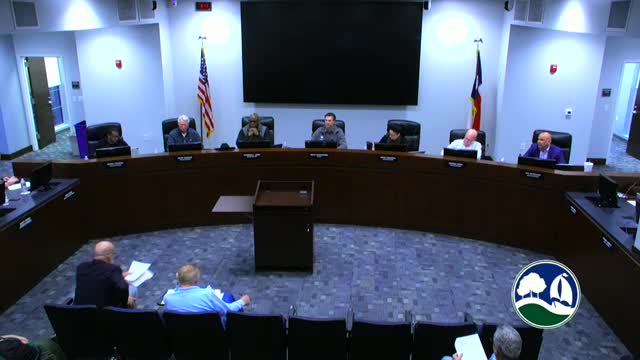
The Rockwall Charter Review Commission on March 3 presented its report and recommendations to the City Council, including several proposed charter changes the commission said should be placed before voters.
The commission recommended retaining the city's current plurality voting rule and keeping at‑large council seats instead of moving to majority runoffs or single‑member districts. The commission recommended substantive changes that would be presented as ballot propositions, including: allowing elected officials to serve a total of five consecutive terms across council and mayoral positions (while retaining a three‑term limit in a single office), extending the city secretary's petition certification window from 21 days to 30 calendar days, extending the time to file a notice of claim against the city from 60 days to 180 days, and giving the City Council authority, by ordinance, to make non‑substantive technical updates to the charter.
Why it matters: the changes would alter how residents can initiate and validate petitions, how long injured parties have to notify the city of claims, and how long elected officials can remain in office in combinations of roles. Several items would require voter approval on future ballots; others the commission characterized as technical updates.
The commission, which met three times between Dec. 5, 2024, and Feb. 6, 2025, reported unanimous votes within the commission on the recommendations it forwarded. Chair Fowler introduced the panel's work and thanked council for the appointment; Frank, identified by the council as the city attorney's presenter for the commission, walked through each recommended change and the commission's reasons.
On voting method, Frank said the commission —did not recommend a change— from plurality to majority runoff voting, citing the low historical frequency of multi‑candidate races that would trigger a runoff and the cost of conducting runoff elections. Chair Fowler elaborated on the deliberations, saying, "Really, what drove that final decision was just when he looked at the historical data of the amount of times that it occurred, it just wasn't very much." Council members who spoke at the meeting voiced differing views but accepted the commission's role in forwarding recommendations to the council.
On term limits, the commission recommended modifying Article 3, Section 301 to allow a person to serve three consecutive terms in one position and up to two additional consecutive terms in another position, producing a five‑term consecutive maximum across offices. Frank summarized the recommendation: the commission is "recommending that you still limit to 3 consecutive terms, but to make it 5 total."
On petitions and claims, the commission recommended increasing the time the city secretary has to certify petition signatures from 21 days to 30 days; commissioners said the 21‑day window has grown difficult to meet as Rockwall's population has increased. The commission also suggested changing the charter's notice‑of‑claim period from 60 days to 180 days, citing case law and court rulings that have found 60 days insufficient for claimants.
The commission also proposed an ordinance mechanism for the council to make non‑substantive technical amendments to the charter (typographical fixes, gender‑neutral language updates, corrections to code citations) so such edits would not require a separate charter election.
Council discussion: several council members thanked the commission for the work and asked for follow‑up research on some items. One council member asked whether other similarly sized cities use majority voting; Frank said state law does not require majority runoffs and pointed to cost and rarity of runoffs as reasons the commission recommended no change. Councilmember Campbell asked about election cost estimates; staff later said a May election is currently estimated at $80,000 total depending on which jurisdictions participate.
Next steps: Councilmembers and staff said they would return with proposed ordinance language and ballot propositions for council review. Frank and Chair Fowler told council they were available for follow‑up questions and that the commission's recommendations would be brought back to the council for formal scheduling and potential placement on the ballot.
Ending: The council did not take a formal vote on the commission's package at the March 3 meeting; members discussed timing, possible ballot placement and the need for additional outreach and ordinance drafting ahead of any election.