Get Full Government Meeting Transcripts, Videos, & Alerts Forever!
Get email alerts on the Landscaping topic
No spam. Unsubscribe anytime.
Planning Commission backs removing large agricultural buffer, trims landscape bond and raises small-project fee
Summary
Planning staff introduced amendments to Title 18 landscaping rules that would remove a 150-foot designated agricultural buffer, shorten the landscape maintenance bond from three years to one, and raise the small-project bond threshold from $5,000 to $7,000; the commission moved to recommend approval and to pursue the removal alternative.
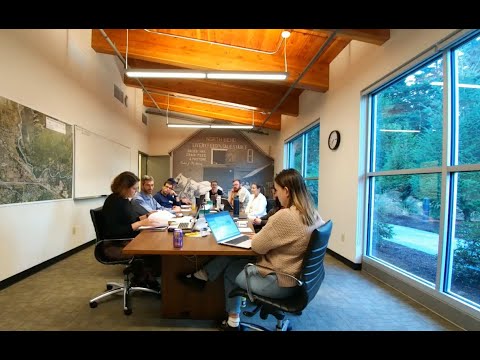
The North Bend Planning Commission on June 18 heard staff proposals to amend the city’s landscaping regulations in Title 18 and moved to recommend approval of the revisions, including a staff-preferred alternative that would remove an existing 150-foot designated agricultural buffer.
Planning intern Chase Rick, who led the staff presentation, said the package "remedies code that may no longer be necessary, solves existing language conflicts, promotes sustainable landscaping methods, and simplifies the city's landscape maintenance assurance device." The draft changes also would shorten the landscape maintenance bond period from three years to one year and raise the small-project bond threshold from $5,000 to $7,000.
Why it matters: The amendments affect how future development abutting designated agricultural land and city trails will be buffered, how long developers must guarantee new landscaping, and which projects require a maintenance bond. City staff framed the changes as a cleanup that aligns the code with current practice and with the 2024 comprehensive plan references.
Details of the proposal
Staff presented two alternatives for the section that establishes a large buffer adjacent to designated agricultural lands and the Snoqualmie Valley Trail corridor. Under Alternative 1 — the staff recommendation — the specific “150-foot” designated-agricultural buffer would be removed from Title 18 because other existing features (a 100-foot trail corridor plus utility easements and an existing floodway) already create a wide separation in much of the mapped area. Staff said some parcels are effectively constrained by power-line easements and floodway limits, reducing the practical effect of the extra buffer.
Scott (planning staff) summarized the trade-offs, noting that the Washington "right of farm laws ... mean that you can't bring nuisance claims against existing agriculture," and that single-family or multifamily housing adjacent to farms typically does not produce the same kind of impacts (heavy industrial light/noise) that would require additional protective buffers.
Bond and fee changes
Staff explained that the maintenance bond exists to ensure new plantings are installed correctly and to allow the city to require corrective work for installation defects. The proposed change shortens the maintenance-bond period from three years to one, on the rationale that one year covers construction and initial establishment defects while three years drifts into routine long-term maintenance that the city should not manage. Staff also proposed raising the project threshold that triggers a bond from $5,000 to $7,000, which staff said would reduce the number of small projects requiring bonds and save administrative time.
Other edits
The amendments would resolve an inconsistency in language about fence heights in setbacks (one section set a 3.5-foot limit; another allowed 6 feet). The proposal would harmonize that standard to remove the conflict, add a graphic to clarify setback measurements, encourage sustainable landscaping practices (including native, drought-resistant species and rain barrels), clarify irrigation requirements, and update cross-references to figures and zones to match the 2024 comprehensive plan.
Public comment and property-specific context
No members of the public spoke at the hearing; staff noted a written comment from a nearby property owner, identified in the packet as Mr. Stringfellow, and showed the parcel in relation to the trail corridor and utility easements to illustrate how the existing site conditions interact with the code’s buffer requirement.
Commission action and next steps
A commissioner moved that the commission recommend approval of the Title 18 landscape regulation amendments and to pursue Alternative 1 (removal of the 150-foot designated-agricultural buffer). The motion was entered on the record; the transcript does not include a roll-call vote tally. Staff indicated the commission’s recommendation will be forwarded to city council for further review.
What the record shows
- Proposed changes: remove or reduce the 150-foot agricultural buffer; reduce landscape maintenance bond period from 3 years to 1 year; raise small-project bond threshold from $5,000 to $7,000; harmonize fence-height language; add sustainable-landscaping language; correct Title 18 cross-references to the 2024 comprehensive plan. - Public comments: none in person or online during the public hearing. Staff referenced a written comment from a property owner.
The commission and staff said they will forward the recommended amendments to city council for additional review and potential adoption.