Get Full Government Meeting Transcripts, Videos, & Alerts Forever!
Get email alerts on the Community Care And Addiction Recovery topic
No spam. Unsubscribe anytime.
Covington council hears annual Community Care update; graduate credits program with recovery and housing support
Summary
The City of Covington’s Community Care Program presented an annual, qualitative update at the Sept. 23 council meeting. A program graduate described outreach, detox and supportive housing that he said helped him achieve sobriety; staff described a seven-step ‘graduated rehousing’ model and partnerships with the Recovery Navigator program.
The City of Covington received an annual update on its Community Care Program on Sept. 23, during which a program graduate credited city-funded outreach, detox referrals and supportive housing with helping him rebuild his life.
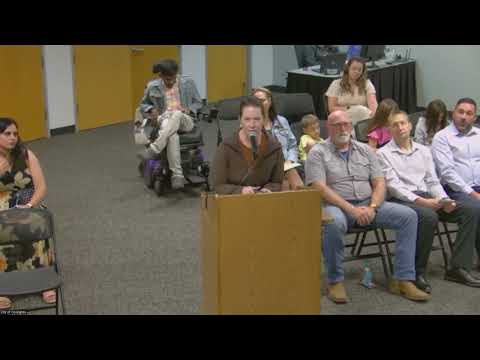
Darren Patterson, identified in the meeting as the city’s Community Care Specialist, introduced the update and a program graduate who described his pathway out of homelessness and addiction. “None of this would have been possible without the program that you support,” the graduate said. “Your sponsorship didn't just give me a second chance. It gave me a future.”
The council heard that the Community Care Program is organized around a seven-step “graduated rehousing” model staff described as a gradual, structured process from outreach through community reintegration. Patterson and other staff outlined the steps as: (1) community contact/outreach, (2) stabilization/direct aid, (3) case management referral, (4) detox/intensive intervention when needed, (5) supportive housing, (6) recovery skill building and (7) community reintegration.
Staff said the program partners with the Recovery Navigator program, which is activated by referrals from law enforcement and supports people after immediate crises. Ryan Paciano, representing the Recovery Navigator program, described it as a continuing resource for people referred by first responders and said the program expanded regionally from about 11 to nearly 50 partner agencies since 2023. He said Recovery Navigator staffing currently operates roughly 08:30 a.m. to 7:00 p.m., with the program staying late when first responders make evening referrals.
Steven Kidd, introduced as a peer and case manager for the program’s supportive housing partner, said the city-funded supportive housing typically funds placements for up to three months and that extensions are evaluated case by case to determine the best next step. Staff estimated that about 90% of persons referred qualify for the program and emphasized that the team tries to move participants through stabilization, skills building and into employment or longer-term housing when possible.
Council members asked about program outcomes and capacity; staff said they track referrals, outreach contacts and intake through their case management partners and that the program uses a mix of city direct-aid funds, contracts and partner-provided services to operate. Staff also described outreach events (library visits, Kids Fest and senior-focused activities) and upcoming senior outreach scheduled for Oct. 29 at the Covington Place.
Why it matters: council and staff framed the Community Care Program as a local, coordinated response connecting outreach, first-responder referrals and short-term supportive housing. Council members and staff said the program aims to keep people safer while they stabilize, and the Recovery Navigator partnership provides continuing case management after a crisis.
The council offered praise for staff and for the graduate who spoke; no formal action or new funding was taken at the meeting. Staff said they will continue outreach and coordination with Recovery Navigator and partner housing providers.
Additional details drawn from the meeting: - Referral pathway: law-enforcement referral to Recovery Navigator, then community care team and case manager/housing partner intake. - Supportive housing funding: city funds placements up to three months; extensions considered case-by-case. - Recovery Navigator hours: generally 8:30 a.m.–7:00 p.m.; staff will stay later when referrals occur near closing. - Qualification rate: staff stated roughly 90% of referrals qualify for immediate program services. - Outreach: weekly outreach sweeps, library and community events; upcoming senior-focused Halloween outreach Oct. 29.
Ending note: Council members commended staff and the graduate for the reported outcomes and encouraged continued outreach and interagency coordination to connect people to housing and recovery services.