Get Full Government Meeting Transcripts, Videos, & Alerts Forever!
Get email alerts on the City Budget Fees topic
No spam. Unsubscribe anytime.
Budget workshop: council to keep military millage, discusses fire assessment, buyer-fee exemptions and electronic billing options
Summary
Budget staff recommended maintaining the current 2.99-mill military tax rate and briefed the council on fire-assessment and buyer-assessment fee mechanics and potential administrative exemptions for city parcels; staff also opened discussion on an electronic-billing incentive to reduce mailing costs.
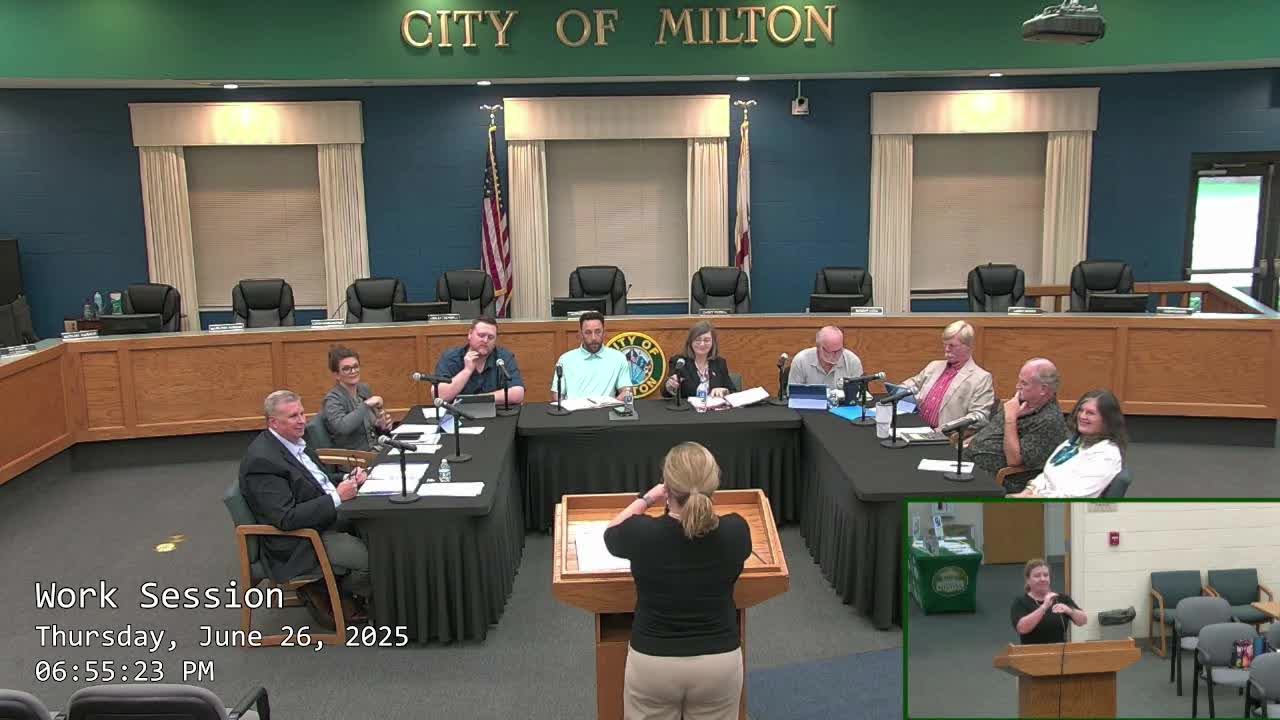
City budget staff updated the Milton City Council on several budget-related items during the work session, recommending the city maintain the current military millage rate, explaining proposed adjustments to the fire-assessment and buyer-assessment fees, and opening discussion about electronic utility billing incentives.
Budget director Laura McDill told the council preliminary property valuations show a roughly 7% increase in taxable values compared with the prior year and that maintaining a 2.99-mill military tax rate would yield roughly $200,000 additional revenue compared with last year (the staff figure cited in the meeting). McDill recommended retaining the current millage rate for the upcoming budget process.
The council also discussed the annual fire-assessment and the buyer-assessment fee process. Staff said the buyer-assessment is invoiced on a per-parcel basis and that the county property-appraiser collection fee (about 2%) incurred on collections is roughly $98.10 in one example; more importantly, the city processes more than 100 city-owned parcels through the invoicing system and staff said administering those internal invoices consumes more than a week of staff time. Staff proposed exempting city-owned parcels from the buyer-assessment invoicing to save administrative time, but noted that removing parcels from the assessment pool would slightly raise the per-parcel fee for other property owners (staff provided a preliminary estimate that the per-parcel fee would increase from $45.31 to $46.43 in the current example if city parcels were exempted).
Councilmembers also discussed utility-billing practices. Staff said approximately 10,000 bills are mailed monthly and described two policy approaches: (1) encourage customers to opt in to electronic billing with a small discount, or (2) charge a paper-billing fee to those who continue to receive mailed statements. Council members favored offering a discount for customers who opt into electronic billing and discussed the existing $2.99 convenience fee charged when customers pay by credit card; some members suggested waiving or offsetting that convenience fee for electronic-bill customers. Staff noted that some residents lack internet access and that mailed notices sometimes carry additional city information, so any policy should preserve paper options for residents who need them.
Staff said they will include the recommended $15,000 estuary program contribution in the proposed budget and will bring the buyer-assessment resolution and related fee language back for council consideration; the council did not take immediate votes on the matters discussed in the workshop.