Get Full Government Meeting Transcripts, Videos, & Alerts Forever!
Get email alerts on the Quasi Judicial Procedures topic
No spam. Unsubscribe anytime.
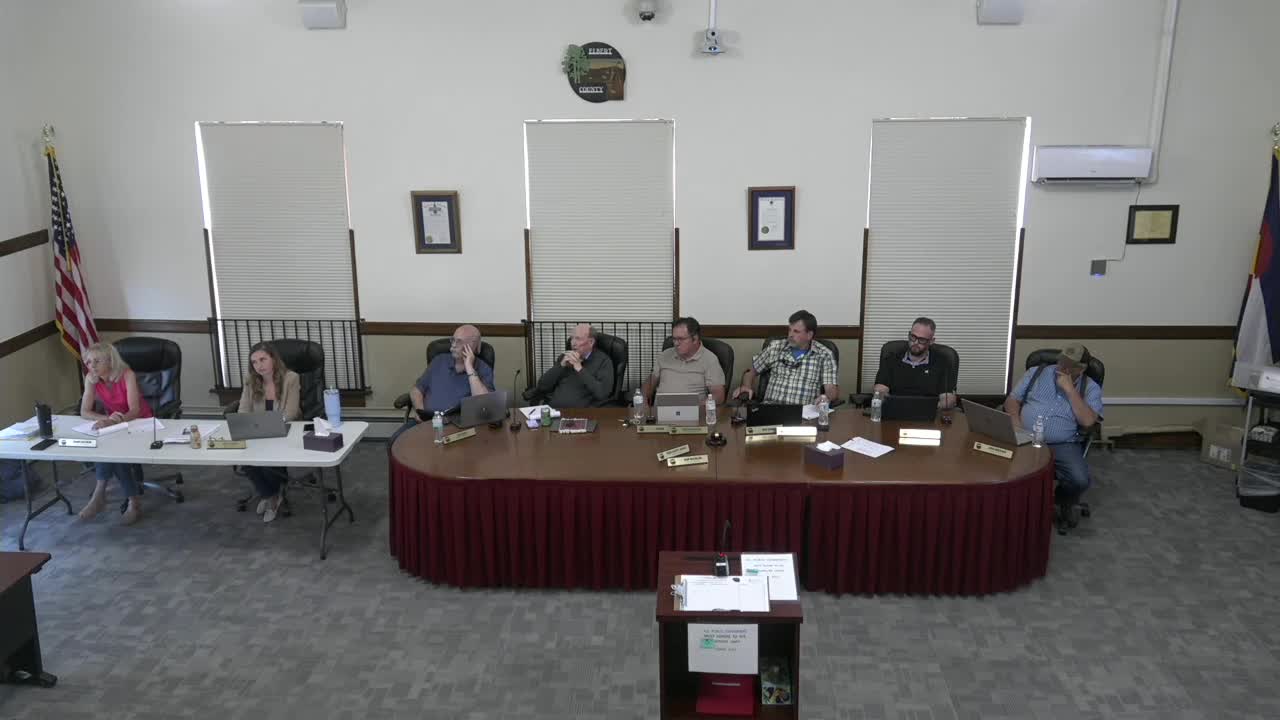
Elbert County attorney tells planning commissioners to avoid ex parte contacts, predetermination
Summary
County attorney Lance briefed Elbert County Planning Commission on risks from ex parte communications, predetermination, off‑record investigations and the 28‑day appeal period, advising disclosure or recusal when necessary.
Elbert County’s acting county attorney, Lance, told the Planning Commission at a legal briefing that commissioners must avoid off‑record, one‑sided communications about pending land‑use applications and must either disclose or recuse themselves when such contacts may affect fairness.
Lance told commissioners that ex parte communications — private conversations with a single party about an application outside the public hearing — threaten due process because “neither side [should] have information that the other side does not.” He said such communications can invalidate a commission recommendation or later decisions by the Board of County Commissioners if they are judged significant enough.
The attorney outlined two primary responses when an ex parte contact occurs: disclose the contact on the record at the hearing so that the information is part of the public record and available to both sides, or, if the contact is so prejudicial that it undermines a commissioner’s ability to be fair, recuse and physically remove oneself from the proceeding. “If you cannot consider only that (the record) in your deliberations, you have an issue,” Lance said.
He also warned commissioners to avoid creating their own evidentiary records outside the hearing by conducting independent investigations such as driving to a site to collect photos, saying that information unavailable to other parties has the same effect as an ex parte contact. “Don’t develop your own record,” he said. If commissioners need additional materials — photo simulations, traffic data or site information — Lance said they should request those through staff or the applicant so they become part of the official record.
Commissioners raised practical questions during the training about when ex parte rules begin, with Lance saying practices vary by jurisdiction. He noted Douglas County uses a bright‑line rule: restrictions start when an application is formally filed. In Elbert County, he said, some situations are gray — for example, pre‑submittal meetings with staff — and those conversations may still require disclosure if they later relate to a filed application.
Lance urged caution after a final BOCC decision as well. He said most land‑use decisions remain vulnerable to judicial review for 28 days after the board’s written decision under what he called a “Rule 106” appeal, and he advised commissioners to refrain from public comment during that appeal window. “I beg and plead for 28 days at least that nothing be said, done,” he said, noting statements made during that period can be quoted in court appeals.
The attorney also discussed bias and predetermination. He distinguished inadvertent ex parte contacts from situations that create actual bias — particularly where a commissioner or a close family member has a direct financial interest in the outcome. In those cases, he said, disclosure alone is inadequate and recusal is appropriate. On predetermination, he said a commissioner who has already decided the outcome “and the testimony’s not gonna matter” should not sit on the matter.
Commissioners and staff discussed how to apply subjective approval criteria such as “harmony” or “compatibility.” Lance explained that approval criteria in the county’s land‑use code are binding factors to be considered in quasi‑judicial decisions: if, in a commissioner’s judgment, all required criteria are met, the law requires a vote to approve; if any criterion is not met, the proper vote is to deny. He emphasized that commissioners are the fact‑finders and may disagree with staff recommendations, but must base recommendations on the record presented at the hearing.
The briefing closed with procedural reminders: disclose inadvertent ex parte contacts on the record; recuse and physically leave the hearing if fairness is compromised; avoid off‑record investigations; and rely on the hearing record for deliberations. Lance said he will attend some future planning commission meetings to provide legal guidance when available.