Get Full Government Meeting Transcripts, Videos, & Alerts Forever!
Get email alerts on the Rv Parking topic
No spam. Unsubscribe anytime.
Board approves new rules on large commercial vehicles and creates temporary refuge permits for people living in RVs
Summary
The Board approved an ordinance adjusting rules for large commercial vehicle parking and creating a temporary refuge‑permit program and other measures intended to manage RV parking while offering pathways to services and housing for people living in vehicles.
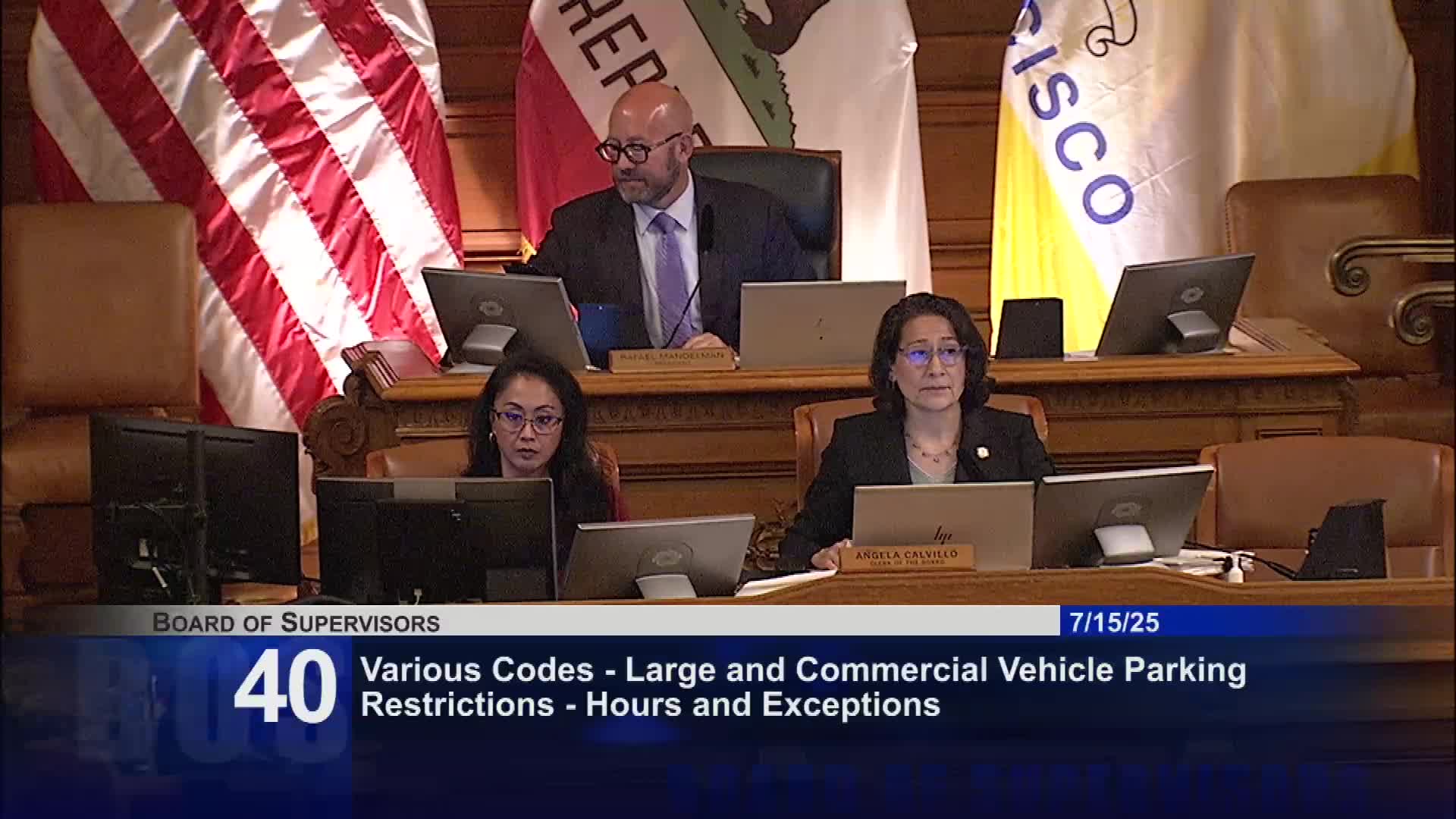
The Board of Supervisors on July 15 passed an ordinance amending parking restrictions for large commercial vehicles and adopting a refuge permit framework intended to manage where people live in vehicles while providing a path for services and housing.
What the ordinance would do: The measure updates parking restrictions for large commercial vehicles, adjusts hours and exceptions for such parking in public rights‑of‑way and adds a system of refuge permits for people living in vehicles. The refuge permits allow a person living in a vehicle to remain in a permitted location for up to six months (renewable) provided they meet rules governing sanitation, trash disposal and engagement with city caseworkers or service providers. The ordinance also includes a buyback/storage program to allow vehicle owners to monetize or store vehicles as part of housing transitions and creates exemptions and short‑term residential permits for people who do not immediately qualify for refuge status.
Debate and concerns: Supporters, including Supervisor My office, argued the ordinance balances public‑safety and environmental hazards (generators, storage of gasoline near dry vegetation) with compassionate placement pathways. Supervisor Melgar cited work in his district to move people from unsafe vehicular encampments into housing vouchers and stressed the ordinance's intention to hold property owners and exploitative landlords accountable. Opponents warned the plan could be operationally impossible if there are insufficient housing options to transition people out of vehicles; Supervisor Walton said a program that prioritizes people living in vehicles over other unhoused residents without adequate housing supply risks leaving people on the street.
Vote: The ordinance passed on first reading on roll call 9 ayes, 2 no (Supervisors Fielder and Walton voted no). Several supervisors asked for ongoing reporting from the Department of Homelessness and Supportive Housing and MTA on permitting, implementation and outcomes.
Implementation: Departments were directed to develop permitting processes, define refuge locations, set sanitary rules and coordinate outreach and housing placement. Supervisors asked for regular reporting and emphasized the need for language‑accessible outreach and tracking to prevent people from falling through administrative cracks.