Get Full Government Meeting Transcripts, Videos, & Alerts Forever!
Get email alerts on the Procurement Reform topic
No spam. Unsubscribe anytime.
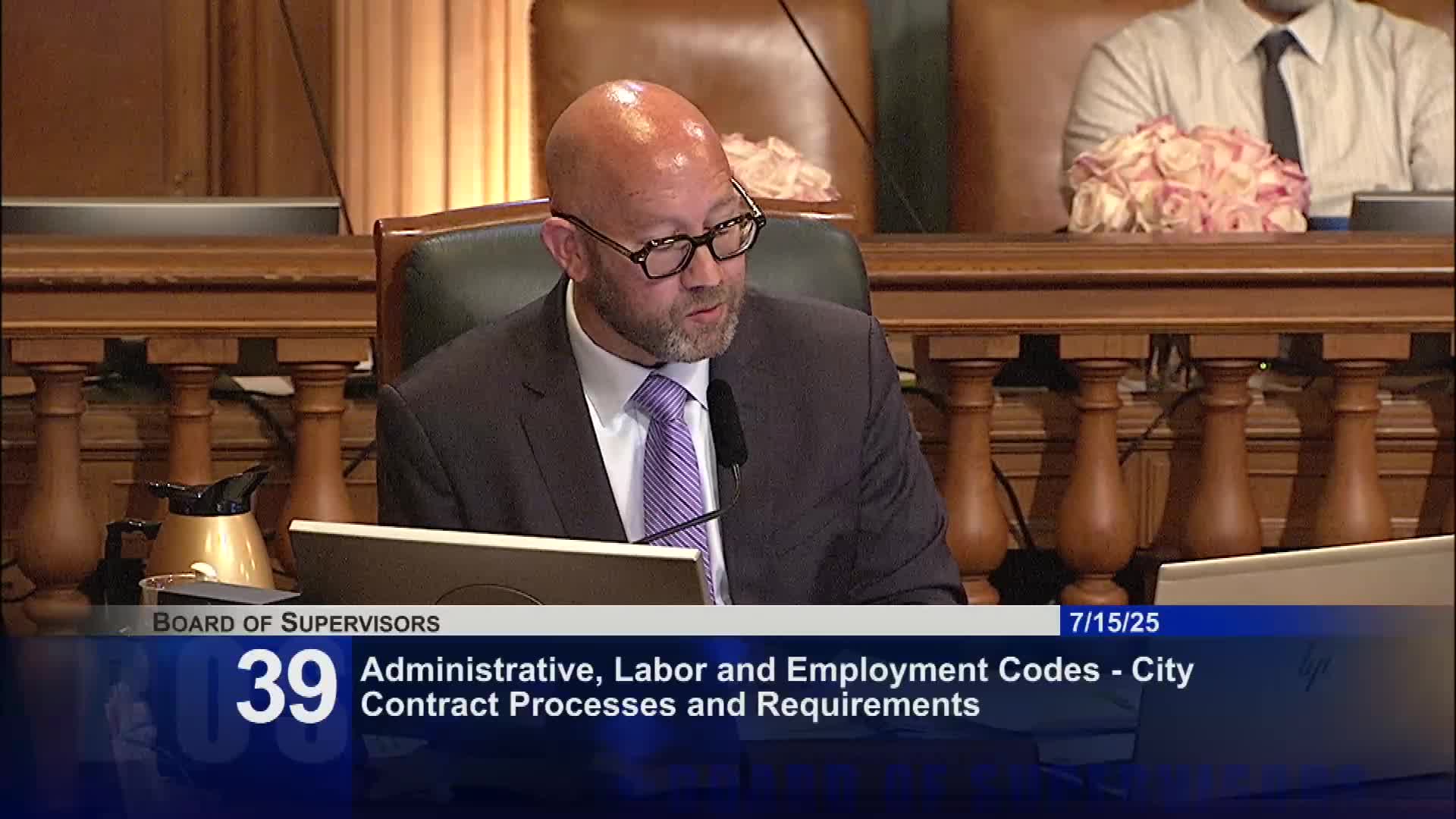
Board advances "Open for Business" contracting reforms but sends sweat‑free advisory change back to committee
Summary
An ordinance to streamline low‑dollar city contracting advanced July 15 but the board voted to send back to committee a proposed change that would eliminate the city's SweatFree contracting advisory committee, after labor and advocates raised objections.
The San Francisco Board of Supervisors advanced a package of procurement changes aimed at simplifying contracting for low‑value purchases on July 15 but voted to return a controversial component affecting the SweatFree Contracts oversight to committee for further work.
What passed: Council President Mandelmann's "Open for Business" procurement bill, which incorporates several recommendations from the city administrator to streamline informal procurements, reconcile thresholds, and require impact analysis for future contracting legislation, was amended on the floor to require a 60‑day fiscal and operational analysis from the City Administrator for future procurement legislation and to make procedural clarifications. The president's amendment, which allows the board to proceed if the analysis is not delivered in 60 days unless an extension has been granted, was adopted without objection.
SweatFree advisory committee controversy: One component of the broader package would have eliminated or weakened the SweatFree Contracting advisory committee (a body that provides oversight related to labor‑standards in procurement). Labor leaders and former supervisors urged keeping strong worker protections and the advisory body in place; they characterized the proposal as a rollback of long‑standing worker protections. After public and board debate, supervisors voted 6—5 to send the item back to committee for further work rather than take final action on the advisory‑committee changes.
Why it matters: Supporters of contracting reforms said the city's low‑dollar procurements carry disproportionate administrative burden, discouraging small, local and nonprofit vendors and lengthening procurement timelines. Opponents, including organized labor and some longtime supervisors, said worker‑rights safeguards and independent oversight are essential and that the committee plays a role in preventing sweatshop conditions in supply chains.
Board direction: The item was returned to committee; supervisors asked for language that preserves robust worker protections while addressing contracting complexity. The adopted amendment requires future procurement bills to be accompanied by an impact analysis from the City Administrator and allows the board to grant a time extension for that analysis before considering legislation.
Vote: The motion to send the sweatfree advisory committee change back to committee passed 6 ayes and 5 no votes. The president's amendment requiring the procurement impact analysis language was adopted without objection. The main procurement package otherwise moves forward for further implementation steps.