Get Full Government Meeting Transcripts, Videos, & Alerts Forever!
Get email alerts on the Short Term Rentals Street Level topic
No spam. Unsubscribe anytime.
Council debates allowing street‑level residences and short‑term rentals on Front Street; public raises accessibility concerns
Summary
Staff presented narrow and wide code revision options to allow street‑level residential uses and short‑term rentals in Coupeville’s commercial district; residents urged the council to prioritize ADA access and protect active retail frontage.
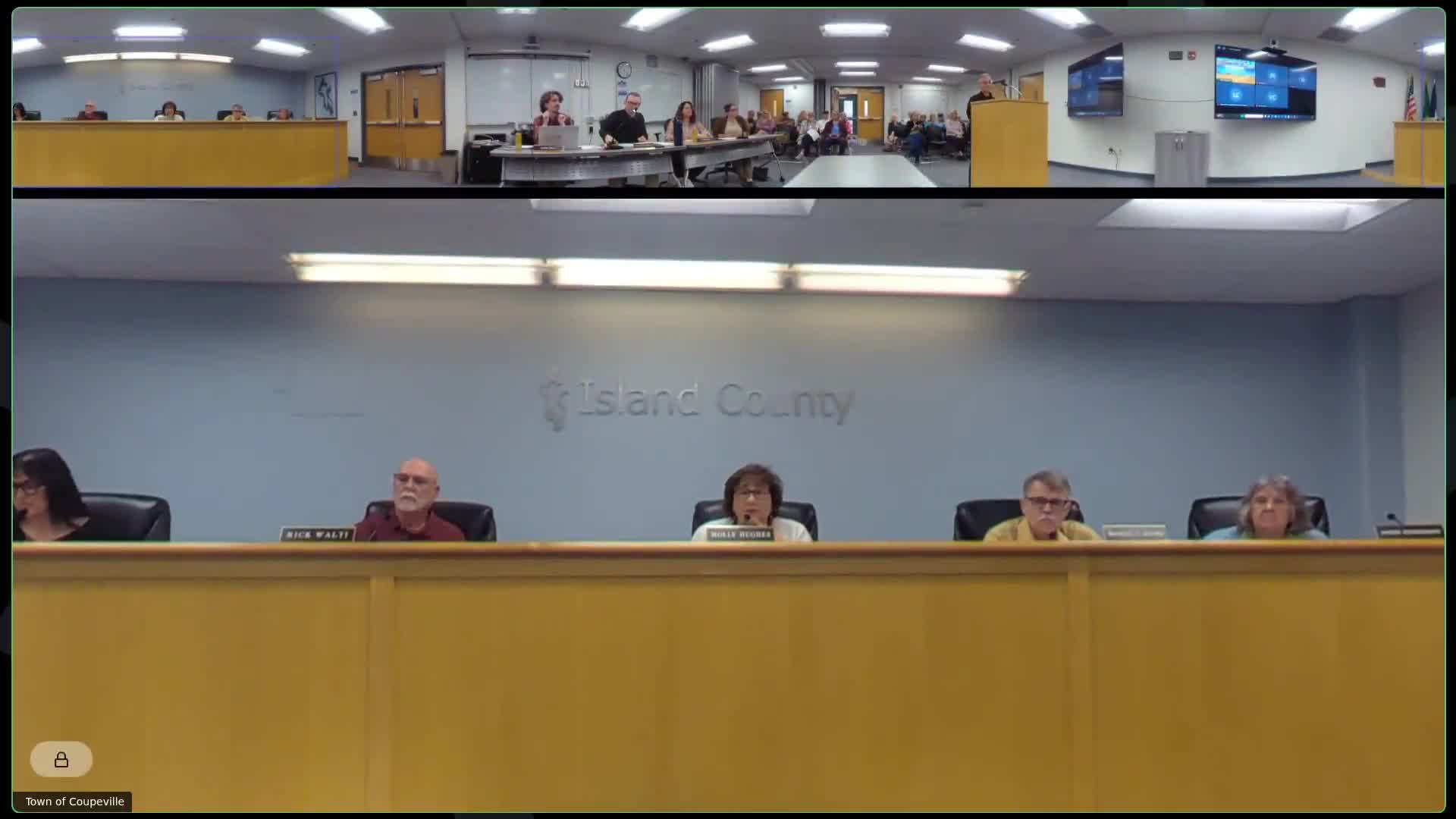
The Coupeville Town Council discussed whether to allow street‑level residential uses, including short‑term rentals, in the town’s historic commercial district on July 22. Staff presented a range of options from narrow revisions limited to over‑water buildings to broader changes across both sides of Front Street.
Staff said outreach to stakeholders produced mixed results: 21 participants provided input, nine written comments were received and roughly a dozen people spoke at a planning commission workshop and council briefings. The planning director said there was no overwhelming consensus in the initial outreach and that additional public engagement and legal review would be required.
Supporters and building owners argued that permitting residential uses in rear or non‑street‑facing spaces could create housing and allow building owners to occupy or adapt underused areas. Staff suggested mitigation measures the council could consider, including active‑frontage requirements (minimum retail frontage by percentage or square footage), limiting where exterior doors for residential units may be placed, and tying a short‑term rental license to the existence of an active street‑level retail presence.
Opponents and some business owners expressed concern that converting street‑level space to residential or vacation rentals would reduce retail space and hurt downtown businesses by limiting expansion and day‑traffic that supports shops and restaurants. Parking and long‑term parking of vehicles associated with residents or long‑term renters were recurring concerns.
Staff identified the specific issues that would require more work: how to preserve viable retail footprints, how to define active frontage, whether to apply changes only to over‑water buildings or to both sides of Front Street, and legal questions about treating one side of the street differently than the other.
The planning director recommended further research and code drafting. Several council members asked staff to investigate narrow revisions first while researching legal equal‑treatment risks of applying rules to one side of the street only. Councilors also asked staff to examine ADU treatment within the district (noting current rules count an ADU as a full dwelling credit in the MOA discussion) and to propose specific measures to preserve retail viability.
Public comment during the same meeting highlighted accessibility concerns. Ellen Stone, a homeowner and longtime visitor, described difficulty finding downtown lodging with wheelchair access and said the Hoopoe Inn lacked accessible entry to its lobby and breakfast on the second floor: “He could not get into the lobby,” Stone said of her son, who uses a wheelchair. Other speakers urged the council to consider short‑term rental allowances only if they preserve ground‑floor retail and public access.
Council did not adopt an ordinance. Staff will continue public outreach, research legal issues (including potential equal‑protection arguments), and return with draft code language if the council directs further work.