
Independent audit finds Clay County’s finances sound; general‑fund reserves remain above GFOA benchmark
Get AI-powered insights, summaries, and transcripts
Sign Up Free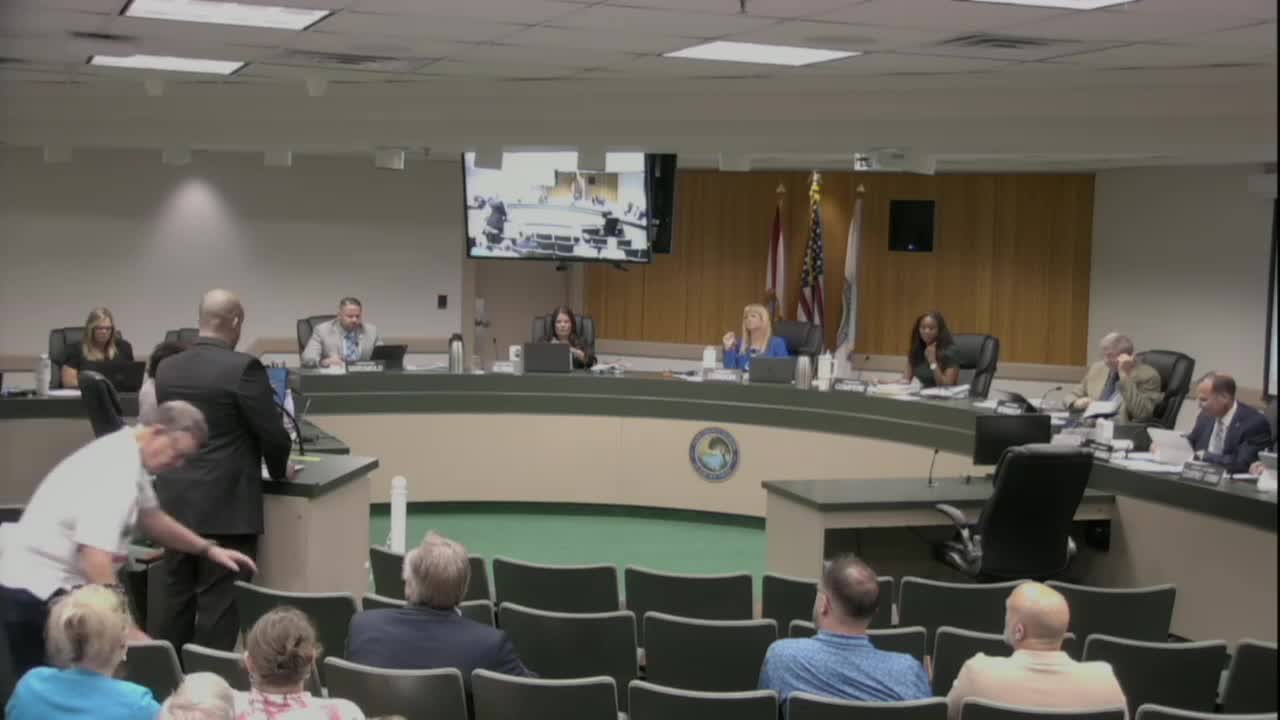
Summary
Auditors from James Moore and Company presented the fiscal year 2023–24 audit to the Clay County Board of County Commissioners, reporting an unmodified opinion, no material findings on major federal and state grant compliance, and a general‑fund reserve above the Government Finance Officers Association recommendation.
An independent accounting firm on July 22 delivered a largely unremarkable financial audit for Clay County’s fiscal year ending Sept. 30, 2024, reporting an unmodified opinion and no major compliance findings on the county’s audited federal and state grant programs.
Zach Chalfour, partner at James Moore and Company, told the Board of County Commissioners the auditors issued five separate reports and that the county received an unmodified opinion — the standard language meaning the financial statements are fairly presented in all material respects. Chalfour said the county exceeded the threshold for both federal single audit and state single audit testing and that auditors looked at major grant programs; those reviews identified no compliance failures.
On internal controls, Chalfour said auditors found no material internal control deficiencies rising to a reportable finding. He noted a single comment — not a finding — regarding building‑department year‑end fund balance relative to allowable carryforward limits; auditors said that planned expenditures will likely resolve that issue.
Chalfour reviewed the general‑fund balance, reporting total countywide assets minus liabilities near $67.2 million with the general fund holding roughly 34.5% of one year’s general‑fund expenditures in fund balance — about four months of reserves. The Government Finance Officers Association’s widely used guidance recommends a minimum of two months of operating reserves; Chalfour noted Clay County’s reserves are about double that minimum and generally consistent with reserves for similar‑sized counties.
Chalfour also addressed the county’s net pension liability as reported under accounting standards — about $179 million in Clay County’s statements — and described it as a theoretical number derived from statewide plan allocations (the Florida Retirement System) rather than a current cash obligation payable directly by the county.
Why it matters: An unmodified opinion and no findings on grant compliance ease concerns about fiscal stewardship and compliance risk. The audit’s reserve analysis will be relevant as commissioners finalize a balanced fiscal 2025–26 budget and discuss capital projects.
Ending: Commissioners asked several technical questions, including about pension accounting and solid‑waste fund balance trends; staff and auditors agreed to follow up on specific line‑item queries.