Get Full Government Meeting Transcripts, Videos, & Alerts Forever!
Get email alerts on the Building Codes Ev Solar topic
No spam. Unsubscribe anytime.
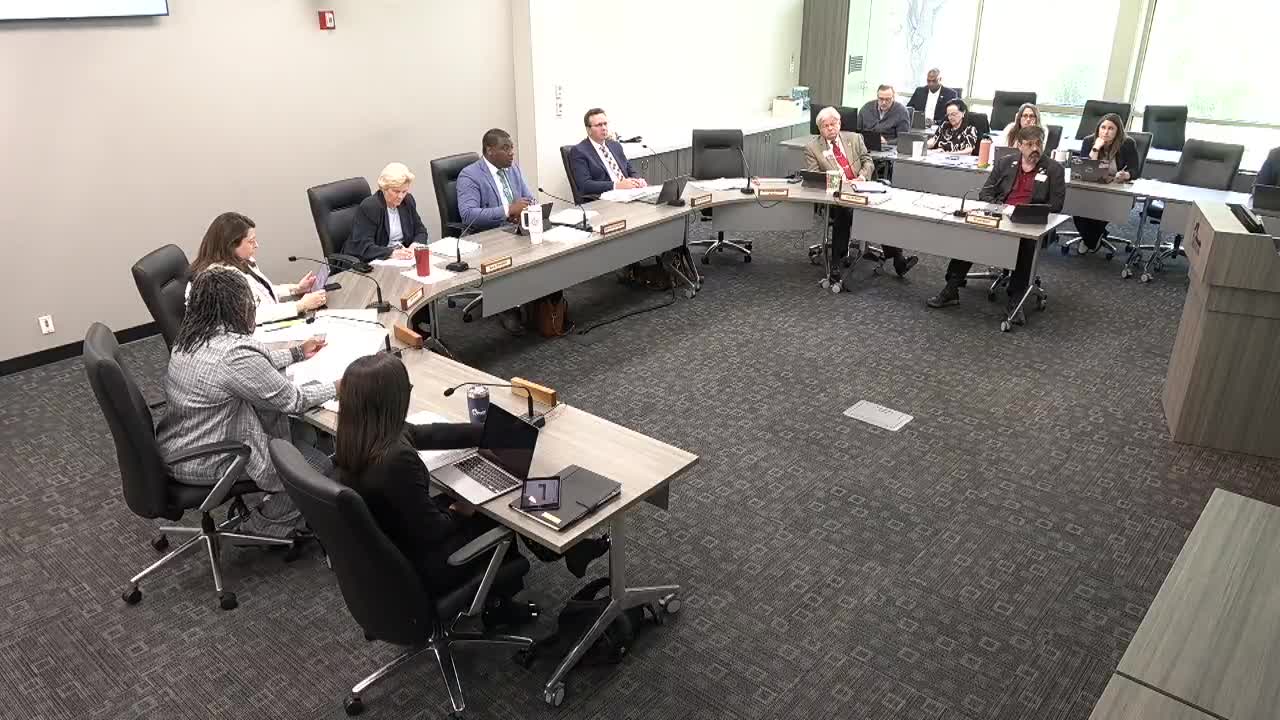
Denton council weighs EV and solar requirements for new homes; staff and advisory board favor incentives over mandates
Summary
Assistant building official and the health and building standards committee recommended against mandating EV type‑2 or solar‑ready requirements for all new construction and urged incentives; council gave mixed direction and asked the advisory board to revisit incentive options.
The Denton City Council discussed possible updates to the International Energy Conservation Code to add EV‑ready and solar‑ready provisions for new residential construction, and several council members said they preferred incentives rather than a citywide mandate.
Amber Rogers, assistant building official, told council the current adopted code requires receptacles in vehicle bays that accommodate level‑1 (Type 1) chargers — the corded chargers that generally come with electric vehicles — and that local permitting data show only 58 residential Type‑2 charger permits in the past six years. Rogers summarized HABSCO (the Health and Building Standards Commission) feedback: the commission did not support mandating Type‑2 (Level‑2) charger capability or solar‑ready requirements in new construction and recommended considering incentives instead.
Rogers said that a mandated EV‑capable home would require “enough space in the panel for a spare 40‑amp breaker,” which adds cost to the home and is usually passed to the buyer. She also said solar installations currently accounted for less than 1% of existing homes in Denton and that most local installations required only electrical updates rather than structural changes. The HABSCO chair, Nick Stevens, told council the advisory board supported incentives for EV infrastructure (not solar mandates) but the board lacked consensus on a mandate and had not developed specific incentive packages.
Council members voiced differing perspectives. Some members favored no action because the existing code already provides Level‑1 receptacles and the cost/need for universal Type‑2 capability was not evident: “I feel like we're getting out ahead,” one council member said, noting the low permit count. Other members urged the city to pursue incentives and suggested using impact‑fee reductions, credits or other local tools to encourage builders to include solar‑ready roofs or electrical panels sized for future chargers. One council member asked staff to return with potential incentive ideas and how to implement them without undermining necessary city revenues; the city attorney reminded council that state law limits the permissible uses of impact fees.
There was no adoption of a code change at the work session. Council’s direction was mixed: a majority expressed “no action” for now but asked staff to share the discussion with HABSCO so the board can consider incentive approaches and report back. Several council members requested cost breakdowns (for example, the incremental cost to provide wiring space for a 40‑amp breaker in new versus retrofit construction) so they can weigh affordability effects. The council also asked staff to clarify which incentives HABSCO would favor (credits, rebates or other tools) and to return with a menu of options for council consideration.