Get Full Government Meeting Transcripts, Videos, & Alerts Forever!
Get email alerts on the Capital Improvements topic
No spam. Unsubscribe anytime.
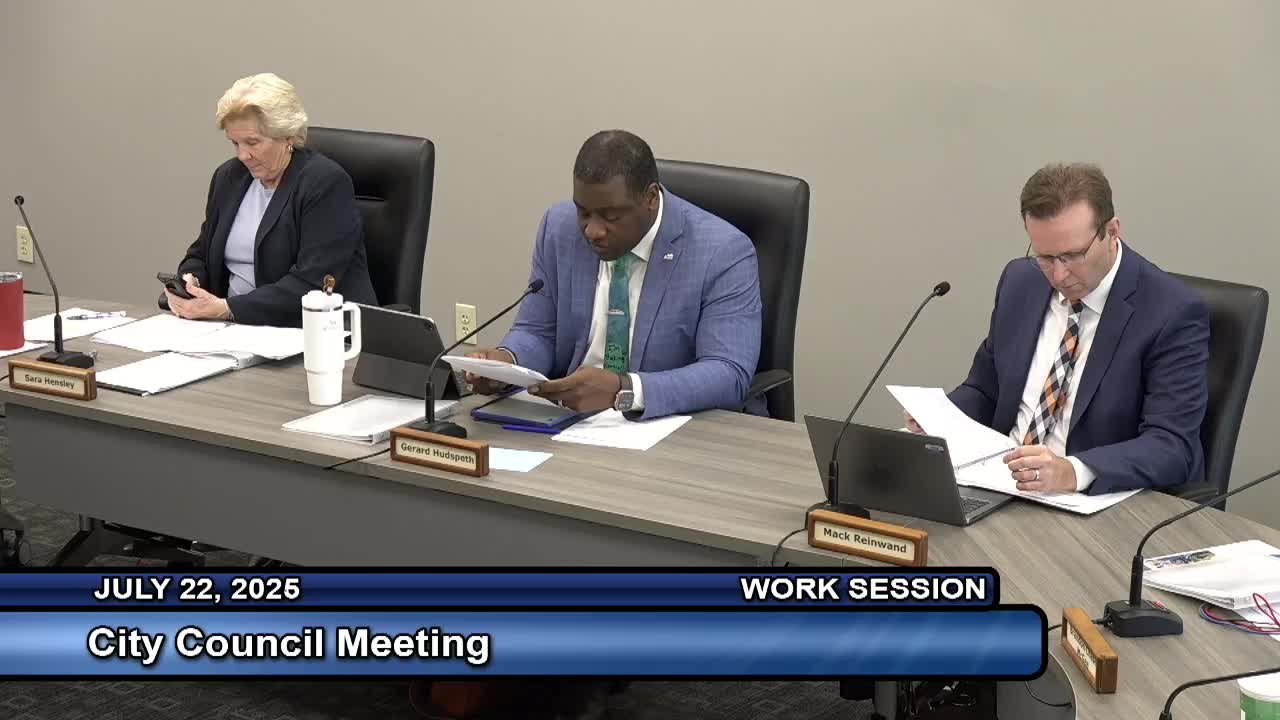
Denton reviews $1 billion-plus five-year capital plan as council presses shift from debt to revenue funding
Summary
City staff presented a preliminary five‑year capital improvement program that is driven by water and wastewater projects and recommends shifting more projects from debt to revenue funding; council asked for follow‑up detail on timing, delay costs and options to reduce borrowing amid high growth and grant/loan opportunities.
City staff on Tuesday reviewed Denton City’s preliminary fiscal year 2025–26 capital improvement program (CIP), focusing attention on large water and wastewater projects, proposed bond issuances and a push by several council members to shift more projects from debt financing to revenue funding.
The presentation covered departmental five‑year plans and near‑term borrowing. Staff said the city anticipates new appropriations next fiscal year including $94.9 million for the water fund (about $55.6 million debt, $37.9 million WIFIA loan and $1.3 million from operating), $242.9 million for wastewater (about $141.8 million debt, $98.2 million WIFIA and $2.8 million from operating), $63.9 million for Denton Municipal Electric (DME), and $21.71 million for solid waste. The staff presentation also showed reduced planned bond issuance from previous schedules — for example, planned issuance on the 2023 bond program was presented as $44.2 million, down from an earlier plan of $72.7 million.
The council pressed staff on the scale and timing of the major projects. “Water and wastewater together are going to be over $1,000,000,000,” a council member noted during discussion, and staff described major wastewater projects including upgrades to Pecan Creek Water Reclamation Facility and lift‑station increases such as Cooper Creek (capacity increased from 8 million to 12 million gallons per day) and replacement of the Granada lift station. DME General Manager Tony Puente told council that transmission overload work north of town is pending ERCOT approval and could cost the city in the range of $140 million under the likely scenarios under discussion; prior scenarios had been about $65 million.
Council members repeatedly urged staff to produce a clearer plan for shifting costs from borrowing to revenues where possible. A staff member said the objective is “to have more revenue funding than debt funding,” noting funds such as solid waste have begun shifting vehicle replacements to revenue funding to reduce future debt issuances. Council asked staff to return with (a) project‑level analyses showing which projects are already delayed and which could be delayed further, (b) estimates of the financial consequences of delaying particular projects (for example, expected cost increases), and (c) clarifications about how state and federal funding programs — including Texas Water Development Board and WIFIA — are expected to be used.
Staff also laid out preliminary tax/debt rate estimates tied to the CIP. Using certified values received that morning, staff estimated the city’s fiscal 2025–26 debt (interest and sinking) rate could rise about 1.5 cents per $100 of assessed value, from 0.25064 to a preliminary 0.26564; staff said the change would increase the INS tax bill by about $76.19 per year for a median house valued at $386,000 under those preliminary assumptions. Staff emphasized the tax estimate is preliminary and will be refined during the August 9 budget workshop and later meetings.
Council members sought more granular material before formal budget adoption, including: a multi‑year schedule of which projects are delayable and for how long; estimated inflation or delay costs associated with postponing projects one, two or more years; and the operational impacts of shifting the timing of park, library or senior‑center projects (for example, whether the city could staff new facilities if construction proceeds earlier than operations are funded). One council member also pressed staff to include the operational costs when recommending construction deferrals — for example, building a facility without budget to staff it would not be responsible planning.
Staff described next steps: staff will return for the August 9 budget workshop, then another follow‑up on August 19, with adoption of the budget and tax rate scheduled for Sept. 16. Council members asked that staff prepare materials on delay‑cost tradeoffs and revenue‑funding pathways so they can weigh service priorities against affordability impacts.