Get Full Government Meeting Transcripts, Videos, & Alerts Forever!
Get email alerts on the Meeting Procedure Minutes Public Comment topic
No spam. Unsubscribe anytime.
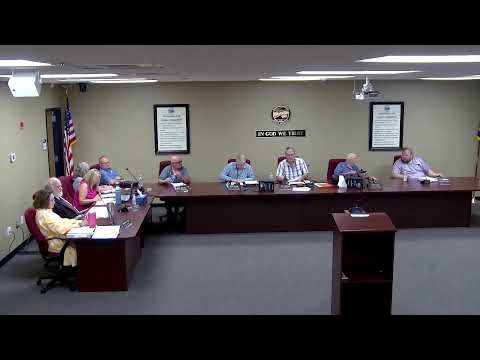
Alleghany commissioners debate whether minutes should name speakers after public-comments dispute
Summary
A motion to revise June minutes to restore references to a commissioner named in public comments failed for lack of a second; the board then approved the minutes as written 4-1 amid a lengthy discussion about the legal standard for minutes and public-comment practices.
The Alleghany County Board of Commissioners on July 21 considered a motion to revise previously filed minutes after members of the public said their remarks naming Commissioner Greg Walker had been omitted.
The motion to direct the clerk to re-listen to the recording and insert Commissioner Walker’s name where it was mentioned failed for lack of a second. The board later voted 4-1 to approve the minutes as written; one commissioner recorded a “no” vote and asked that his objection be noted.
The issue arose during approval of the July 7 minutes when a resident and at least one commissioner said public commenters expected that references to individual commissioners would appear in the written minutes. “You can’t unring the bell,” said Commissioner Bobby Erwin, arguing that the written record should reflect what speakers said. The board’s attorney responded that state law requires minutes to be “full and accurate” but does not define the level of detail; the attorney said statutes require that minutes identify actions taken and proof of any conditions necessary to action, such as a quorum, and that additional discussion is often included but is not legally required.
Commissioners debated the policy balance between preserving a concise written record and ensuring the public can verify what was said. Several commissioners noted that a full audio or video recording is available online and that minutes are a distilled record prepared for approval by the board. One commissioner said individual board members do not have unilateral authority to change minutes and that any substantive alteration should be decided by a board vote.
After the failed motion to revise, the board moved to accept the minutes as presented and approved them 4-1; the meeting record shows “Bobby” cast the lone dissenting vote.
The discussion also touched on guidance for public-comment periods: county counsel reminded the board it may adopt reasonable rules governing conduct, time limits and group representation, but cautioned against rules that discriminate on viewpoint because of First Amendment protections. Several commissioners emphasized civility and the availability of recordings for full context.
The board did not adopt a new written policy on minutes or public-comment content during the meeting, and a commissioner said any specific change would require a future vote.
The question of whether to include named references to commissioners in future minutes may return to a later meeting if a member requests reconsideration.