Get Full Government Meeting Transcripts, Videos, & Alerts Forever!
Get email alerts on the Health And Safety topic
No spam. Unsubscribe anytime.
American Heart Association recognizes students, donates CPR kits and offers cardiac emergency plan to Victoria ISD
Summary
American Heart Association representatives presented trophies and hands-only CPR training kits funded by Citizens Bank, recognized a student fundraiser, and offered a model cardiac emergency response plan aligned with a recently enacted state law.
Representatives from the American Heart Association recognized student fundraising and donated hands-only CPR practice kits to Victoria ISD during the meeting, and offered the association’s cardiac emergency response plan template to help schools comply with recent state law.
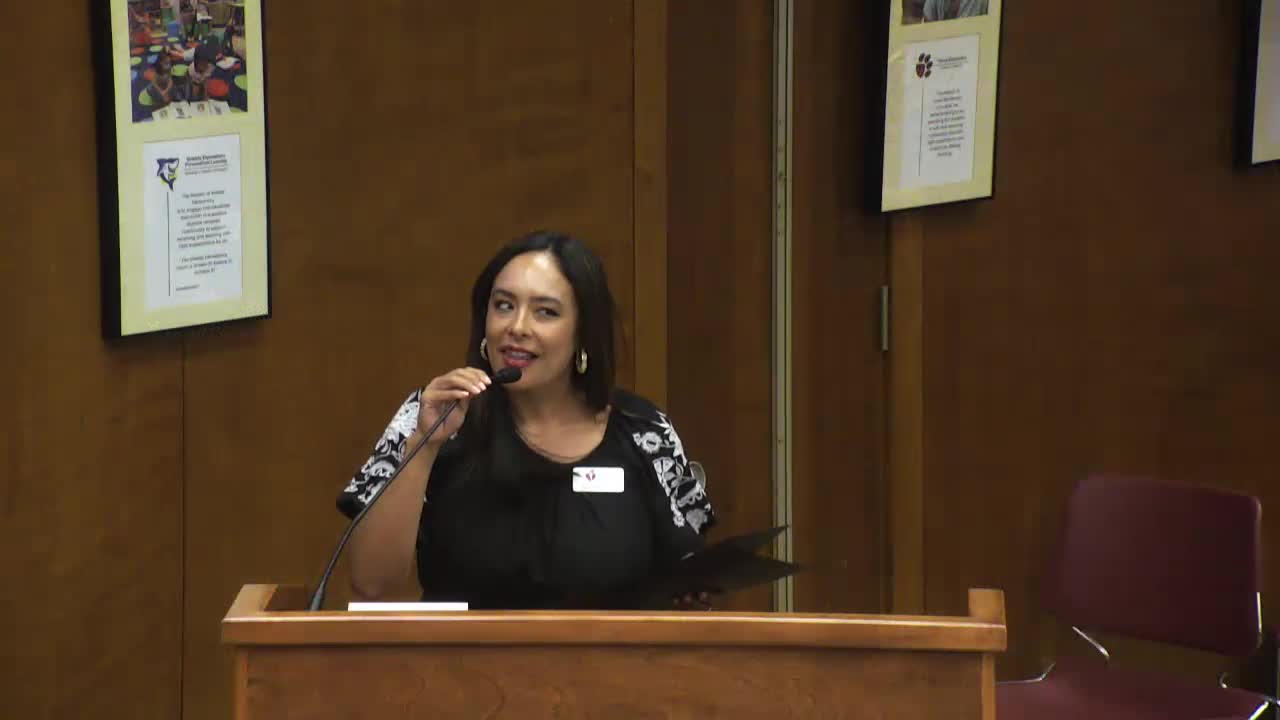
Sonia Marinas of the American Heart Association presented a trophy to student Blake Harris, who raised $3,274 for the group’s Kids Heart Challenge, and recognized teacher Stephanie Daniels and principal Miss Mills for supporting the program at the campus level. Marinas said the program teaches students CPR steps, stroke recognition and habits for heart health that can be introduced at elementary ages.
Marinas also announced a gift of hands-only CPR practice kits, funded by Citizens Bank, that include a feedback panel to confirm proper compression placement and force. "It's kind of like learning to drive. You can read a book, but you have to practice so that it comes muscle memory," Marinas said.
Marinas’ colleague Melissa told trustees the association has developed a cardiac emergency response plan template and offered it to the district at no cost. The presenters referenced Senate Bill 865 (referred to in the meeting as the Lannon Payton Act), a law that requires each school to have a cardiac emergency response plan. Melissa said the association’s template includes required elements such as having AEDs on campus, creating a cardiac emergency response team with clear roles (who retrieves the AED, who calls 911) and other evidence-based procedures.
Board members and staff accepted the donation and said they would work with the association on implementation. The presentation was informational; no board action was required.