
Sunnyvale public safety unit reports flat five‑year bike/ped trends; cites enforcement, education and data limits
Get AI-powered insights, summaries, and transcripts
Subscribe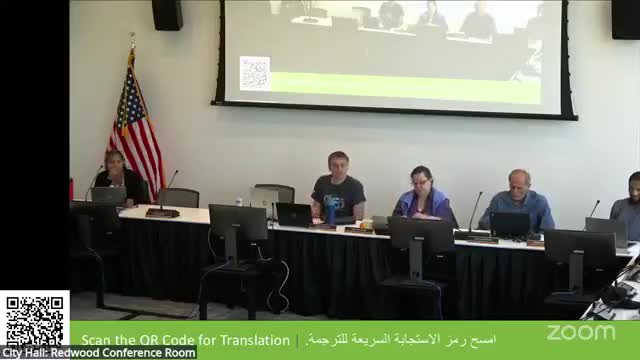
Summary
Lieutenant Juan Glazo told the Bicycle & Pedestrian Advisory Commission the city’s traffic unit is focusing on engineering, education and enforcement after a multi‑year review showed roughly steady numbers of serious pedestrian and cyclist injuries; staff flagged data limitations and enforcement capacity as constraints.
Lieutenant Juan Glazo of the Sunnyvale Department of Public Safety presented the commission with a five‑year summary of collisions involving pedestrians and cyclists and described the department’s enforcement and education plan.
Glazo told commissioners the department recorded roughly the same level of severe bicycle and pedestrian injuries over the period reviewed and stressed the unit’s three priorities: “engineering, education, and enforcement.” He said 2024 figures were compiled from electronic citation data and are therefore best‑effort estimates, because paper citations cannot be reliably exported from the city’s current system.
Why it matters: the numbers underlie the city’s Vision Zero goals and shape where staff prioritize limited enforcement and engineering resources. Commissioners pressed staff for clarity on causes, enforcement coverage and whether recent engineering changes had reduced close calls.
The department reported enforcement and complaint totals: 4,363 moving‑violation citations issued across the department; 90 citations to cyclists for signal or stop violations; eight pedestrian jaywalking citations; and a rise in traffic complaints from 384 (2023) to 463 (2024), of which 185 were speeding reports. Glazo said his traffic safety unit comprises four people (three officers plus a lieutenant) and that capacity limits how many complaints can be addressed immediately.
Glazo described targeted enforcement tactics the unit uses: monthly countywide operations focused on primary collision factors (speeding, failure to yield, red‑light violations), school‑zone enforcement, and a pedestrian decoy operation planned for several crosswalks. He said the department receives grant money through the Office of Traffic Safety for many of those campaigns.
On hit‑and‑run investigations, Glazo described using a camera analytics system called FLOCK to identify candidate vehicles in the area of a collision. He said the system has produced “breadcrumb” leads in some investigations but that most hit‑and‑runs lack sufficient suspect detail to identify a vehicle from the footage alone.
Commissioners asked for additional context on individual incidents. Commissioner Melman raised a collision in October 2024 in which a man in a wheelchair later died while in a skilled‑nursing facility; Glazo said hospital and physician information listed the death as due to underlying medical conditions rather than the crash, but commissioners noted the collision likely contributed to a permanent change in the subject’s care. Glazo confirmed the subject had lived at home before the collision and was discharged to a skilled‑nursing facility afterward.
Multiple commissioners pressed the department on parking and bike‑lane enforcement. Glazo said the vehicle abatement unit currently handles abandoned‑vehicle cases and parking enforcement in part because of a backlog (he said there were roughly 400 open abatement cases) and that, across the department, “we've written approximately 700 tickets” for parking violations so far this year. He said he has directed officers to cite vehicles observed parked in bike lanes as a priority.
Data and process limits featured in the discussion. Glazo and commissioners said the city’s collision/citation system is built on Microsoft Access (Crossroads Analytics), which lacks convenient export and location queries; Glazo said the application sometimes crashes when he attempts to pull larger datasets. He told commissioners that while he has provided CSV/Excel extracts in prior years, he could not do so this year because of technical problems with the vendor software.
Commissioners recommended the city evaluate alternative analytics tools and consider funding to allow deeper, map‑based collision analysis. Glazo said that would be useful and that he has been pushing patrol and other units to increase night‑time enforcement where collisions peak.
The unit’s staffing limits and data constraints, commissioners said, make it difficult to tie specific engineering interventions to measurable changes in collisions without a formal statistical update or consultant analysis. Glazo said the unit would continue targeted enforcement, work with public works on engineering suggestions and pursue grant funding for enforcement operations.
Ending: The commission requested more exportable data (location/time) and follow‑up on whether a different citation/collision database could be procured. Glazo said he would continue to compile and share more granular case‑level evidence when the system permits and to coordinate with public works on engineering fixes for specific problem intersections.