Get Full Government Meeting Transcripts, Videos, & Alerts Forever!
Get email alerts on the Infrastructure Septic And Water Quality topic
No spam. Unsubscribe anytime.
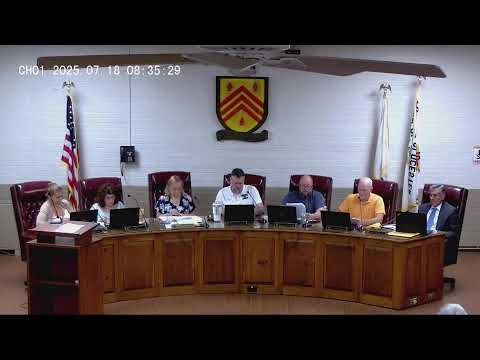
Glocester council backs resolution to expand septic loan eligibility to businesses and nonprofits
Summary
The council unanimously adopted Resolution 2025-09 asking state partners to expand the Glocester Community Septic Loan Program to include commercial, mixed-use and nonprofit properties in Chepachet Village to complement grant funding for septic upgrades.
The Glocester Town Council on July 17 adopted Resolution 2025‑09 expressing support for expansion of the Gloucester Community Septic Loan Program (GCSLP) to allow mixed‑use, commercial and nonprofit properties in Chepachet Village to access the same loan terms as residential properties.
Karen Scott, the town planner, told the council the village revitalization plan identified infrastructure — water and on‑site wastewater — as a major barrier to business and housing in Chepachet Village. She said many village lots are small and close to wells and the Pawcatuck/Chipach(?) River, requiring advanced septic systems that can cost far more than a typical residential installation.
"If, say, a septic system on a regular residential lot would be, you know, maybe $30,000 or so, this type of septic could go up to $60,000," Scott said. She described a package of grant funding the town had assembled for Chepachet Village, including Southern New England program and EPA funds, but noted the grants would not cover full construction costs for many systems: "What that does is it doesn't get you all the way to a new septic system. There's still a financial gap."
Scott described the existing GCSLP: a low‑interest (2%) loan program administered through a line of credit from the Rhode Island Infrastructure Bank and application/servicing through Rhode Island Housing, available to owner‑occupied residential properties of up to four units. She said the infrastructure bank agreed in concept to a pilot expansion to allow commercial, nonprofit and mixed‑use properties to use the same loan terms, subject to approval by the bank's board.
The resolution asks the Rhode Island Infrastructure Bank, Rhode Island Housing, and the Department of Environmental Management to expand GCSLP eligibility for properties in Chepachet Village, stating that the town's Chepachet Village Septic Improvement Program (CVSIP) will provide grant funds but still leave a funding gap for many property owners. The resolution cites the program goals of safeguarding public health, improving water quality, and reducing pollutants that contribute to the village's total maximum daily load (TMDL) concerns.
Councilors asked whether expanding eligibility would reduce availability for residential applicants under the town's current line of credit. Scott said the town has historically requested new lines of credit when funds were exhausted and that residential applicants would remain eligible under the same terms.
The council read and adopted Resolution 2025‑09 by unanimous voice vote.
The resolution itself notes the GCSLP is offered by Rhode Island Housing in partnership with the Water Finance Agency, the Department of Environmental Management, and the Rhode Island Infrastructure Bank, and that the CVSIP uses grants from Southern New England program, U.S. EPA and local coronavirus recovery funds. The resolution "shall take effect upon passage."