
Eastpointe ZBA denies Moses Roses requests for larger wall and pole signs
Get AI-powered insights, summaries, and transcripts
Subscribe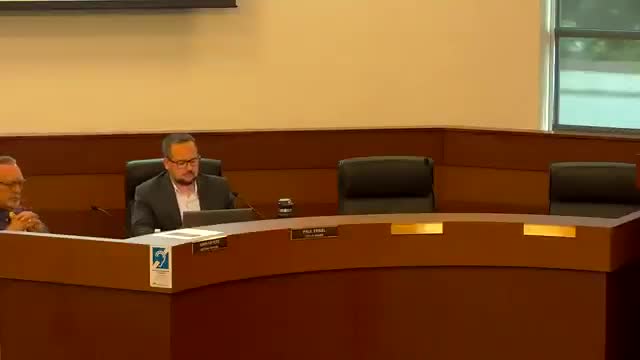
Summary
At a meeting of the Eastpointe Zoning Board of Appeals, members voted to deny three sign-variance requests from Moses Roses for a property on 8 Mile near Kelly Road, rejecting requests for two oversized wall signs and an oversized pole sign.
At a meeting of the Eastpointe Zoning Board of Appeals, members voted to deny three sign-variance requests from Moses Roses for a property on 8 Mile near Kelly Road, rejecting requests for two oversized wall signs and an oversized pole sign.
The board's planner told members the applicant sought three variances: a southeast-facing wall sign proposed at 88 square feet where 54 square feet is allowed (a requested variance of 34 square feet); a southwest-facing wall sign proposed at 55 square feet where 41.25 square feet is allowed (a requested variance of 13.75 square feet); and a pole sign proposed at 63.92 square feet where 50 square feet is allowed (a requested variance of 13.92 square feet). The planner corrected reporting errors in the packet before the votes.
The board denied the two wall-sign variances and also rejected an initial motion to approve the pole sign variance. Votes recorded on the record: for the motion to approve the pole sign variance the board vote was Rasco — yes; Williams — yes; Barconi — no; Troutman — no; Wilson — no (motion failed). Later motions to deny the wall-sign variances passed (denial motions carried on recorded votes that left the variances denied).
Why it mattered
The board evaluated the request under the city's standards for "practical difficulty" in the Zoning Ordinance (Article 17 and related provisions cited in the planner's report). The planner told the board these criteria include whether strict compliance would unreasonably prevent use of the property, whether the problem is self-created, and whether the conditions are unique to the parcel. Several board members said the applicant had not met that burden.
What speakers said
Jennifer Nicholas, an Eastpointe resident who testified, told the board she did not believe the applicant had shown a hardship and urged enforcement of the ordinance: "I don't feel that they've demonstrated any type of hardship." Chris Aiello, corporate counsel for Moses Roses, framed the request as driven by visibility and branding, saying the location and the company's branding needs make the larger letters necessary: "Our brand is everything." A sign representative (Hathram) explained technical details of the proposed LED and channel-letter work, describing the pole display as high-resolution and automatically dimming at night so it reads like a photograph rather than a grid of LEDs.
Board discussion and staff input centered on visibility from westbound 8 Mile, the scale of the building's façade, safety and light impacts, and whether the sign configuration was a consequence of the applicant's own design choices. The planner noted that if the board finds the practical-difficulty standard unmet, the appropriate action is to deny the variance and that applicants may pursue lesser relief or ask the council to amend ordinance standards.
Formal actions
- Motion to approve the pole sign variance (requested extra 13.92 sq ft): motion failed on a vote (Rasco — yes; Williams — yes; Barconi — no; Troutman — no; Wilson — no). - Motion to deny the southeast-facing wall sign variance (requested extra 34.0 sq ft): denial motion carried (vote recorded in the minutes; variance denied). - Motion to deny the southwest-facing wall sign variance (requested extra 13.75 sq ft): denial motion carried (vote recorded in the minutes; variance denied).
Next steps and appeal rights
The planner reminded the public and the applicant that appeals of board decisions may be taken to the Macomb County Circuit Court within the time established by statute or ordinance. The applicant may also revise sign designs to comply with the ordinance or return with a narrower variance request.
Context
Public comment included both support for Moses Roses' community involvement and opposition urging strict enforcement of the sign code. Speakers for the applicant emphasized industry-standard LED modules and dimming technology; residents and others argued that economic or branding concerns are not valid bases for variance under the city's practical-difficulty standard. The board also briefly addressed separate procedural matters later in the meeting (unrelated elections and bylaws), but the sign-variance votes concluded the item.