Get Full Government Meeting Transcripts, Videos, & Alerts Forever!
Get email alerts on the Street Demapping topic
No spam. Unsubscribe anytime.
Community board leadership committee approves demapping of Raymond Avenue despite community objections
Summary
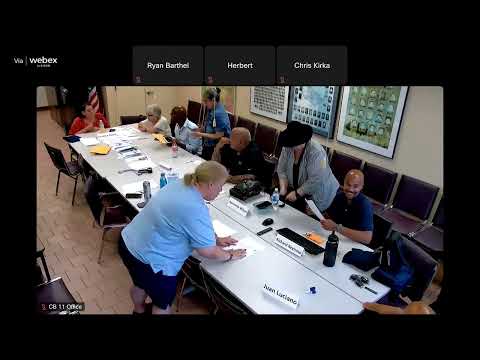
On July 16, 2025, the leadership committee of a Bronx community board held a public hearing and voted to approve an application to demap a portion of Raymond Avenue, a street the applicants say is effectively unopened and fenced off.
On July 16, 2025, the leadership committee of a Bronx community board held a public hearing and voted to approve an application to demap a portion of Raymond Avenue, a street the applicants say is effectively unopened and fenced off.
The item drew extended public comment and questions from committee members about past use of the city-owned parcel, enforcement by city agencies, and what ownership would allow the applicants to do. A registered speaker opposed the demapping, saying the applicant had “not demonstrated that they have the best interest of the community at heart” and that the fenced area shows long-term private use and sidewalk degradation. Attorney Richard Lobel, representing Blondell Corp., and applicant Joe Galito Jr. responded that the applicants own adjoining lots, that zoning and site constraints limit the street’s use, and that Department of Buildings records show no open violations on the four lots the applicants control.
Why it matters: Demapping removes a street from the city map and is a necessary step before the city can sell or convey the underlying parcel. Opponents said approving demapping would reward decades of informal private control of public land and could reduce community access or future parking, while applicants said demapping is the first step in a city-controlled process that could make an inactive parcel contiguous with private lots and place responsibility for maintenance on an owner.
Key points from the hearing
- Public opposition: A registered community speaker described visible “ponding” and broken sidewalks and argued the fenced area had been used as private space for at least 18 years, saying it was improper to “allow private entities to commandeer and erode a public space.” The speaker urged the committee to deny demapping because, in their view, the applicant had not complied with city rules.
- Applicant response: Attorney Richard Lobel said the applicants control four adjoining lots and that demapping would allow a contiguous property. Lobel told the committee he reviewed Department of Buildings (DOB) records and found “0 violations that are open on these properties.” Lobel also said much of the mapped area lies within an active train yard and that Department of Transportation (DOT) has no present intention of opening the street as a through way.
- Legal and process clarifications: Lobel and others on the call described demapping as only the first step; if demapping were approved, the city would still need to engage in a sale or other transaction before the applicants obtained title. The attorney also referenced the doctrine of adverse possession in explaining long-term fenced use, noting that some encroachments have persisted for decades but that the applicants are pursuing the formal demapping process rather than asserting immediate ownership.
Committee action and next steps
The committee moved to approve the demapping application; the chair closed public comment and called the vote. A small number of members registered opposition and one member abstained; the motion passed. The committee noted that demapping does not transfer ownership — the city would still determine whether to sell, set price through appraisal, or keep the parcel.
What remains unclear or pending
- The transcript records concerns about sidewalk condition and fencing but does not include any new enforcement actions or citations issued at the hearing. Committee members asked which city agencies would enforce sidewalk or ponding repairs and were told enforcement and any required permits remain subject to the city’s usual agencies and processes (DOB, DOT, Department of Citywide Administrative Services/City Record when publication is required).
- If the city chooses to sell after demapping, any future development would be subject to existing zoning (described in the hearing as M1-1 zoning) and to separate land-use and permitting reviews in which the community and local elected officials would have additional opportunities to comment.
Quotes (selected)
“I oppose the same Raymond Avenue demapping because the applicant has not demonstrated that they have the best interest of the community at heart,” said a registered speaker during public comment.
“They’ve got four lots here…when you take a look at the DOB records for these four properties, there’s a total of zero violations that are open on these properties,” said attorney Richard Lobel, representing Blondell Corp.
Ending
Committee members who expressed concern suggested documenting community priorities in a letter to the applicants or the city that would state what the community does not want to see if ownership changes hands; others noted the city could later RFP the parcel or set conditions. The demapping approval advances the application to whatever city-controlled land-disposition and sale process follows, at which point additional public review and agency action would be required.